String of pearls has a reputation as a plant that dies for no reason. It dies for one reason, on a schedule, and the reason is water given too often by an owner following a calendar instead of the plant. Each pearl is a small water tank with a translucent window built into it, a strip of clear tissue that lets light into the leaf and, for the grower, works as a gauge: when the plant is well supplied, the pearls are firm and round and the window sits open; as the plant spends its reserves, the window narrows and the pearls lose their gloss and begin, slightly, to pucker. That gauge is the whole watering system. This page teaches the gauge, the soak and dry rhythm it controls, the crown rot geometry that makes this plant different from every other succulent on the shelf, and the rescue fork for a plant that is already in trouble. The general succulent watering guide covers the family rules; this page is about the one succulent that reports its own water level.
Home / Gardening Basics for Beginners
How Often to Water String of Pearls: Read the Pearls, Not the Calendar
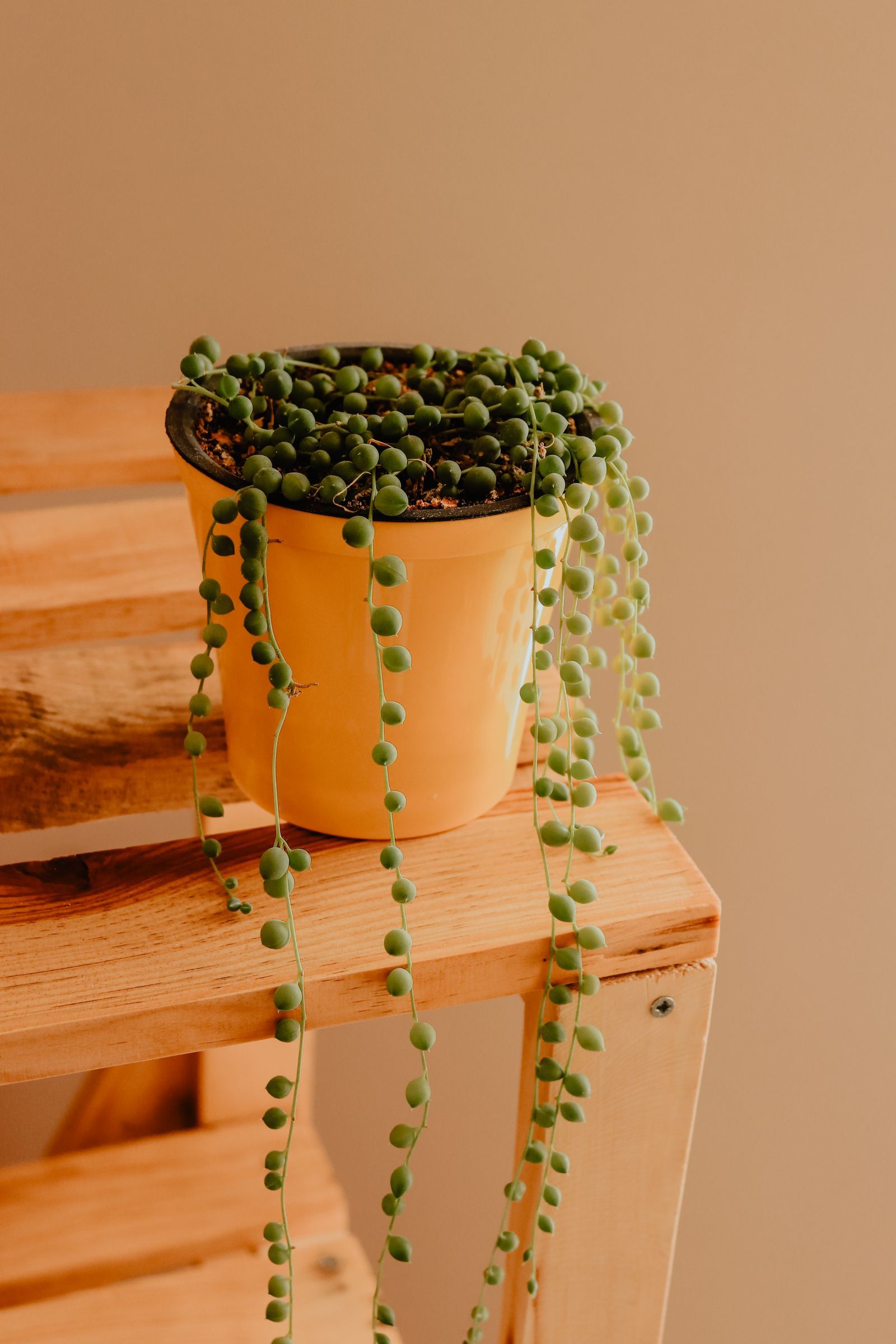
Photo: Rumeysa Akbaş / Pexels
Watering Calculator: The String of Pearls Soak and Dry Audit
String of pearls stores its water in the pearls themselves: soak thoroughly, then let the mix dry completely and wait for the first pucker before watering again, about every 2 to 3 weeks in growth. Enter your pot size below, then read the pearl gauge in this article.
19.9 gallons
For 32 square feet at 1 inch deep. That is about 76 liters, or 10 trips with a standard 2 gallon watering can.
A rain gauge or a straight sided can set in the bed tells you when a sprinkler or soaker hose has actually delivered this depth. Time alone is a guess, because hose pressure varies from house to house.
The conversion is arithmetic, not opinion: one inch over one square foot is 144 cubic inches of water, and a US gallon holds 231 cubic inches, so each square foot at one inch takes 0.62 gallons.
The Pearl Gauge: Window, Gloss, and Pucker
Run three checks before you water, in this order. First, the window: each pearl has a thin, lighter slit running along it. On a supplied plant the slit is visible and slightly open. On a thirsty plant it closes down to a line. Second, the gloss: pearls with water in reserve are shiny; pearls spending their reserves go matte. Third, the squeeze: a supplied pearl is firm, almost hard. A pearl ready for water gives very slightly and shows the first fine wrinkling at its surface. Water when the third check turns, not the first. Owners who water at the first sign of a narrowing window keep the soil permanently damp, and permanently damp soil is the crown rot setup below. In bright light and active growth, the full cycle from soak to pucker usually runs 2 to 3 weeks. In winter, in a cool room, it can run 4 to 5. The calculator above sizes the soak for your pot; the pearls call the day.
| Setting | Growing season | Winter |
|---|---|---|
| Small terracotta pot, bright window | Every 10 to 14 days | Every 3 to 4 weeks |
| Standard pot, bright indirect light | Every 2 to 3 weeks | About monthly |
| Large pot or low light | Every 3 to 4 weeks | Every 5 to 6 weeks, gauge permitting |
| Hanging basket in strong light | Every 10 to 14 days | Every 3 weeks |
The Soak: Bottom Watering Protects the Crown
When the gauge says water, water completely. The method that suits this plant best is bottom watering: stand the pot in a few inches of water for 15 to 20 minutes, let it take up what it needs through the drainage holes, then lift it out and let it drain fully before it goes back to its place. Bottom watering keeps water off the crown, the dense mat of stems and pearls at the soil surface, and the crown is where this plant rots. If you water from the top, aim the spout at the soil at the pot's edge, under the mat, and water slowly until it runs from the holes. Then the rule that does more for this plant than any other: never leave it standing in a saucer of water, and never water again until the mix has dried completely and the gauge has turned. A string of pearls that is watered little and often, a sip every few days to keep it moist, is being killed by the method most owners think of as gentle.
Crown Rot: The Geometry of the Usual Death
The plant's shape explains its death pattern. The strands radiate from a crown at the soil surface, and that crown sits in the wettest part of the pot, against mix that stays damp longest. In soil that never fully dries, the crown and the stem bases rot first, silently, while the long strands hanging over the edge still look plump and green, because they are living on their own stored water. By the time the strands collapse, the base has been dead for weeks. The early signs are at the soil line, which is why this plant must be inspected where it meets the mix, not at the photogenic ends: pearls near the base going translucent or mushy, stems at the surface turning brown and thread thin, a sour smell from the pot. Caught early, the rescue is in the section below. Prevented, it is simply the dry out discipline above, plus a gritty mix, at least half mineral grit or perlite, that cannot stay wet even when you overdo a soak.
The Rescue Fork: Drowned or Thirsty
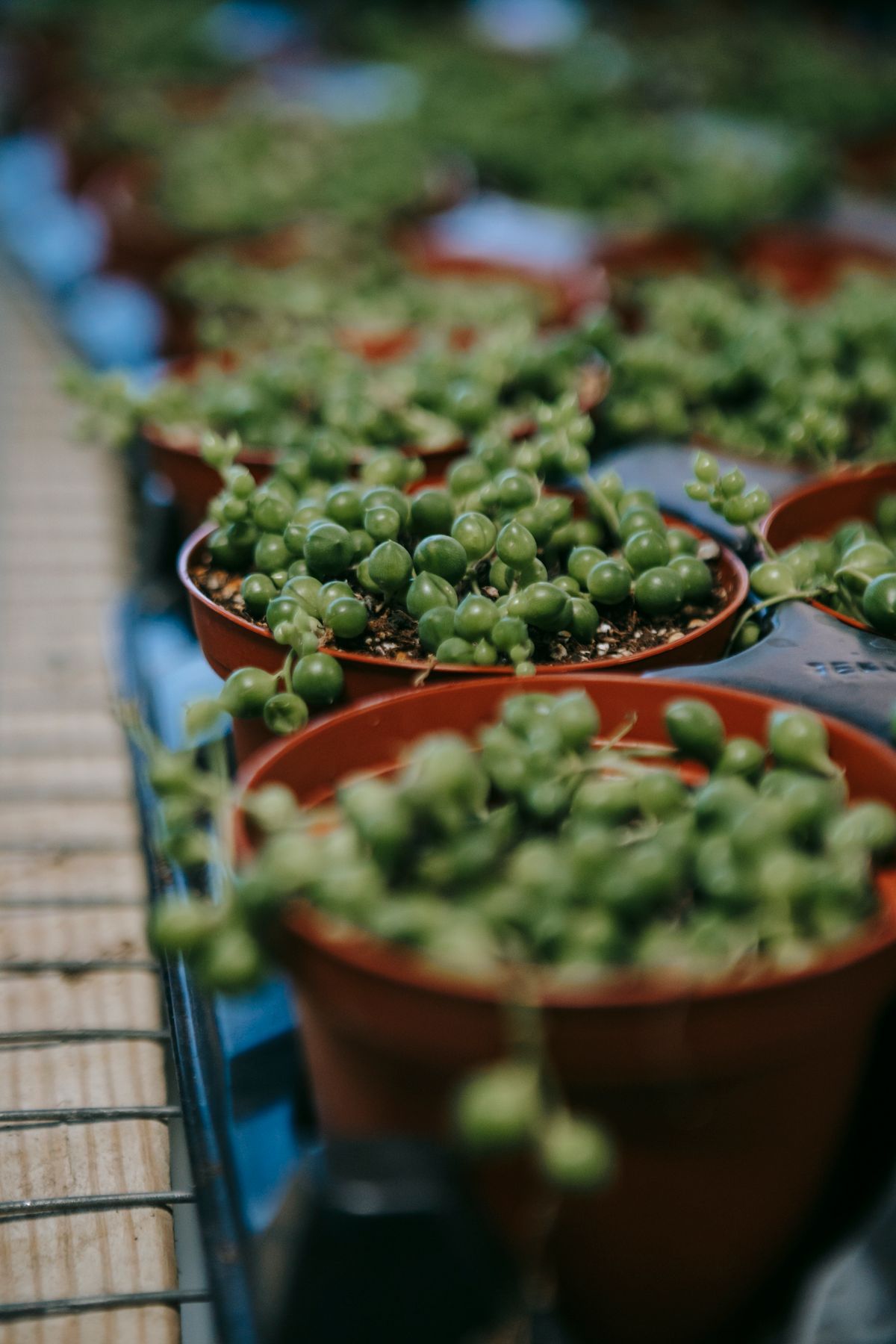
A failing string of pearls presents two ways, and the responses are opposites. The drowned plant has mushy, translucent pearls, often starting near the base, stems that pull away from the soil with no resistance, and wet mix. The thirsty plant has shriveled, pointed, pea wrinkled pearls along the strands, dry mix all the way down, and a light pot. For the thirsty plant, the fix is a bottom soak and patience; pearls refill over a day or two, and the most shriveled may not recover, which is fine, because the strand grows from its tip. For the drowned plant, water is poison. Take the plant out of its pot, cut away every rotted stem and mushy pearl back to firm green tissue, and lay the healthy strands on fresh, dry, gritty mix, pinning the stems lightly against the surface. Kept in bright light with the surface misted occasionally, the strands root at the nodes and rebuild the plant. This is also, not coincidentally, exactly how the plant is propagated, which is why a string of pearls owner who learns the rescue never really loses the plant.
Light, Pots, and Why the Interval Moves
The gauge absorbs most of the variation, but three setup facts explain why one owner's plant runs two weeks and another's runs four. Light is the throttle: this is a high light succulent, and in the brightest window it grows fast, drinks fast, and shows its best compact pearls. In low light it stretches, the pearls space out along thin stems, growth slows, and the plant uses so little water that a two week rhythm rots it. A string of pearls that keeps rotting in a dim room does not have a watering problem; it has a light problem expressing itself through water. Pot material is the second factor: terracotta breathes and shortens every interval, plastic and glazed ceramic hold moisture and lengthen them. The third is the mat itself: a full, mature plant shades its own soil with a dense curtain of strands, and its surface dries far more slowly than a young plant's, which is another reason the mix below the mat stays wet and the crown is the casualty.
The Year With This Plant: Propagation and Repotting
The rescue method doubles as the plant's whole propagation system, and a grower who masters it treats the annual tidy as a production run. In spring, when the plant is growing actively, take cuttings: snip healthy strands, lay them on the surface of a pot of fresh gritty mix, and pin the stems flat against the mix with the pearls up. Roots form at the nodes where stem touches soil. Keep the surface lightly misted, not wet, until the cuttings anchor, then put the young pot on the same soak and dry rhythm as its parent, at a shorter interval, since a small pot of small plants dries quickly and has no reserves to spend. This is also how a thinning, balding plant is made full again: the strands cut from the ends are coiled onto the parent's own surface to root in place and fill the crown, which is the one place a string of pearls cannot fill itself.
Repotting follows the same logic of restraint. The plant has a small, shallow root system and resents disturbance; move it only when the crown mat is crowded and the mix has collapsed, usually every 2 to 3 years, and move it only one pot size up, in spring. A large pot around a small root ball holds a volume of mix the roots cannot drink, and that mix stays wet at the edges, feeding exactly the crown rot this page has been warning about. When you do repot, keep the crown at the same level it grew at, bury nothing, and water it in once, lightly. Growers lose more of these plants to enthusiastic repotting into bigger, richer homes than to any pest or disease.
Pet Safety and Placement
The ASPCA lists string of pearls, Senecio rowleyanus, as toxic to cats and dogs; eating the pearls can cause vomiting, drooling, and lethargy, and the plant's trailing habit puts it within reach of a determined cat in most rooms. The plant wants a high, bright place anyway, a hanging basket or a tall shelf in the strongest light you have, which solves the light requirement and the pet problem with the same decision. Keep fallen pearls picked up; they roll, and a cat that ignores the plant may bat and bite a loose pearl on the floor. In a home without pets, the same high bright placement stands, because the light is non negotiable for this species.
Related guides
These guides sit closest to this one on the garden path:
- How Often to Water Succulents: The Soak and Dry Rule, Tuned to Your Own Pot
- How Often to Water Echeveria: Soak, Dry Completely, Repeat
- How Often to Water a Venus Fly Trap: Pure Water and the Tray Method
- How Often to Water Hens and Chicks: Dry All the Way Through
Frequently Asked Questions
How often should I water a string of pearls?
When the pearls tell you: after a thorough soak, wait until the mix has dried completely and the pearls have just begun to lose their gloss and pucker slightly. In most homes that is every 2 to 3 weeks in spring and summer and about once a month in winter. Bright light and small terracotta pots shorten the cycle; low light and large pots stretch it.
Why is my string of pearls dying at the base while the strands look fine?
That is crown rot, the standard death for this plant. The crown sits against the mix at the soil line, and in soil that never fully dries it rots while the strands live on their stored water and keep looking healthy. Inspect the base: mushy translucent pearls and brown thread thin stems confirm it. Cut the healthy strands and restart them on fresh gritty mix.
Should I bottom water string of pearls?
It is the best method for this plant. Standing the pot in water for 15 to 20 minutes wets the mix evenly while keeping the crown and the pearl mat dry, and the crown is the rot point. Top watering works if you aim under the mat at the soil edge and water until it drains. Either way, let the pot drain fully and never leave it standing in a saucer.
What do overwatered string of pearls look like?
The pearls go mushy and translucent, like tiny water balloons, starting near the base of the plant. Stems at the soil line turn brown and thin, and the mix smells sour. That is the opposite presentation from thirst, where pearls shrivel, wrinkle, and come to a point on dry mix. The drowned plant needs surgery and dry mix, not a drink.
Is string of pearls safe around cats and dogs?
No. The ASPCA lists Senecio rowleyanus as toxic to cats and dogs, with vomiting, drooling, and lethargy among the signs. Hang it high in bright light, which the plant needs regardless, and pick up fallen pearls, which roll across floors and invite exactly the batting and biting you are trying to avoid.
Photo credits: Rumeysa Akbaş (Pexels); Teona Swift (Pexels). Photos are served from this site; follow the credit to the library page for the original.