Hens and chicks, Sempervivum, are the succulents people plant in strawberry pots, roof edges, and the cracks of stone walls, and then kill with kindness in about six weeks. The plant is a water storage device wearing a rosette: thick leaves arranged in a spiral, holding weeks of moisture against drought, attached to roots that rot quickly in wet soil. Its watering rule is therefore the strictest on this site. Let the soil dry completely, all the way through, then water deeply once, then let it dry completely again. The calendar versions of that rule disagree with each other in print, some guides saying weekly, some every 2 weeks, a few monthly in winter, and the disagreement is real but irrelevant, because the interval is an output, not an input: it depends on whether the plant sits in a gritty raised bed, a terracotta pot, or heavy clay, and the dry test reads all three correctly. This page teaches the test, the settings that change the interval, and the one population that breaks the rule, the newly set chicks.
Home / Gardening Basics for Beginners
How Often to Water Hens and Chicks: Dry All the Way Through
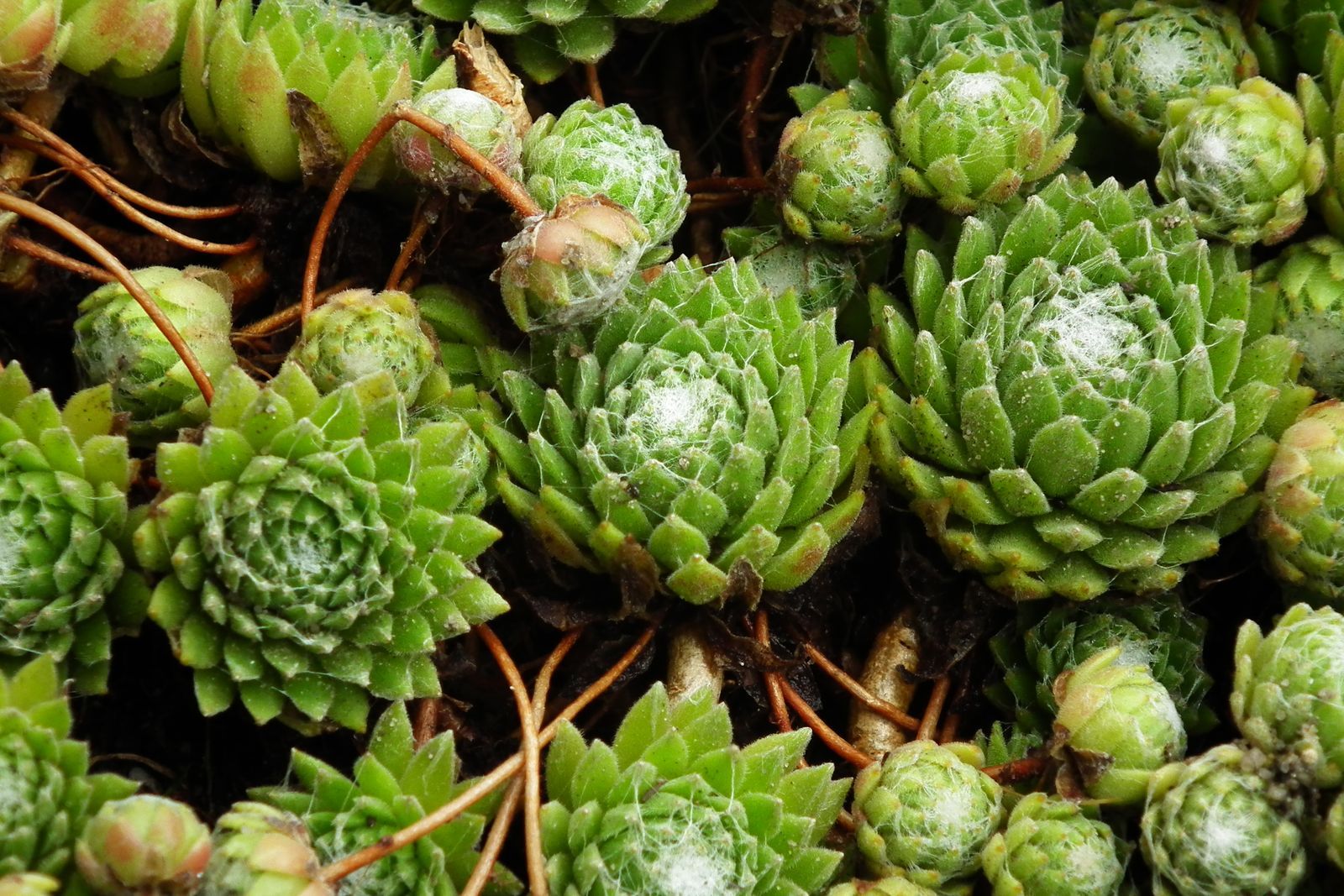
Photo: Teodor Buhl / Pexels
Watering Calculator: The Hens and Chicks Dry Audit
Hens and chicks water only from bone dry, and never into the rosette center. Enter your pot or bed size below to size the rare drink, then read the setting by setting frequency table in this article.
19.9 gallons
For 32 square feet at 1 inch deep. That is about 76 liters, or 10 trips with a standard 2 gallon watering can.
A rain gauge or a straight sided can set in the bed tells you when a sprinkler or soaker hose has actually delivered this depth. Time alone is a guess, because hose pressure varies from house to house.
The conversion is arithmetic, not opinion: one inch over one square foot is 144 cubic inches of water, and a US gallon holds 231 cubic inches, so each square foot at one inch takes 0.62 gallons.
The Complete Dry Rule
Water hens and chicks only when the soil has dried through the full depth of the roots, and confirm it rather than assume it. In a pot, a wooden skewer pushed to the base comes out clean and dry, and the pot feels light, noticeably lighter than its just watered weight. In a bed, a finger or trowel at 2 to 3 inches finds dry, crumbly grit, not cool dampness. When the test says dry, water thoroughly, a real drink that wets the root zone and runs from a pot's drainage hole, because a sprinkle that wets only the surface trains shallow roots and leaves the plant thirsty at depth while the crown sits damp, the worst of both worlds. Then the discipline: no more water until the test says dry again, even if that takes 3 weeks, even if a neighboring plant is on a weekly schedule. Between waterings the rosettes will draw slightly inward and the outer leaves will soften at the tips as the plant spends its stored water; that mild tightening is the system working, not a distress call. The distress calls are different and are covered below, and the first of them is caused by water, not its absence.
| Setting | Dry test | Typical interval in summer | Typical interval in winter |
|---|---|---|---|
| Gritty raised bed or rock garden | Dry at 3 inches | Every 2 to 3 weeks, often rain only | Rain only in most climates |
| Terracotta pot outdoors | Skewer dry at base | Every 1 to 2 weeks | Every 3 to 4 weeks if sheltered |
| Plastic or glazed pot | Skewer dry at base | Every 2 to 3 weeks | Monthly or less |
| Indoor pot | Skewer dry, pot light | Every 2 to 3 weeks | Every 4 to 6 weeks |
| Heavy clay bed | Dry at 3 inches | Rain only, plus drainage fix | Rain only |
Why the Sources Disagree, and Why the Test Wins
The weekly versus monthly argument in the guides is really an argument about soil wearing a calendar's clothes. A weekly interval is correct for a small terracotta pot of gritty mix on a hot patio, where the whole volume can dry in 6 days. A monthly interval is correct for the same plant in a glazed pot indoors in January. Both writers measured their own setting and published the interval as the rule, and a reader in the opposite setting follows the number into rot or desiccation. The transferable rule is the state of the soil, complete dryness, and the setting table above is offered as a set of expectations to check your test against, not as a schedule. If your skewer says dry in 5 days in a heat wave, water; the table's 1 to 2 weeks was written for ordinary summer. If your indoor pot is still damp at 3 weeks in winter, wait; the rosette is holding more than enough. Sempervivum evolved on thin, rocky, mountain soils where rain arrives, drains, and vanishes, and every part of its care is an attempt to reproduce that pattern at pot scale.
Never Water the Rosette
How the water lands matters as much as when. The rosette's spiral is a funnel, and water poured over the top collects in the crown and sits against the stem and the bases of the leaves, where it starts the rot that hollows a plant from the center while the outer leaves still look sound. Water at the soil line, from a spout slipped under the leaves, or bottom water pots by standing them in a tray for 15 to 20 minutes and draining them fully. The rot itself announces late: leaves at the base turn translucent, then mushy, and pull away at a touch, and by the time the center goes soft the plant is usually lost, though sound outer leaves and offsets can be lifted, dried for a day, and restarted on grit. Outdoor plants take rain on the crown without asking permission, and they survive it because wind, sun, and grit dry the crown within hours; the indoor and greenhouse cases are the dangerous ones, where crown water sits in still air for days. Good air movement is therefore a watering tool for this plant, and a colony that dries fast can be watered a little more often than one in a stagnant corner.
The Chick Exception: Babies Drink Differently
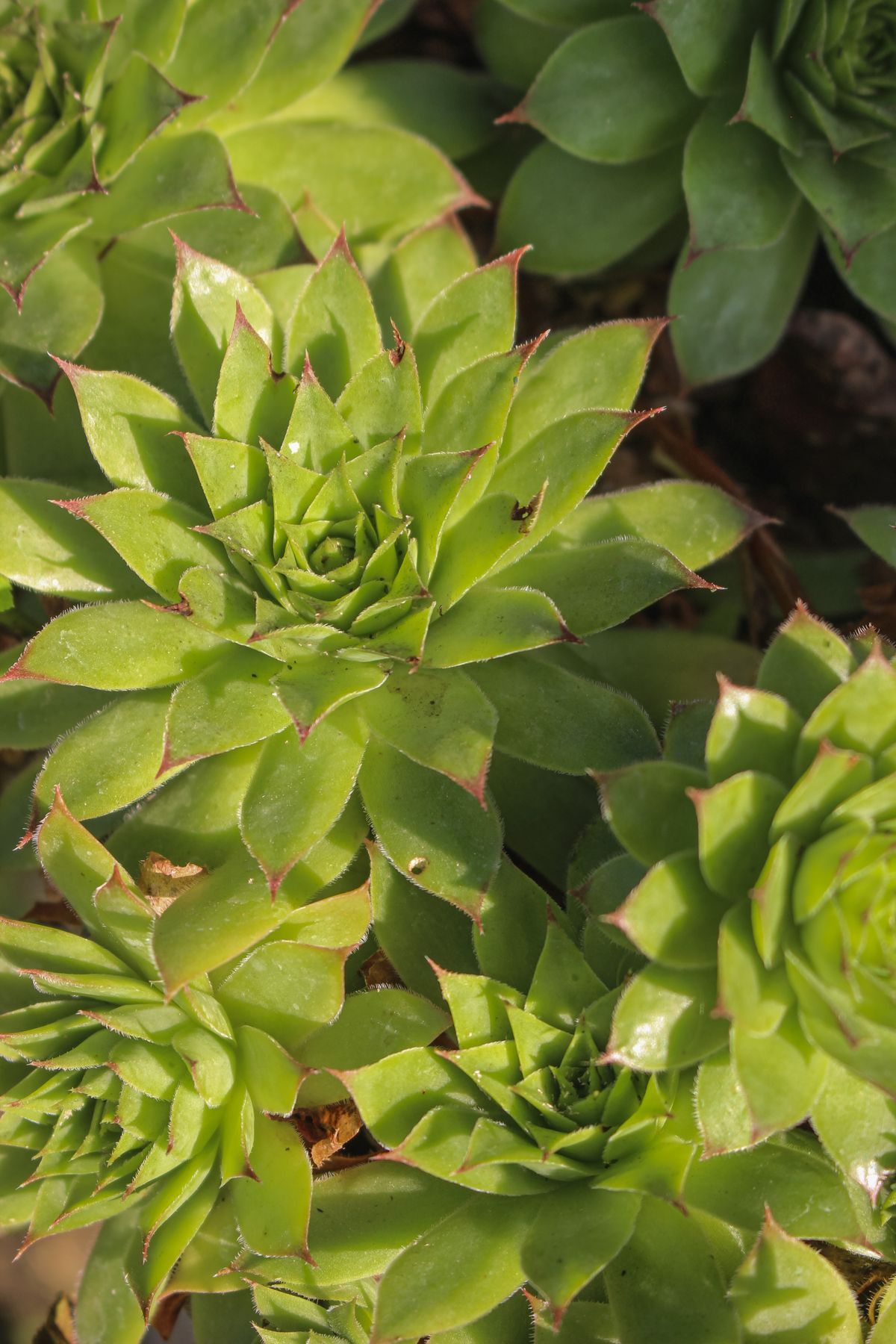
Everything above describes an established rosette with roots and a full tank of leaves. A chick, the offset rosette the mother plant sends out on a stolon, starts life with few or no roots of its own, and a chick separated and set on soil to root cannot wait out a 3 week dry cycle, because it has no reserves and no way to drink deeply. Newly set offsets get the beginner's rhythm: settle them on gritty mix, water lightly to dampen the soil under the rosette, and repeat every few days, keeping the soil barely moist, never wet, until roots take hold and the chick resists a gentle tug. That transition takes 2 to 4 weeks in the growing season, after which the chick graduates to the adult rule of complete dryness between drinks. Chicks left attached to the mother need no separate care at all, since the stolon is a supply line; the exception applies only to offsets you have cut and planted yourself. The same logic covers fresh transplants of mature rosettes, whose roots are always damaged in the move: one settling drink, a week of barely moist soil while roots repair, then the full dry rule for life.
Cold, Wet Winters: The Season That Actually Kills
Sempervivum are alpine plants, hardy far below any winter temperature a North American or European garden delivers, and cold alone essentially never kills them. The winter killer is the combination, cold plus wet soil that never dries, which rots the crown and roots in the dark months while the plant cannot grow away from the damage. The defenses are structural, set at planting: the grittiest soil you have, a raised position, a rock garden, a wall top, a slope, anywhere water leaves quickly, and no winter mulch mounded over the crowns, since mulch holds moisture exactly where the plant least wants it. In containers, the winter move is under an eave or against a wall where rain is partly shed, with watering stopped almost entirely; a dormant rosette in cold soil needs a drink perhaps monthly, and only when the mix is dry and a mild day allows it to drain. Gardeners in rainy winter climates who lose hens and chicks every year and replant every spring are not fighting their winters; they are fighting their drainage, and a bag of grit worked into the bed ends the cycle. The site's succulent watering page covers the wider family this plant belongs to, and hens and chicks are its hardiest, driest drinking members.
Troubleshooting the Colony: A Quick Field Guide
A colony that is thriving spreads, offsets freely, and holds tight, colorful rosettes; most problems announce themselves in the rosette before they spread. A rosette that opens flat and stretches upward, with spaces appearing between the leaves, is short of light, not water, and no watering change fixes it; move the colony brighter in stages. Leaves that wrinkle and pull inward during a hot, dry spell while the soil is bone dry are the plant spending reserves on schedule, and a single deep drink restores them within days. Blackening at the stem base, by contrast, is rot already inside, and the response is surgery, not water: unpot, cut away every soft black part to clean tissue, let the cuts dry for several days, and restart the sound pieces on fresh grit. Ants farming the crowns usually signal aphids in the offsets, and a sharp jet of water, the one case where water goes over the rosettes on purpose, followed by fast drying in moving air, clears both. Read this way, the colony needs attention monthly and water rarely, which is the correct ratio for the plant.
Related guides
These related guides round out the picture:
- How Often to Water an Aloe Vera Plant: Dry All the Way Down
- How Often to Water Kokedama: The Soak, the Weight Test, and No Pot at All
- How Often to Water String of Pearls: Read the Pearls, Not the Calendar
Frequently Asked Questions
How often should I water hens and chicks?
When the soil has dried completely, through the full root depth, and not before. In practice that is every 1 to 2 weeks for a terracotta pot outdoors in summer, every 2 to 3 weeks for a gritty bed, and monthly or less indoors in winter. Test with a skewer or by pot weight rather than counting days, because the interval belongs to your soil and pot, not to a calendar.
Why are the bottom leaves of my hens and chicks mushy?
That is rot from wet soil or water sitting in the rosette, and it is the plant's main killer. Base leaves turn translucent and pull away easily. Lift any sound offsets, let them dry a day, and restart them on gritty mix. Water at the soil line, never over the crown, and only when the soil is dry all the way through.
Can hens and chicks survive winter outdoors?
Yes, easily, if the soil drains. Sempervivum are alpine plants, hardy in deep cold; what kills them in winter is cold combined with wet soil that never dries. Plant them raised and gritty, keep mulch off the crowns, and move pots under an eave where rain is shed. Cold alone is not the enemy.
How do I water baby chicks that I just planted?
Differently from adults. A separated offset has no roots and no reserves, so keep its soil barely moist, a light watering every few days, until it roots and resists a gentle tug, usually 2 to 4 weeks. Then switch it to the adult rule: complete dryness between thorough drinks.
Do hens and chicks need fertilizer?
Almost never, and lean soil suits them. Rich feeding and rich soil push soft, fast growth that rots easily and loses the tight rosette form. If a colony in a pot looks exhausted after years in the same mix, one half strength feeding in spring is plenty; in beds, skip it entirely.
Photo credits: Teodor Buhl (Pexels); Ebru DOĞAN (Pexels). Photos are served from this site; follow the credit to the library page for the original.