Every other houseplant on this site is watered by some version of the same rhythm: soak, then let the soil dry to a point, then soak again. The venus fly trap breaks the pattern completely, and advice that imports the houseplant rhythm, water when the top inch is dry, let it dry between drinks, is the fastest respectable sounding way to kill one. A flytrap is a bog plant from a small patch of North Carolina wetlands. Its roots expect to sit in waterlogged, mineral free soil permanently, and its whole watering system follows from that one fact: the pot stands in a tray of pure water, the soil stays wet, and the grower's job is managing the tray and the water quality, not timing drinks. Get those two things right and the plant is easy for years. Get the water wrong, and it dies slowly while being watered perfectly on time.
Home / Gardening Basics for Beginners
How Often to Water a Venus Fly Trap: Pure Water and the Tray Method
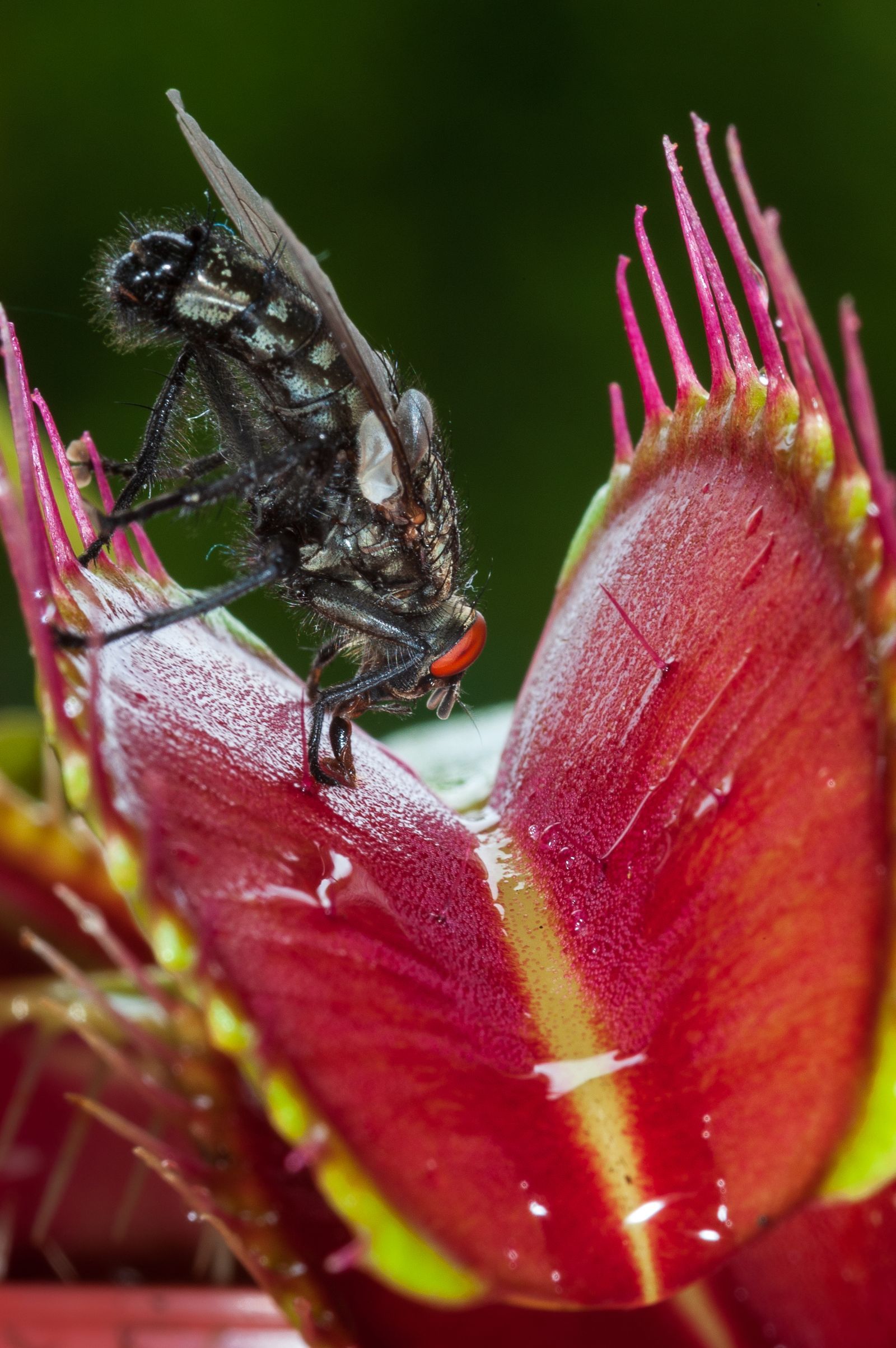
Photo: Rolf Härdi / Pexels
Watering Calculator: The Venus Fly Trap Tray Audit
A venus fly trap stands in pure water: keep a half inch to an inch of distilled or rain water in the tray through the growing season and never let the soil dry. Enter your pot size below, then read the water quality rules in this article.
19.9 gallons
For 32 square feet at 1 inch deep. That is about 76 liters, or 10 trips with a standard 2 gallon watering can.
A rain gauge or a straight sided can set in the bed tells you when a sprinkler or soaker hose has actually delivered this depth. Time alone is a guess, because hose pressure varies from house to house.
The conversion is arithmetic, not opinion: one inch over one square foot is 144 cubic inches of water, and a US gallon holds 231 cubic inches, so each square foot at one inch takes 0.62 gallons.
The Tray Method: The Whole System
Set the pot in a saucer or tray and keep a half inch to an inch of water standing in it through the growing season, spring to fall. The soil, a mix of sphagnum peat and perlite or pure long fiber sphagnum, wicks the water up and stays evenly wet, which is the condition the roots are built for. Refill the tray when it empties; in a hot bright spot that can be every 2 to 3 days, in a cool room weekly, and the plant does not care which, because the soil moisture barely changes between refills. The pot itself should be plastic or glazed ceramic, never bare terracotta, which leaches minerals into the soil and wicks water away from it, and it should be taller than the tray depth by a good margin, since the plant wants wet feet, not a submerged crown. The calculator above is here for the site's standard pot math, but for this one plant, read the tray rule instead: depth of water in the saucer is the number that matters.
| Season | Tray depth | Soil state | Notes |
|---|---|---|---|
| Spring growth | 1/2 to 1 inch | Constantly wet | Flower stalk usually cut to save the plant's strength |
| Summer peak | 1/2 to 1 inch, refill often | Constantly wet | Outdoor plants in full sun drink the tray dry fastest |
| Fall slowdown | About 1/2 inch | Wet, cooling | Growth slows as days shorten |
| Winter dormancy | No standing tray; keep just moist | Damp, never wet and warm | Cool rest at 35 to 45 F for about 3 months |
The Water Itself: Under 50 PPM or Nothing
The flytrap's native bog is rinsed by rain and fed by almost nothing else, and the plant has no tolerance for dissolved minerals, salts, or fertilizer of any kind. The working standard is water under 50 parts per million total dissolved solids. Distilled water passes. Rainwater passes. Reverse osmosis water passes. Most tap water fails, running 100 to 400 ppm or higher, and bottled spring water usually fails too, since the minerals are the selling point. The poisoning is slow and cumulative: minerals build in the peat with every watering, and the plant declines over weeks to months, traps blackening and new growth shrinking, on a schedule that looks like faithful care. A cheap TDS meter settles any argument about a water source in seconds. Water softened through a household softener is the worst option of all, because the softener swaps calcium for sodium, and sodium is poison to this plant at very low levels. Never fertilize a flytrap, in the water or on the soil, at any strength. The traps are the fertilizer system; the plant eats insects because its soil gives it nothing, and feeding the soil breaks the arrangement from both ends.
The Black Trap Diagnosis: Mineral Burn or Old Age
Traps blacken, and the diagnosis decides whether you act. Every individual trap has a working life of a few weeks to a few months and a limited number of closures, roughly three to five meals, after which it blackens and dies back while the plant replaces it from the center. That is housekeeping, not disease, and a plant losing an old trap while pushing new ones is healthy. Mineral burn looks different: blackening strikes across the plant at once, including young traps, new growth comes in small, distorted, or not at all, and the decline tracks with a history of tap water. The rescue is a flush and a fresh start: run pure water through the pot from the top, repeatedly, to wash the accumulated salts down and out, then set the plant back on the tray with pure water only. A plant too far gone for flushing gets repotted into fresh peat and perlite that has itself been rinsed with pure water, because new mix watered once with tap water starts the clock again. If your water has been pure all along and traps blacken one at a time from the outside in, do nothing at all. You are watching the plant's normal turnover.
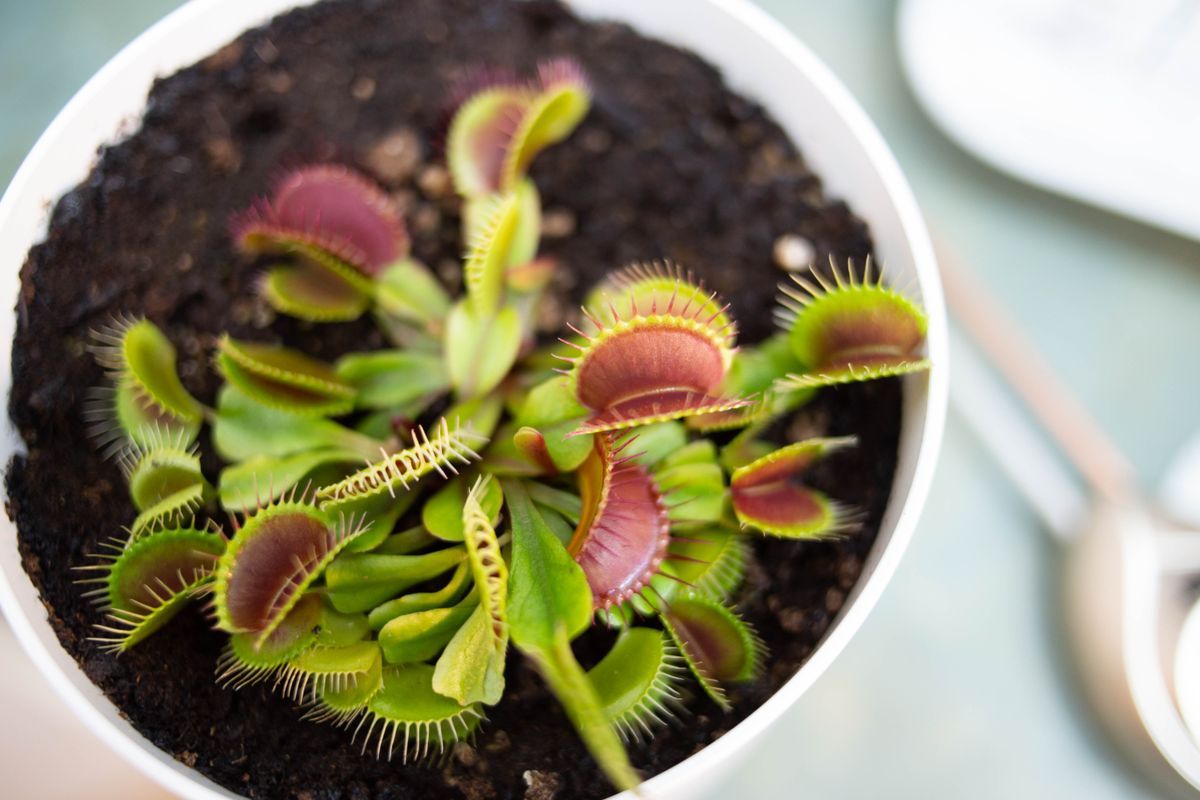
Soil and Pot Rules That Make the Water Work
The watering system only functions in the right soil, and the rules are prohibitions. The mix is sphagnum peat and perlite, roughly half and half, or long fiber sphagnum alone. It must contain no fertilizer, no added lime, and no wetting agents with nutrient charges, which rules out most enriched potting soils and the peat products sold pre fertilized for general use; read the bag, because "feeds for three months" on the label disqualifies it completely. Garden soil, compost, and regular potting mix are all fatal over time. The pot, as above, is plastic or glazed, with drainage holes, sitting in its tray. Repotting, every year or two in late winter, is done into fresh rinsed mix, and the plant is watered in with pure water and put straight back on the tray. These rules look fussy written out; in practice they reduce the plant's care to refilling a saucer and cutting the flower stalk, which is why growers who follow them describe the flytrap as one of their easiest plants.
Dormancy: The Winter Rest and Its Water
A flytrap that is kept warm, wet, and lit all winter, year after year, weakens and dies, because the plant requires a cold dormant rest. For about 3 months in winter it wants short days, temperatures roughly between 35 and 45 F, and a slower life: many traps die back, growth nearly stops, and the plant sits as a small tight rosette at the soil surface. Watering changes with it. Take the pot off the standing tray and keep the soil just moist, checking weekly and adding pure water when the surface begins to dry, because a dormant plant in saturated warm soil rots, and a dormant plant dried hard in a heated room desiccates. An unheated garage, a cold frame, or the refrigerator in a bag with damp sphagnum are the standard winter quarters for potted plants in warm climates. In spring, return the pot to full sun and the tray, and the plant wakes and grows its summer traps. Skipping dormancy to keep the plant pretty in winter is borrowing against next year; the plant always collects.
Sun, Food, and the Two Mistakes That Are Not Water
Two care errors ride along with watering questions and are worth settling here. The first is light: a flytrap wants full, direct sun, more than almost any houseplant, outdoors or on the brightest sill available, supplemented with strong grow lights indoors. A plant in dim light grows weak, floppy, and pale no matter how perfect its water is, and its owner usually blames the watering. The second is feeding by hand: never put fertilizer, meat, or hamburger in the traps. An outdoor plant catches everything it needs. An indoor plant can be offered a live or freshly killed insect no larger than a third of the trap, a few times through the summer, and needs nothing at all in winter. Triggering traps for entertainment costs the plant energy each time one closes on nothing, and a trap spent is a trap closer to its blackening date. Leave them alone and watch the plant work when work arrives.
Sourcing the Plant and the First Month
Most flytraps are sold half starved in small pots under hardware store lights, often in a plastic dome, and the first month decides whether the rescue takes. Take the dome off; the plant does not need humidity coddling and the dome cooks it in sun. Put it straight onto the tray system with pure water, in the strongest light you have, moving it into full sun over a week if it came from a dim shelf, because leaves raised in low light scorch before the plant hardens. Expect the existing traps to blacken and be replaced; the plant rebuilds its trap set for its new conditions over the first month, and the new growth, compact, red inside the traps, growing flat to the soil in strong light, is the report card. Resist the urge to feed it during this month. It is spending its reserves on roots and new traps, and a plant that is catching nothing at all while it establishes is doing exactly what a wild plant does after a hard season.
Related guides
These guides sit closest to this one on the garden path:
- How Often to Water Calathea: The Wrung Sponge Rule, the Water Quality Verdict, and the Humidity Floor
- How Often to Water Bromeliads: The Cup Rule, the Weekly Flush, and the Soil as the Second Drink
- How Often to Water Ferns: One Rule for Three Moisture Classes
- How Often to Water String of Pearls: Read the Pearls, Not the Calendar
Frequently Asked Questions
How often do you water a venus fly trap?
You keep it standing in water rather than watering it on a schedule. Through the growing season the pot sits in a tray with a half inch to an inch of pure water in it, refilled whenever it empties, which is every 2 to 3 days in hot sun and about weekly in a cool room. The soil should never dry out. In winter dormancy, take it off the tray and keep the soil just moist.
Can I water a venus fly trap with tap water?
Almost always, no. The standard is water under 50 parts per million of dissolved solids, and most tap water runs well above that. Its minerals accumulate in the peat and slowly poison the plant, blackening traps across the whole plant over weeks to months. Use distilled water, rainwater, or reverse osmosis water. Bottled spring water usually fails the test too, and softened water is the worst option, because it carries sodium.
Why are my venus fly trap's traps turning black?
One trap at a time, from the oldest inward, is normal turnover: each trap catches only a few meals before it dies back and is replaced. Blackening across the whole plant at once, with shrinking new growth, is mineral burn from impure water. Flush the pot repeatedly with distilled or rain water from the top, and if the decline continues, repot into fresh rinsed peat and perlite and use pure water only.
Does a venus fly trap need to sit in water all the time?
In the growing season, yes: the tray method, a half inch to an inch of standing pure water, keeps the bog soil at the constant wetness the roots expect. The exception is winter dormancy, about 3 months of cold rest when the pot comes off the tray and the soil is kept just moist. Drying the plant out like an ordinary houseplant, at any season, is the error that kills it.
Should I fertilize my venus fly trap?
Never. Not in the water, not on the soil, not at any dilution. The plant evolved in soil with essentially no nutrients and gets its nitrogen from the insects it catches. Fertilizer burns the roots and leaves and undermines the whole system. An outdoor plant feeds itself; an indoor plant can be given a small live insect a few times in summer and needs nothing in winter.
Photo credits: Rolf Härdi (Pexels); Erik Mclean (Pexels). Photos are served from this site; follow the credit to the library page for the original.