Emerald Green is the default privacy hedge in American suburbs, and it has a first year mortality problem that is almost never about the plant. The hedge goes in as a row of handsome green cones, gets watered on the lawn's schedule, and by August half the row is bronzing from the inside out. The cause sits below the mulch: a nursery root ball made of bark and peat dries out far faster than the garden soil around it, so the bed can test moist at 4 inches while the roots themselves are dust dry. Watering this cultivar is therefore two different jobs. The first year is an establishment program, deep water 2 to 3 times a week aimed at the root ball. Every year after is a drought program, roughly an inch a week in dry spells, with one deep soak before freeze up. This page runs both programs, the test that tells them apart, and the wet edge where good intentions rot the roots.
Home / Gardening Basics for Beginners
How Often to Water Emerald Green Arborvitae: The Establishment Year Decides
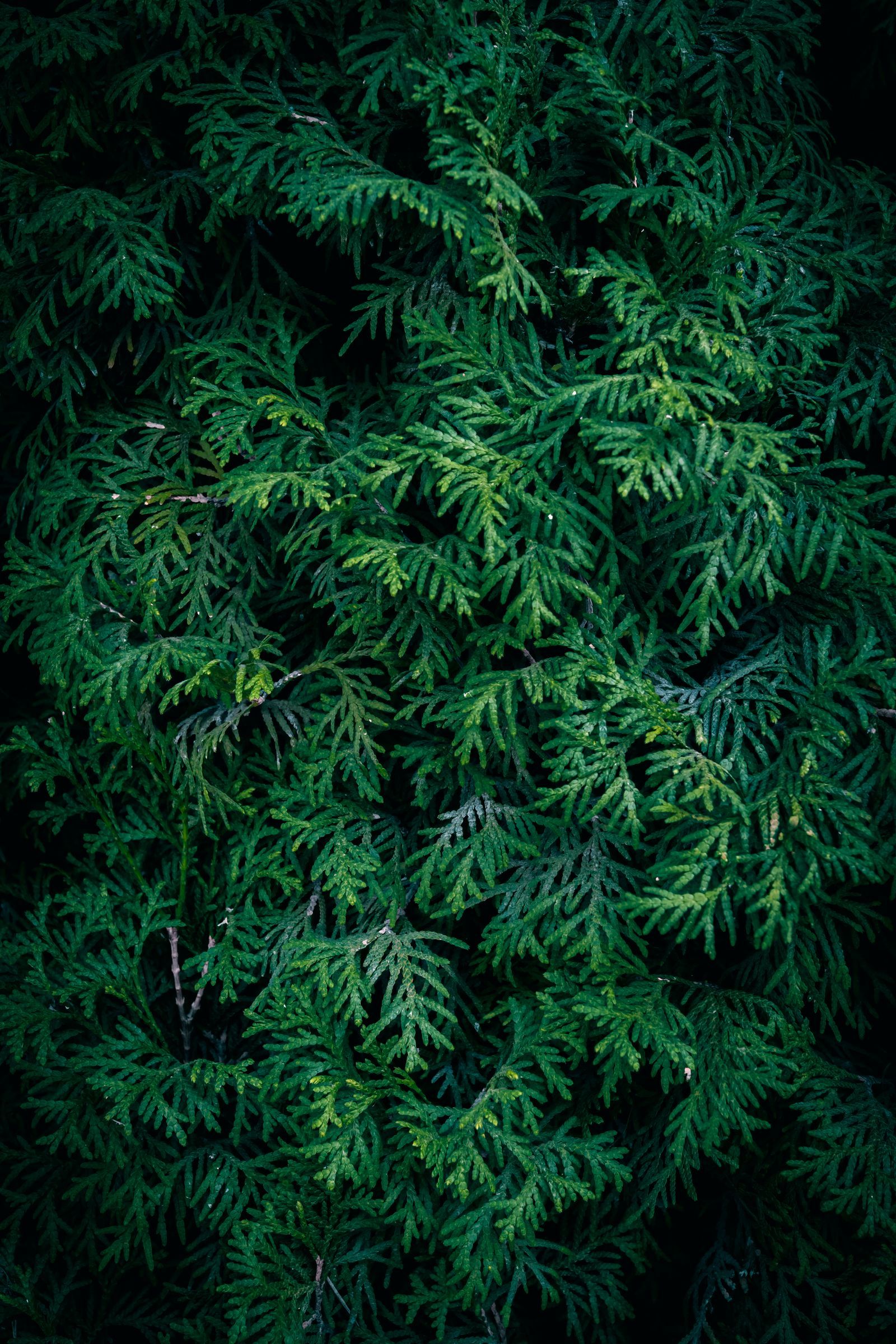
Photo: Wyxina Tresse / Pexels
Watering Calculator: The Emerald Green Establishment Audit
A first season Emerald Green drinks deeply 2 to 3 times a week whenever the top 1 to 2 inches of the root ball dry, then tapers to about an inch a week in dry spells. Enter your hedge length or bed size below to size the soak, then read the root ball check in this article.
19.9 gallons
For 32 square feet at 1 inch deep. That is about 76 liters, or 10 trips with a standard 2 gallon watering can.
A rain gauge or a straight sided can set in the bed tells you when a sprinkler or soaker hose has actually delivered this depth. Time alone is a guess, because hose pressure varies from house to house.
The conversion is arithmetic, not opinion: one inch over one square foot is 144 cubic inches of water, and a US gallon holds 231 cubic inches, so each square foot at one inch takes 0.62 gallons.
The First Season: Water the Root Ball, Not the Bed
A newly planted Emerald Green, whether it came from a pot or balled and burlapped, lives entirely inside its nursery root ball for the first months, because the roots have not yet grown out into your soil. That ball is mostly bark and peat, and it sheds water to the heavier soil around it, which is why the standard advice to check the soil near the plant fails so completely on this shrub. Test the ball itself: push a finger or a wooden dowel 3 to 4 inches into the root ball, at the trunk, and water when the ball feels dry at that depth. In most soils and most summer weather, that test calls for a deep soak 2 to 3 times a week through the first growing season, each soak slow enough to wet the whole ball, which for a 5 to 6 foot plant means several gallons delivered at a trickle, a soaker hose looped at the base, or a hose on low for 20 to 30 minutes per plant. Taper in fall as growth stops and rain returns, but do not stop at the first cool week; the ball keeps drying on warm autumn days. Plants installed in fall get the same program at a slower rhythm, roughly weekly checks, because cool soil dries slowly but a dry ball in November is still a dead hedge by March.
| Stage | Test | Rhythm in dry weather | Amount per plant |
|---|---|---|---|
| First 2 weeks | Root ball at 3 to 4 inches | Every 2 to 3 days | Slow soak, whole ball wet |
| First season | Root ball at 3 to 4 inches | 2 to 3 times a week | 3 to 5 gallons for a 5 to 6 foot plant |
| Second season | Soil at 4 to 6 inches | Weekly in dry spells | About 1 inch over the root zone |
| Established | Soil at 6 inches | In drought only | About 1 inch, deep and slow |
| Before freeze | Soil at 6 inches | One deep soak | Wet the full root zone |
Established Hedges: The Inch a Week Drought Rule
From the second year on, Emerald Green's roots have colonized the surrounding soil and the plant becomes what the catalogs promise, a tough, low water hedge, with one condition: it is shallow rooted for its size and it cannot chase water deep the way an oak can. The established bench is about an inch of water a week across the root zone during dry spells, delivered in one deep watering rather than daily sprinkles, because shallow frequent watering trains the roots to the surface where heat finds them. Rain counts toward the inch; a week with an inch of rain needs nothing from you. The check is the soil at 6 inches under the mulch: cool and slightly moist means wait, dry and crumbly means water. Mulch is the hedge's quiet partner here, 2 to 3 inches of shredded bark over the root zone, kept a few inches off the trunks, cutting evaporation enough to stretch every watering by days. The winter entry in the table is not optional in cold climates. Evergreens keep losing water through their foliage on sunny, windy winter days while frozen soil gives nothing back, and the defense is a deep soak in late fall after leaf drop and before the ground freezes, so the plant enters winter with a full reservoir. Hedges that brown on the windward side in March were usually thirsty in November.
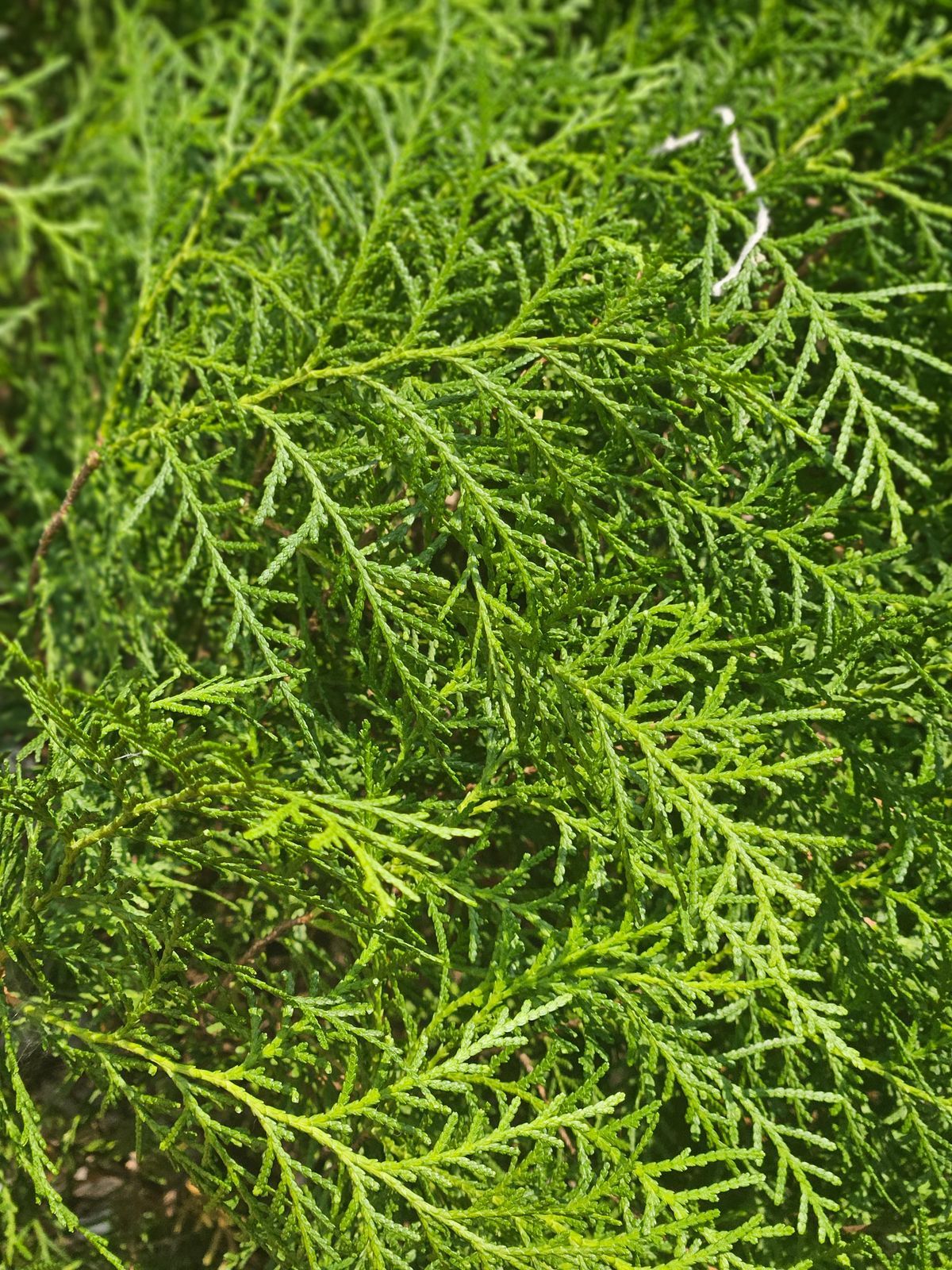
The Wet Edge: Root Rot Wears the Same Brown
Everything above argues for generous water, and the correction matters just as much: Emerald Green planted in heavy clay or a low spot dies of wet feet wearing the exact same brown as drought. The roots of this cultivar rot readily in soil that stays saturated, and the foliage signal, bronzing that starts low and inside, is nearly identical to the drought signal, which is why the dowel test at depth is the diagnosis and not the leaf color. If the ball and the soil below it are wet and the plant is still browning, stop watering entirely, check that the planting hole is not a bathtub of clay holding a puddle, and improve surface drainage away from the row. The planting depth error compounds the wet problem: a hedge set with the root flare buried sits in the wettest layer permanently, and no watering schedule fixes a depth problem. Set the flare at or slightly above grade, water the ball on the establishment rhythm, and let the soil between waterings drain toward merely moist. The two failures bookend the bench, dry ball in year one and wet hole in any year, and the test at depth separates them in ten seconds.
Reading the Hedge: What the Foliage Reports
Emerald Green talks in three signals, and each maps to a different fix. Interior browning in late summer on a first year plant, with the outer shell still green, is the classic dry ball report, because the plant sheds its oldest, innermost foliage first when water runs short; the answer is the establishment soak, resumed and held. Bronzing that spreads on the windward side over winter is desiccation, the November soak missed, and the fix is next fall's watering plus patience, since the browned sprays do not green up again and the plant must grow past them. Sudden browning of whole branches scattered through an established hedge, with wet soil at depth, points down instead of up, to roots rotting in saturated ground, and the answer is drainage and a watering stop, not a drink. One more signal deserves respect because it is not water at all: a hedge that yellows evenly in a dry winter may simply be showing the cultivar's normal winter bronze, a cold color that greens back in spring without any intervention. Water is the lever for two of the four signals, which is why the dowel goes in before the hose comes out. The site's japanese maple watering page teaches the same read the roots first discipline for another shallow rooted ornamental, and the two checks share a Saturday round well.
Delivery: How the Water Reaches the Ball
The establishment program fails as often on delivery as on frequency. Overhead sprinklers, the lawn's system, are the worst tool for a new hedge: they wet the foliage and the mulch surface, lose half their water to a hot wind, and leave the root ball, sheltered under the plant's own canopy, the driest spot in the bed. The fixes are all slow and low. A soaker hose snaked along the row at the trunk line, run for 1 to 2 hours, puts water exactly where the balls sit and nowhere else. Drip emitters, one or two per plant at the ball, do the same job on a timer. Hand watering works for short rows if it is done at a trickle, a hose laid at each base for 20 to 30 minutes, rather than a standing blast that runs off the mulch. Whatever the tool, verify the result once with the dowel an hour after watering: the ball should be wet at 4 inches, and if it is not, the delivery, not the schedule, is the broken part. Water in the morning when you can. Evening watering leaves the dense foliage wet overnight, and while Emerald Green is not as disease prone as some evergreens, a hedge that dries fast is a hedge with fewer fungal complaints.
The First Year, Season by Season
The rhythm inside the establishment year has a shape worth knowing, because the two ends of the year are where hedges are lost. Spring plantings get the gentle start: cool soil, regular rain, and a ball that dries in days rather than hours, so the 2 to 3 times a week check often resolves to once a week of actual watering, with the dowel making the call. Summer is the test: heat pulls the ball dry between waterings, the interior browning signal appears within a fortnight of neglect, and the soaker schedule runs at full tempo, which is why a hedge planted in June needs an owner home in July. Fall is the deceptive season, because the top growth stops and the plant looks finished while the roots are doing their most important growing of the year in warm soil; keep checking the ball into November and taper only as the soil itself stays cool and moist. Winter closes the year with the deep pre-freeze soak from the table, the single most valuable watering an established hedge gets in cold climates. A hedge that clears its first winter green has roots out into real soil, and from the second spring it graduates to the drought rule, an inch a week only when the rain fails.
Related guides
Keep reading with these guides from the same corner of the garden:
- How Often to Water a Bamboo Plant: The Container Rhythm, the Establishment Year, and the Leaf Curl Signal
- Best Plants for Beginners: Decide Where It Lives First
Frequently Asked Questions
How often should I water a newly planted Emerald Green arborvitae?
Two to 3 times a week through the first growing season, deeply enough to wet the whole root ball each time. Test the ball itself at 3 to 4 inches deep with a finger or dowel, because the surrounding bed soil stays moist long after the bark based ball has dried out, and that gap is what kills new hedges.
How much water does an established Emerald Green need?
About an inch a week over the root zone during dry spells, given in one deep watering. Rain counts toward the inch. Check the soil at 6 inches under the mulch: cool and slightly moist means wait, dry and crumbly means water. In a normal rainfall week an established hedge needs nothing.
Should I water arborvitae in winter?
Water once deeply in late fall, after the deciduous leaves drop and before the ground freezes, so the hedge enters winter with wet roots. Evergreen foliage keeps losing water on sunny, windy winter days while frozen soil cannot replace it, and the March browning called winter burn is usually November thirst.
Why is my Emerald Green turning brown in the middle?
On a young plant, interior browning is the dry root ball signal: the plant sheds its oldest inner foliage first when water runs short. On any plant in wet soil, the same brown can mean root rot. Push a dowel into the ball and the soil below before acting; dry means soak, wet means stop watering and fix drainage.
Can you overwater Emerald Green arborvitae?
Yes, and in clay soil it is as common as underwatering. Roots sitting in saturated soil rot, and the foliage browns almost exactly as it does in drought. Plant with the root flare at or just above grade, mulch 2 to 3 inches deep kept off the trunks, and let the soil drain toward moist between deep waterings.
Photo credits: Wyxina Tresse (Pexels); Anmol Agarwal (Pexels). Photos are served from this site; follow the credit to the library page for the original.