A bouquet is a harvest of stems that are still alive and drinking, and vase care is the discipline of keeping their plumbing open. Cut flowers fail for mechanical reasons: bacteria multiply in the water and plug the stem ends, an air bubble locks the stem at the first cut, the flower's stored food runs out, and ethylene gas from ripening fruit ages the blooms early. The florist routine addresses each failure in turn, and none of its steps is folklore. Wash the vase so the bacterial count starts near zero. Strip the leaves that would rot underwater. Recut the stems so the conducting tissue is fresh and open. Feed the water so it nourishes the flower and suppresses bacteria at once. Place the vase where heat and ethylene cannot reach it. Gardeners who cut from their own beds meet the same physics as anyone unwrapping a florist bouquet, and the site's cutting-garden spacing pages, like the gomphrena cutting bench, exist to feed this one. This page gives the routine in order, the refresh cycle that extends it, and the honest evidence on the home remedies everyone asks about.
Home / Flowers and Houseplants
How to Care for Flowers in a Vase: The Florist Routine, Myths Tested
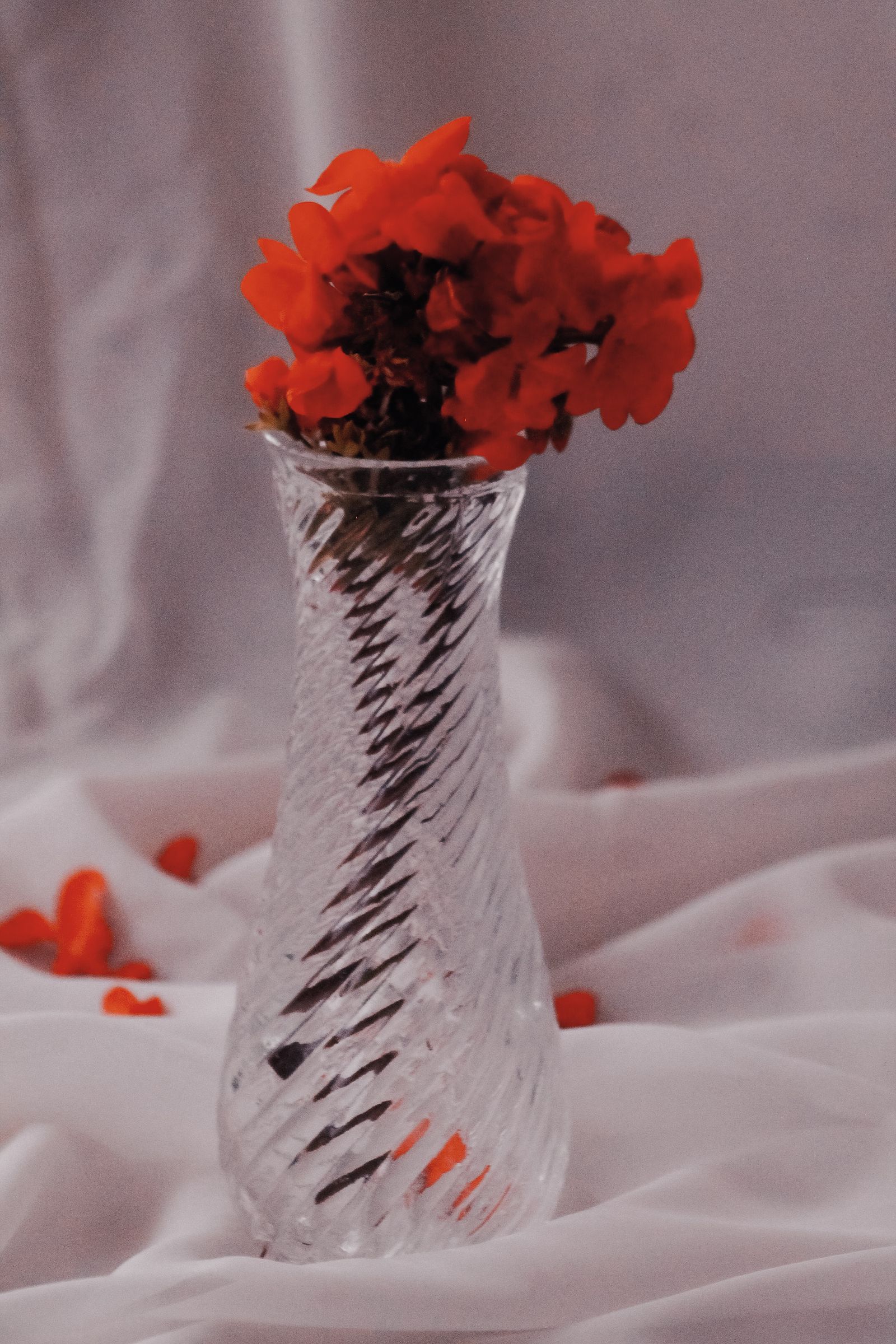
Photo: Rahime Gül / Pexels
Vase Care Checklist
Check off each step as you finish it. Your progress stays on this page.
0 of 8 complete
0% done
Day 0: The Setup Sequence
Work in order, because the steps protect each other. First, wash the vase with hot soapy water or a dilute bleach rinse and rinse it clean; a vase that looks clean can carry a bacterial film from the last bouquet, and bacteria are the leading cause of short vase life. Second, prepare the water: fill with warm water, around 100 to 110 F, because warm water moves up a stem faster than cold and helps clear air locks, and dissolve the flower food packet completely. The packet is a three-part tool, sugar to feed the flower, an acidifier to help water uptake and discourage bacteria, and a biocide to suppress them, and no kitchen substitute matches all three. Third, strip every leaf that would sit below the waterline; submerged leaves rot within a day and seed the water with the bacteria you just washed the vase to avoid. Fourth, recut each stem, removing about an inch at a sharp angle with a knife or clean pruners, ideally under water or immediately before placing the stem in the vase, because a stem end exposed to air draws a bubble into its plumbing. The angled cut increases the open surface and keeps the stem end off the vase bottom. Fifth, arrange loosely enough that air moves between stems, and place the finished vase in a cool spot out of direct sun, away from heat vents, and away from the fruit bowl, whose ripening fruit emits the ethylene that ages flowers overnight.
| Step | Action | Failure it prevents |
|---|---|---|
| 1 | Wash vase, hot soapy water or dilute bleach | Bacterial plug at the stem end |
| 2 | Warm water 100 to 110 F plus flower food | Starvation, slow uptake, bacteria |
| 3 | Strip leaves below the waterline | Rot seeding the water |
| 4 | Recut 1 inch at an angle, into the water fast | Air lock in the stem |
| 5 | Cool spot, no sun, no vents, no fruit bowl | Heat stress and ethylene aging |
The Refresh Routine: Days 2 to the End
Vase care after day 0 is a short cycle repeated until the flowers finish. Every 1 to 2 days, or the moment the water turns cloudy, change the water completely, not a top-up: pour it out, rinse the vase if slime has started, refill with warm water and a fresh measure of flower food if you have it, and recut a half inch from each stem at the same angle before the stems go back in. The recut matters more than the water, because the stem ends seal and plug progressively, and a fresh cut reopens the only door the flower drinks through. Remove any leaf or petal that has fallen into the water at the same visit, and pull individual flowers as they finish, since a dying bloom is an ethylene source sitting inside the arrangement. Between refreshes, top up the level daily in warm rooms, because a vase that drinks itself dry leaves the stem ends in air, which undoes the day-0 cut in an afternoon. The whole routine takes five minutes every other day and is the entire difference between a bouquet that lasts 4 days and the same bouquet lasting 10.
Vase Life by Flower
Species set the ceiling that care then approaches. The table gives honest ranges for common flowers handled with the full routine; the same flowers in a dirty vase on a sunny sill land at half these numbers or less.
| Flower | Typical vase life with care | Notes |
|---|---|---|
| Tulip | About 5 days | Keeps growing in the vase; stems bend toward light |
| Daffodil | 4 to 6 days | Sap harms other flowers; condition alone first |
| Rose | 5 to 7 days | Bent neck usually means a plugged stem; recut deeper |
| Lily | 7 to 10 days | Remove anthers to stop pollen staining |
| Sunflower | 7 to 10 days | Heavy drinker; check the water level daily |
| Carnation | 10 to 14 days | The trial overachiever; see the myths section |
| Dahlia | 4 to 6 days | Cut in the cool of morning from the garden |
| Chrysanthemum | Up to 3 weeks | The longevity champion of the common flowers |
| Gomphrena and strawflower | Weeks, and dries in place | The everlasting end of the scale |
The Myths, as the Evidence Reads
Every vase routine attracts home remedies, and the honest summary of the trial evidence, including the work Clemson Extension reports, is that most of them do nothing measurable and a few do harm. The tested list: a penny in the vase, aspirin, vinegar, sugar alone, soda, and bleach drops were compared against plain water and against commercial flower food across common flowers, and for most flowers the home treatments showed no significant vase-life difference from water alone, while flower food, the sugar-acidifier-biocide combination, performed as designed. The exception that keeps the folklore alive is carnations, which gained 2 to 4 days from some home treatments in the trials, because carnations are unusually responsive to the sugar and antibacterial pieces separately. Pennies fail on their own terms: the copper in a modern penny is a surface film over zinc, and whatever antimicrobial effect copper has does not arrive at the dose a coin delivers. Vinegar acidifies but feeds bacteria nothing useful and starves the flower. The verdict is not that your grandmother was wrong; it is that she was keeping carnations. Use the packet when you have one, use clean water, warm, changed on the refresh cycle when you do not, and spend the effort the myths ask for on the recut instead, which the evidence supports completely.
Cutting from Your Own Garden
Garden-cut flowers take one extra step at the front and repay it. Cut in the cool of early morning, when stems are fully hydrated, carry a bucket of warm water into the garden and put each stem into it within seconds of cutting, because the air-lock clock starts at the cut. Back indoors, run the standard day-0 sequence, with the recut removing the inch that dried or locked during the walk. Two species need special handling. Daffodils exude a sap that shortens the life of other flowers in shared water; condition them alone in their own water for several hours before arranging them with anything else. Milky-stemmed flowers, poppies and euphorbia among them, seal their stems if the cut end is briefly seared or stood in hot water, which keeps the sap in and the stem drinking. Everything else from the cutting garden, zinnias, dahlias, cosmos, gomphrena, follows the standard routine, and the gardener who cuts at dawn, conditions in warm water, and refreshes on the cycle will outlast the florist bouquet bought the same day, because the stem traveled ten steps instead of ten days.
Related guides
Readers working on this usually need these next:
- How to Care for Coneflowers: The Year Round Routine for a Prairie Plant
- How to Care for Irises After Flowering: The Post Bloom Routine
Frequently Asked Questions
What is the single most important thing for keeping flowers alive in a vase?
Clean water in a clean vase, refreshed on a cycle. Bacteria plugging the stem ends kill more bouquets than every other cause combined. Wash the vase before arranging, strip leaves below the waterline, change the water every 1 to 2 days or when it clouds, and recut the stems at each change.
Should I use the flower food packet or a home remedy?
Use the packet. It combines sugar, an acidifier, and a biocide in the right proportions. Trial evidence reported by Clemson found home remedies, pennies, vinegar, aspirin, sugar alone, made no significant difference for most flowers versus plain water, though carnations gained 2 to 4 days from some treatments. Pennies and vinegar in particular do not work as advertised.
Why warm water instead of cold?
Warm water, around 100 to 110 F, moves up the stem faster and helps clear air from the conducting tissue when the stem is first placed. It is a day-0 and refresh-day tool; the vase itself should then sit in a cool spot, because cool air slows the flower's aging even though warm water speeds its drinking.
How often should I change the water and recut the stems?
Every 1 to 2 days, or immediately when the water clouds. Change the water completely rather than topping up, rinse the vase if it feels slimy, and recut about half an inch at an angle at every change. Top up the level daily between changes so stem ends never sit in air.
Why did my roses droop at the neck within two days?
Bent neck is a plugged stem: bacteria or an air lock stopped the water below the flower. Recut the stem deeper, removing an inch or more under water, and stand it in fresh warm water with food; roses caught early usually rehydrate and lift within hours. Prevention is the day-0 routine, especially the washed vase and the quick recut.
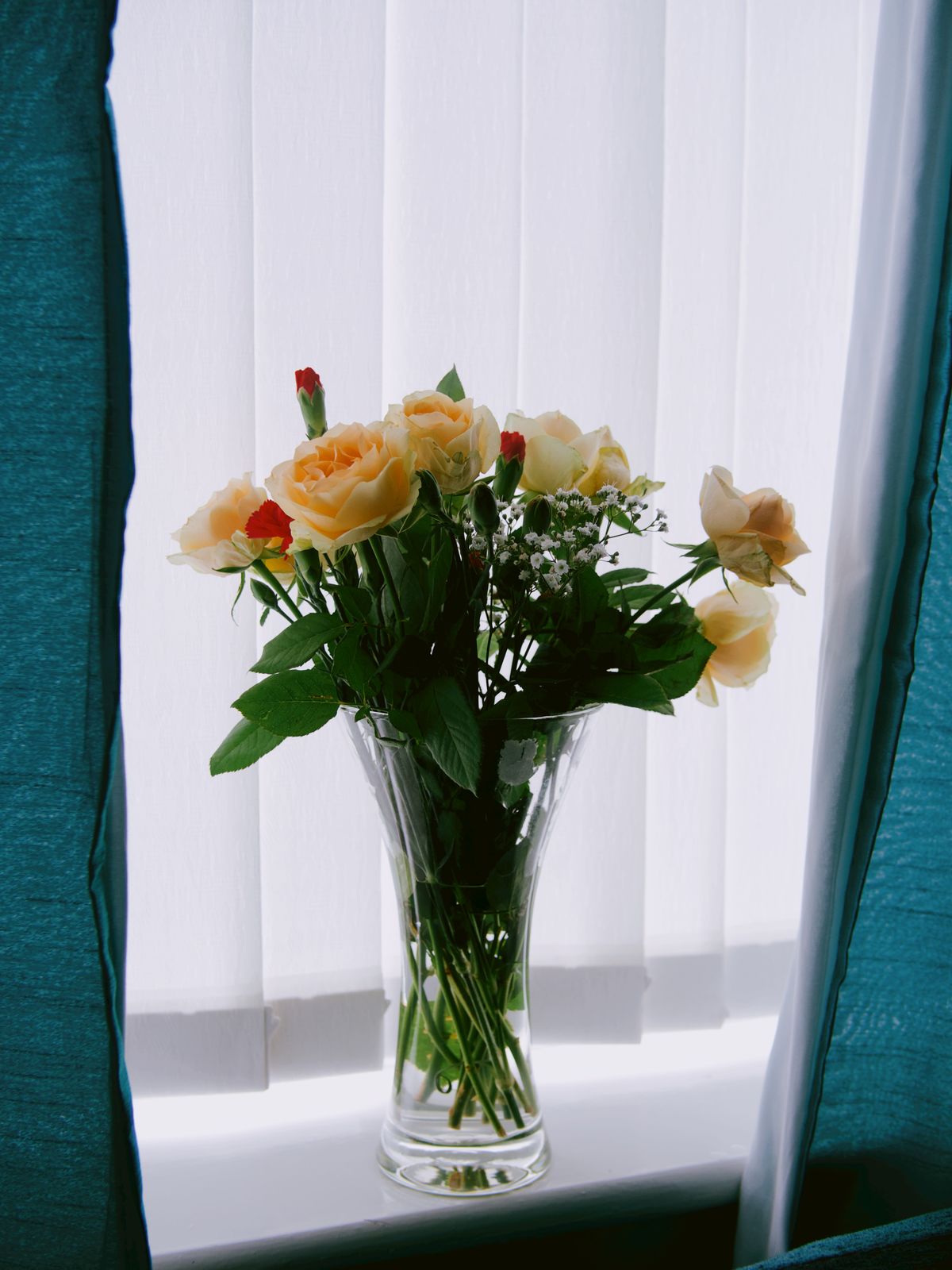
Photo credits: Rahime Gül (Pexels); Lisa Fotios (Pexels). Photos are served from this site; follow the credit to the library page for the original.