The zinnia is the easiest flower in the summer garden, and in a pot it becomes a slightly different plant with one non negotiable rule: it wants the pot to itself. A single zinnia in a correctly sized container grows into a full, floriferous plant that blooms from early summer to frost; three seedlings crowded into the same pot grow into a mildewed thicket of stunted stems fighting for a root zone none of them can win. The one plant rule, a 5 gallon container for a full size type, is the whole foundation. On top of it sit four habits: sow or transplant once, into the final pot, because zinnias resent root disturbance; water when the top inch dries, at the base; feed lightly and liquidly every two to four weeks; and deadhead without mercy. The bed grown version of this flower is covered in the zinnia care guide; this page is the container discipline, where the pot, not the bed, sets every number.
Home / Flowers and Houseplants
How to Care for Zinnias in Pots: One Plant, One Pot, Full Sun
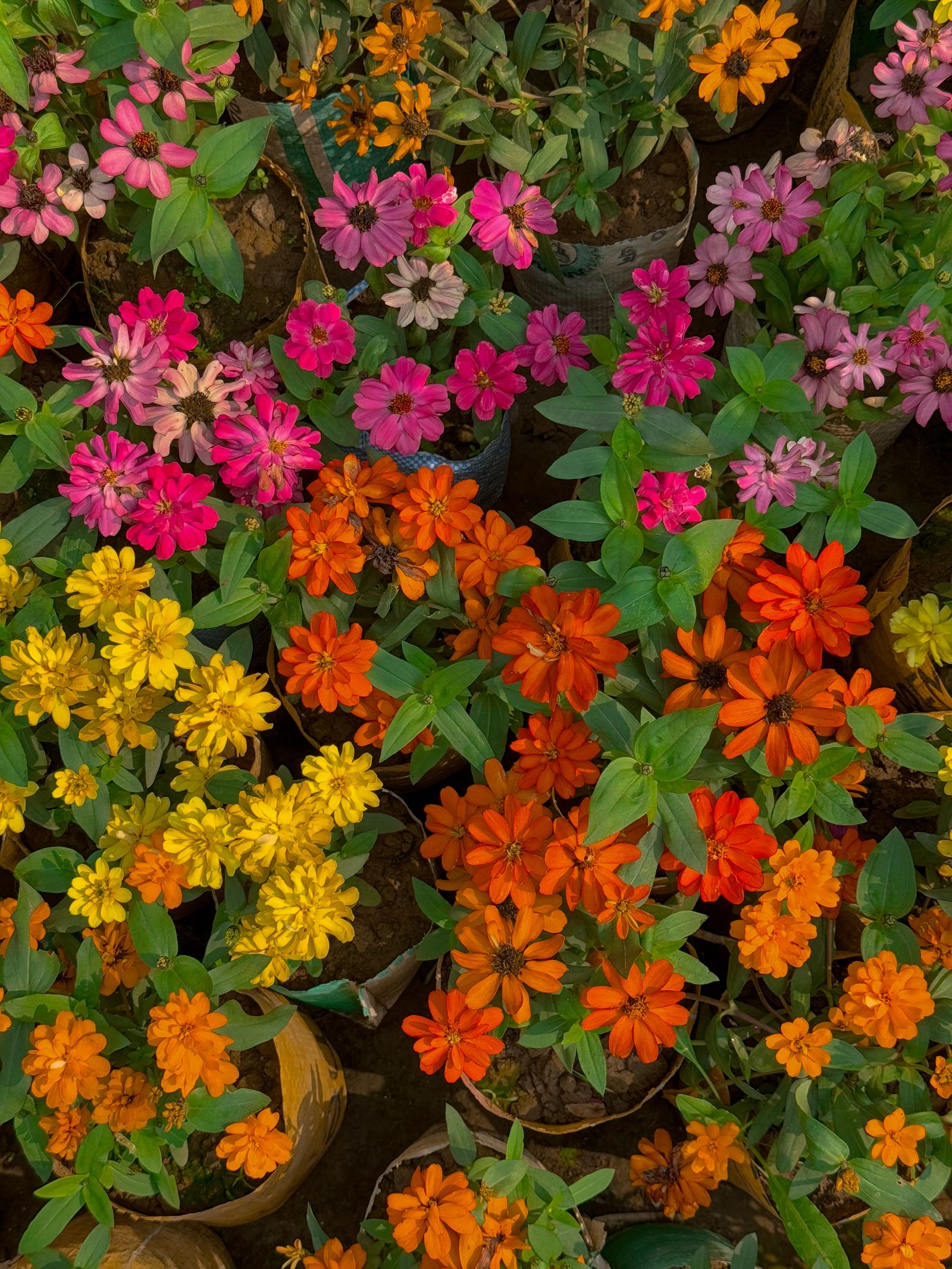
Photo: Nihad Khan / Pexels
Zinnias in Pots Checklist
Check off each step as you finish it. Your progress stays on this page.
0 of 8 complete
0% done
Pot Size by Type
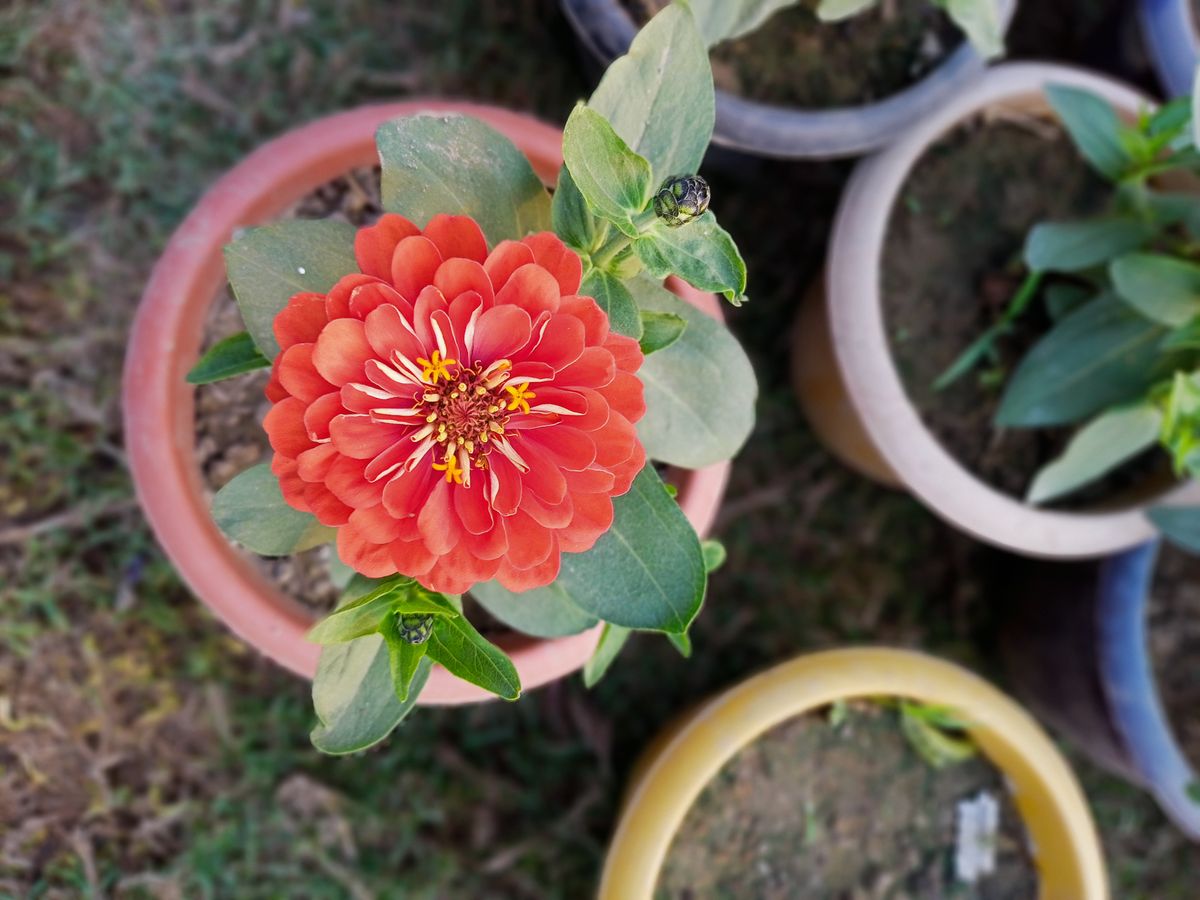
Zinnia types span 8 inch dwarfs and 4 foot cutting giants, and the pot must be bought for the plant's mature size, not its seedling. Dwarf types, the Thumbelina and short Profusion class plants, finish in an 8 to 10 inch pot. Compact bedding types, the Zahara and mid size hybrids, want 10 to 12 inches. Tall cutting zinnias, the Benary's Giant and State Fair class, need a 12 to 16 inch deep pot, and depth matters as much as width because the plant builds a real taprooted system and a top heavy canopy that a shallow pot cannot anchor in a thunderstorm. In volume terms the tall plant's honest home is the 5 gallon container, one plant, full stop. Every pot needs drainage holes that actually drain, and a light, open potting mix rather than garden soil, which compacts in containers and holds the wet that zinnias hate at their roots. Terracotta dries fastest and suits wet climates; plastic holds moisture longer and suits hot, dry ones where the watering test below starts failing daily.
| Type | Pot size | Plants per pot | Notes |
|---|---|---|---|
| Dwarf types | 8 to 10 inches | One | Thumbelina, short Profusion class |
| Compact bedding types | 10 to 12 inches | One | Zahara and mid hybrids |
| Tall cutting types | 12 to 16 inches deep, about 5 gallons | One | Benary's Giant, State Fair class |
| Window box or trough | 8 inches deep minimum | One per 10 to 12 inches of length | The one plant rule in a row |
| Hanging basket | Not recommended | n/a | Zinnias are upright; baskets starve them |
Sow in the Final Pot
Zinnias are famous for resenting transplanting, and the potted version of the rule is to handle the plant exactly once. Best practice is to sow seed directly in the final pot, two or three seeds at a quarter inch deep, once the weather is warm, since zinnia seed germinates fast in warm soil and the seedlings outgrow any head start a windowsill provides within weeks. Thin to the single strongest seedling, snipping the others at the soil line rather than pulling them, so the keeper's roots are never disturbed. If you buy a nursery plant instead, choose the smallest, stockiest one in the pack, transplant it once into its final pot at the same depth it grew, water it in, and never repot it again. A rootbound six pack zinnia that has been flowering in its cell is already stunted and rarely becomes a good pot plant; the seed route, covered for beds in the guide to growing zinnias from seed, is genuinely the better start for containers too.
Watering: The Top Inch Test
Potted zinnias dry faster than any bed, and the test is the top inch: when the mix is dry an inch down, water thoroughly at the base until it runs from the drainage holes, then empty the saucer. In high summer a 5 gallon pot in full sun commonly needs that drink every day or two, and a smaller pot in a heat wave needs it daily without apology. The two disciplines that protect the plant are aim and timing. Aim at the soil, never over the foliage, because zinnias are powdery mildew's favorite summer host and wet leaves in a pot's still air are the invitation. Time it in the morning, so any splashed leaf dries in an hour. A plant that wilts at noon and recovers by evening in a heat wave is coping; a plant still wilted at dawn is behind, and the answer is a bigger drink that morning and, if it repeats, the admission that the pot is too small for the site, to be fixed next season rather than by twice daily watering heroics.
Feeding: Light, Liquid, Regular
Container zinnias cannot forage, and an unfed pot plant runs down by midsummer: growth slows, leaves pale, flower size shrinks. The rhythm that works is a balanced liquid fertilizer at half strength every two to four weeks through the season, or a slow release fertilizer mixed in at planting plus a liquid rescue when the plant visibly pales. Half strength matters: full strength feeding in a pot pushes soft, lush growth that mildew loves and that flops in rain, and it salts the mix of a plant watered daily. The zinnia that blooms longest is fed like an athlete on a schedule, lightly and often, not feasted monthly. Stop feeding by early fall in cold climates so the plant finishes its season on its own calendar; in frost free areas, potted zinnias can bloom on, and the feed rhythm continues as long as flowers are wanted.
Deadheading, Mildew, and the End of Season
Deadheading is the difference between a potted zinnia that blooms for four months and one that quits in six weeks. Cut each spent flower back to the next set of leaves or side buds, not just the head, because the plant branches from that cut and the next flush comes on the new growth. A weekly pass with snips keeps a pot in continuous bloom. Powdery mildew will still arrive by late summer on most plants; on a single plant in its own pot, with air around it and water kept off the leaves, it stays a cosmetic dusting on the lower foliage for weeks, and the plant blooms through it. The crowded pot is where mildew defoliates, which is the one plant rule returning for its curtain call. At season's end, let a favorite plant set seed: zinnia seed from an open pollinated type sows next year's pots for free, collected from a fully dried head, while hybrid seed will vary from the parent. Frost ends the plant overnight whenever it comes; there is no overwintering a zinnia, and the pot system's last job is to be emptied, scrubbed, and ready for spring.
Troubleshooting the Pot: A Field Guide to the Usual Failures
A potted zinnia that disappoints is almost always reporting one of five correctable errors, and reading them apart saves the season. Leggy, pale plants with long gaps between leaves are short of light: a pot that gets less than six hours of direct sun stretches for it, and the fix is a move, not a feed, though a stretched plant can be cut back by a third to force bushier regrowth once it stands in real sun. Small flowers on a healthy plant usually mean the feed rhythm lapsed or the type is a small flowered one doing its job; check the variety before blaming the care. Buds that form and then blast, drying unopened in a heat wave, are a water rhythm problem, the pot swinging from dry to soaked, and the cure is the top inch test applied daily rather than heroic soaking after the fact. A plant that wilts every afternoon in a correctly sized pot in brutal heat may simply need its pot shaded while its head stays in sun, a board or a companion pot against the sunward side, because roots in a black pot against a hot wall cook at temperatures the foliage tolerates easily. And the sudden collapse of a whole plant, stem soft at the base in a wet pot, is a root and stem rot that does not reverse; pull the plant, discard the mix, scrub the pot, and start again with drainage and the watering test honored, ideally with one of the seed heads you saved. Every one of these failures is a system error, not a plant error, which is the encouraging news: the next pot, run on the rules, behaves.
Related guides
Keep reading with these guides from the same corner of the garden:
- Annual Flowers for Full Sun: The Heat Roster for Beds That Bake
- Container Gardening for Beginners: The Full Method, From Pot to Harvest
Frequently Asked Questions
How many zinnias can I plant in one pot?
One. A single zinnia per pot, sized to the type, is the rule the whole system stands on: dwarfs in 8 to 10 inch pots, compact types at 10 to 12 inches, tall cutting types in 12 to 16 inch deep pots of about 5 gallons. Crowded pots stunt, flop, and mildew.
How often do potted zinnias need water?
When the top inch of mix has dried, water thoroughly at the base until it drains. In summer sun that is every day or two for a 5 gallon pot and daily for smaller pots in heat. Keep water off the foliage and water in the morning, because zinnias are prime powdery mildew hosts.
Should I start zinnias in small pots and pot them up?
No. Zinnias resent root disturbance, so sow seed directly in the final pot once the weather is warm, thin to one seedling by snipping, or transplant a small nursery plant exactly once. Seed sown in place catches up to transplants within weeks in warm soil.
How often should I fertilize zinnias in pots?
A balanced liquid feed at half strength every two to four weeks through the blooming season, or slow release at planting with a liquid rescue when leaves pale. Full strength feeding pushes soft, mildew prone growth and salts a daily watered mix.
Why is my potted zinnia covered in white powder?
Powdery mildew, the zinnia's signature disease, worst on crowded plants with wet foliage in still air. One plant per pot, water at the base in the morning, and air around the pot keep it cosmetic. A defoliating case almost always traces to a shared pot or overhead watering.
Photo credits: Nihad Khan (Pexels); Ayaz Mahmud (Pexels). Photos are served from this site; follow the credit to the library page for the original.