If a gardener can grow only one flower from seed, the marigold is the kindest choice: the seed is large enough to handle one by one, it germinates in under a week in warm conditions, the seedlings are sturdy and unmistakable, and the plants forgive handling that would kill fussier flowers. University of Minnesota Extension's marigold guidance gives the working figures this page is built on: sow a quarter inch deep, expect germination in 5 to 8 days at soil temperatures of 70 to 75 degrees, and start seed indoors 6 to 8 weeks before the last frost if you want flowers at the start of summer rather than the middle. This page runs the seed system for both types, French and African, the indoor start and the direct sow, and the transplant out. The established plant's season of care is in How to Care for Marigolds: The Deadheading Cadence and the Restraint Rules; this page owns everything up to a flowering plant in the ground.
Home / Flowers and Houseplants
How to Grow Marigolds From Seeds: A Quarter Inch Deep
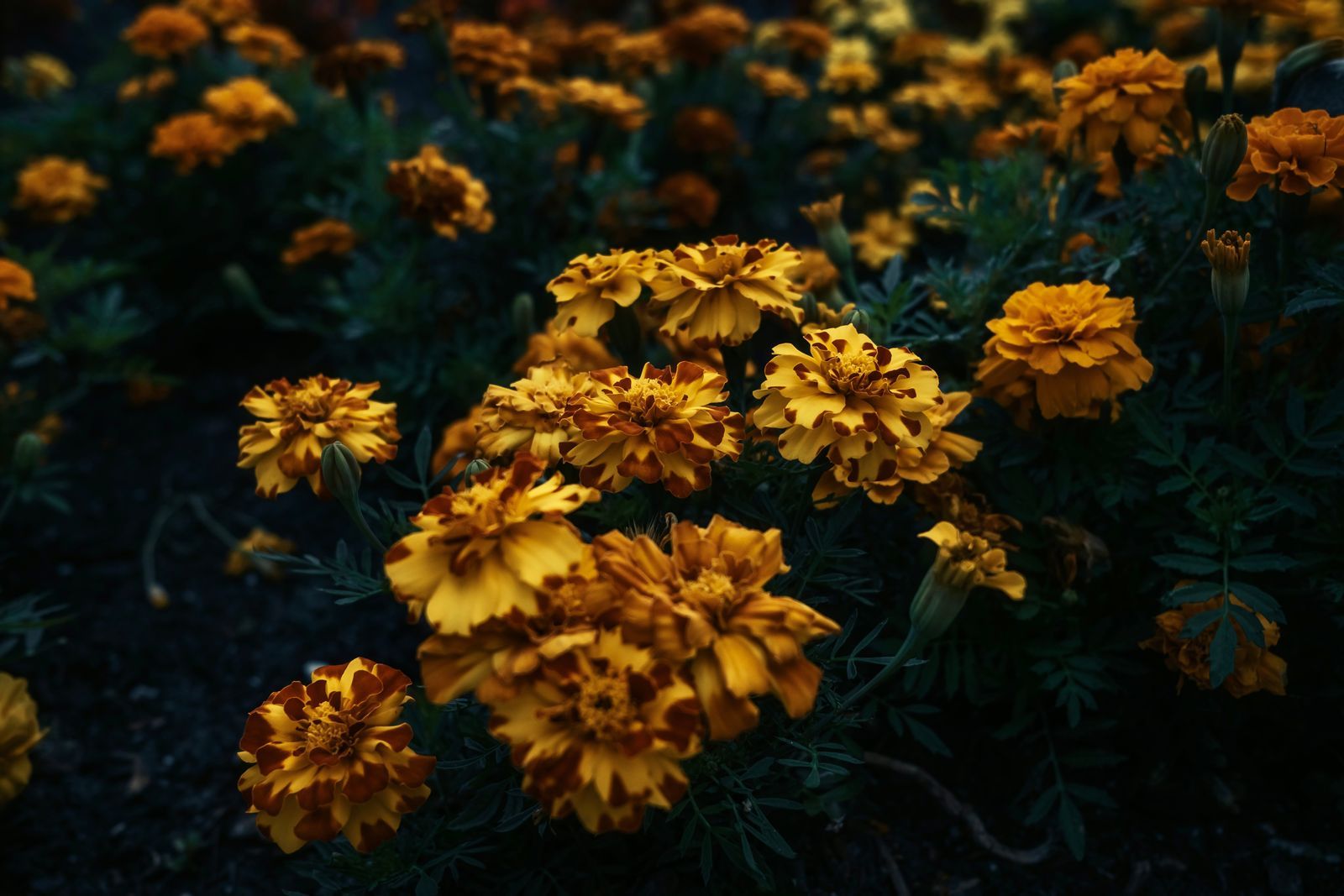
Photo: Connor Scott McManus / Pexels
Marigolds from Seed Checklist
Check off each step as you finish it. Your progress stays on this page.
0 of 8 complete
0% done
The Checklist in Brief
The tracker above runs the job: pick the type by the size of the job, French for edging and pots, African for height and cutting; start indoors 6 to 8 weeks before the last frost, or direct sow after it; sow a quarter inch deep and keep the mix evenly moist; give the seedlings strong light the day they emerge; harden the plants off over a week; and set them out only when nights are reliably mild, because marigolds are a warm season flower and a cold snap after planting checks them hard. The steps are forgiving in every respect except the last: cold is this crop's one unforgiving fact.
French and African: Two Plants, One Method
| Trait | French marigold | African marigold |
|---|---|---|
| Height | 6 to 12 inches | 12 to 36 inches |
| Flower size | 1 to 2 inches, many | 3 to 5 inches, fewer and larger |
| Time to flower from seed | About 8 weeks | About 10 to 12 weeks |
| Best jobs | Edging, pots, vegetable garden borders | Back of border, cutting, bold masses |
| Spacing in the ground | 8 to 10 inches | 12 to 18 inches |
The sowing method is identical; the calendar is not. African types take a month longer to reach flower, so the gardener who wants tall marigolds blooming in June starts them at the early end of the indoor window, while French types sown at the same moment will be flowering in their pots before the weather lets them out. For a mixed planting, start the Africans first and the French three weeks later, and the two come into flower together in the ground, which is the outcome the seed packets' shared instructions never mention.
The Indoor Start
Sow in a fine, moist seed mix, a quarter inch deep, and keep the tray warm: 70 to 75 degrees is the germination sweet spot, and a tray on top of the refrigerator or a heat mat hits it in most houses. At that temperature the seedlings emerge in 5 to 8 days; in a cool room at 60 degrees the same seed can take two weeks and come up unevenly, which is a temperature report, not a seed failure. The moment the first seedlings show, the tray goes into the strongest light available, a sunny sill supplemented or a light fixture hung a few inches above the plants, because marigold seedlings in weak light stretch within days into the leggy, floppy form that never quite thickens up later. Grow them on at ordinary room temperature, water from the bottom or gently from above, and pot them on into individual cells or small pots when they have two sets of true leaves, handling them by a leaf rather than the stem. Seedlings are sturdy but not immortal, and a stem crushed between fingers at transplant is the one handling injury they do not forgive.

The Direct Sow, and When It Beats the Tray
After the last frost, when the soil has warmed, marigold seed sown straight into the bed a quarter inch deep germinates in the same 5 to 8 days and grows without a check, and by midsummer a direct sown French marigold is indistinguishable from its tray started cousin. The direct sow is the better method wherever the season is long enough, and it is the only method that scales: a gardener edging a vegetable garden with a hundred marigolds is not starting a hundred pots. Its one requirement is the warmth rule. Seed sown into cold wet soil before the weather settles rots in the ground, and the gardener concludes the seed was bad. Sow after frost, into soil that feels warm to the wrist, keep the bed evenly moist until the seedlings are up, and thin or transplant the extras to the final spacing, 8 to 10 inches for French, 12 to 18 for African, while they are small. Marigolds transplant so willingly that the thinnings are a bonus crop for filling gaps and pots.
Hardening Off and Planting Out
Indoor raised plants go out through a week of hardening: an hour of shade the first day, building to full days of sun and nights outside by the end of the week, because a seedling moved straight from a light fixture to a June afternoon scorches and checks, whatever the calendar says about frost. Plant out in the evening or on a cloudy day, at the same depth the plant grew in its pot, never deeper, water in well, and mulch once the soil is warm, keeping the mulch an inch from the stems. Space at the type's figure from the table, and resist the bedding pack instinct to crowd them at half spacing for instant effect: marigolds in humid weather mildew and rot at the base in crowded plantings, and the plant bought for pest duty around vegetables does that duty with its scent and its roots in the soil, neither of which improves with crowding. A plant set out correctly in warm soil grows visibly week to week, and flowers arrive on the type's schedule, about 8 weeks from seed for French, 10 to 12 for African.
Saving Seed and the Self Sown Row
Marigolds end the season by making next year's crop. Let the last flowers dry on the plant, collect the heads when they are papery and brown, and pull the slender black seeds from the base of the head; stored dry in an envelope indoors, they keep well for the next spring. Two honest warnings ride with saved seed. Open pollinated types come back true enough for any garden purpose. The fancy hybrids do not: their children revert toward plainer, taller, single flowered forms, which some gardeners honestly prefer and seed companies honestly deplore. And a bed where heads were left standing will self sow, giving you a free row next spring that arrives on the soil's schedule rather than yours, usually a little late and always worth thinning rather than gratitude alone. A gardener who saves seed two years running owns a marigold strain quietly adapting to their own soil and season, which is the oldest bargain in seed growing, and marigolds, easy at every other step, are easy at this one too.
Marigolds in the Vegetable Garden, From Seed
The marigold's second career, as a companion plant in the vegetable garden, is usually planted from bought packs, but the seed grower has the better version of it: enough plants, raised for pennies, to edge every bed and dot every row end without rationing. The companion claims should be stated at their honest strength. French marigolds' roots exude compounds that suppress certain root knot nematodes, a real and documented effect that works when the marigolds are grown densely in the ground the nematodes inhabit, ideally as a cover through a season, rather than as a decorative edging expected to protect tomatoes by proximity. The scent based claims, that marigolds repel various flying pests from the crops beside them, are garden folklore with mixed evidence; the flowers unquestionably feed hoverflies and other beneficial insects whose larvae eat aphids, which is a mechanism with witnesses. Plant them for the nematode ground, the beneficial insects, and the color, sow them in place along the vegetable beds after frost like any other direct sowing, and let the stronger claims go unmade. A seed raised edging, renewed each year from saved seed, costs nothing but the thinning, which is the correct price for a companion planting.
Troubleshooting Germination and Seedlings
The short list of failures, all diagnosable. Nothing comes up: the soil was cold, the seed was old, or the seed was sown too deep and exhausted itself reaching the light; resow at a quarter inch into warm conditions and expect the 5 to 8 day window. Seedlings come up and fall over, pinched at the base: damping off, a fungal collapse of crowded seedlings in wet, still air; sow thinner, ventilate, water from below, and dust the surface with a little dry mix. Seedlings tall and pale: light, again, the most common report in this crop, answered with the strongest light available from emergence day. Seedlings fine indoors, scorched and stalled after planting out: the hardening week was skipped, and the plant will usually recover from the roots if watered, but it has spent two weeks doing so; harden the next batch. Flowers smaller and single on saved seed plants: the hybrid reversion described above, not a failure of method at all, and the decision about it is aesthetic, not horticultural.
Related guides
These guides sit closest to this one on the garden path:
- How to Care for Marigolds: The Deadheading Cadence and the Restraint Rules
- How to Grow Marigolds: The Beginner's Flower That Forgives
- How Often to Water Marigolds: Seedling, Established, and Container Are Three Different Plants
- How to Grow Sunflowers From Seeds: The Taproot Rule
Frequently Asked Questions
How long do marigold seeds take to germinate?
Five to 8 days at the ideal soil temperature of 70 to 75 degrees, per Minnesota Extension guidance, sown a quarter inch deep and kept evenly moist. In a cool room around 60 degrees the same seed may take two weeks and emerge unevenly. Slow marigold germination is almost always a temperature report, not dead seed.
When should I start marigold seeds indoors?
Six to 8 weeks before the last frost, per Minnesota guidance, and split the timing by type: African marigolds take 10 to 12 weeks from seed to flower, so start them at the early end of the window; French types flower in about 8 weeks and can be started three weeks later so both types bloom together after planting out.
Can I sow marigold seeds directly in the garden?
Yes, and in a long season it is the better method: no transplant check, and it scales to the hundred plant edgings a tray never could. Sow a quarter inch deep after the last frost into warmed soil, keep the bed moist until emergence, and thin to 8 to 10 inches for French types, 12 to 18 for African. Seed sown into cold wet soil rots, which is the one failure to avoid.
Why are my marigold seedlings tall and floppy?
Light, almost certainly. Seedlings moved into weak light after emergence stretch within days, and the stretched form never fully thickens. Give the tray the strongest light you have from the day the first seedling shows, with a fixture hung a few inches above the plants if the sill is not enough. A small fan on the seedlings for part of the day also builds sturdier stems.
Do marigolds come back from saved seed?
Open pollinated types come back true enough for any garden, and seed saved two years running begins adapting to your soil and season. Hybrid types do not come true: their seedlings revert toward taller, plainer, single flowered plants. Collect heads when they are dry and papery, store the seed dry indoors, and expect self sown volunteers wherever heads were left standing.
Photo credits: Connor Scott McManus (Pexels); Akshay Patil (Pexels). Photos are served from this site; follow the credit to the library page for the original.