Pavers tempt the raised bed builder because they are uniform, available everywhere, and need no mortar, and the beds built from them fail in predictable ways: walls that lean by the second summer, corners that gap, and a first course that was laid on bare soil and sank unevenly by spring. None of those failures is about the stone. They are about the base and the bond, the two things this build gets right or wrong in its first hour. The system on this page is a dry stacked wall in miniature: a shallow trench, a tamped gravel footing, the first course leveled with genuine care, staggered joints above it, and a height limit that suits the material, about 3 courses, giving a flower bed its ideal 8 to 12 inches of soil depth. The checklist tracker sequences the whole job; the sections below carry the judgment calls, starting with the one that saves the most work: choose the bed's dimensions from the paver's dimensions, not the other way around.
Home / Flowers and Houseplants
How to Build a Raised Flower Bed with Pavers: Dry Stacked, Sized to the Stone
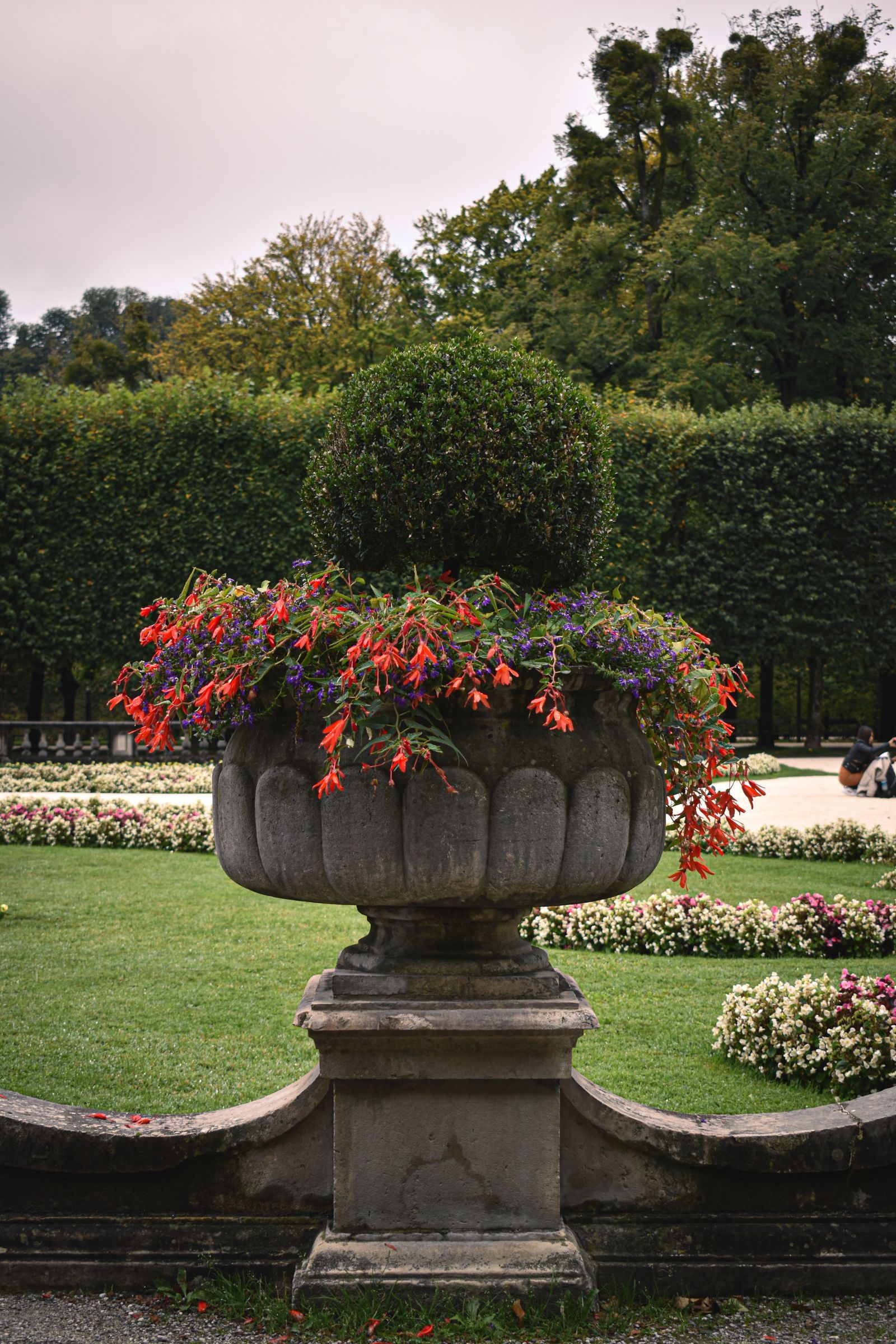
Photo: Louitina Palaiologou / Pexels
Paver Flower Bed Build Checklist
Check off each step as you finish it. Your progress stays on this page.
0 of 8 complete
0% done
Size the Bed to the Paver
Every cut in a paver project costs time, a diamond blade or a splitter rental, and a edge that never looks as clean as a factory face, so the professional trick is to design the cuts away. Measure your paver's length, commonly 8, 12, or 16 inches for wall and edging units, and choose bed dimensions that are whole multiples of it, allowing for the half paver offsets in alternate courses. A bed 8 feet long built from 16 inch pavers is 6 whole units per course with halves only at the ends of alternate courses; the same bed at 7 feet 6 inches is a cutting project on every course. Buy a handful of factory half units if your line offers them, or plan to cut only the handful of halves the staggered bond requires, in one session, at one setup. Corners deserve the same forethought: dry stacked paver corners are made by overlapping the units alternately, one course running long on the front wall, the next on the side wall, which consumes a predictable fraction of a unit per corner per course and should be counted into the order. Order 10 percent extra regardless; a cracked unit discovered mid wall with no spare is how projects stall for a week.
The Trench and the First Course
Dig the wall's trench 2 to 3 inches deep and a few inches wider than the paver, following the bed's outline, and strip every root and stone from it. Into the trench goes a layer of crushed gravel or paver base, about 2 inches, tamped hard, with a plate tamper if you have one and a hand tamper and patience if you do not, because this footing is the wall's entire foundation and dry stacked stone forgives nothing beneath it. Set the first course into the trench so that roughly half its height is buried; a buried first course is what keeps the wall from kicking out at the base when the soil inside it freezes, thaws, and pushes. Level this course obsessively, front to back and along its length, with a long level and a mallet, shimming with coarse sand or screenings, never with soil, which compresses. Check the corners for square with the 3 4 5 triangle or by measuring the diagonals until they match. Every course above this one inherits its errors at full size, which is why experienced builders spend a third of the project's time on the course nobody will ever see.
Stagger, Cap, and the Three Course Limit
Lay the second course so every joint falls at the middle of a paver below, the half offset running bond that turns a stack of stones into a wall. A joint stacked directly over a joint is a hinge, and a wall of hinges leans as a series of separate columns instead of standing as one structure. Tap each unit down and back against its neighbors with the mallet as you go, and check the wall's face with a straightedge every course; dry stacked work can be adjusted freely until the soil goes in, and not at all afterward. Three courses is the working limit for a simple dry stack of standard pavers without pins, adhesive, or a batter, and it happens to give the flower bed exactly what it wants: with typical 3 to 4 inch units, a buried half course plus 3 above ground yields a wall holding 8 to 12 inches of soil, the depth range in which annuals and most perennials thrive and which the site's general raised flower bed guide recommends. Cap the wall with a course of pavers laid flat as a coping, or with proper cap units, overhanging a half inch on each side; the cap sheds water off the wall's face, locks the top course visually, and gives the gardener a clean edge to kneel against and to run the mower along. Landscape block adhesive on the cap course only is a reasonable belt and braces step where children will climb or a slope pushes.
Fill, Drainage, and Planting
Fill the bed in lifts, soil mix a few inches at a time, watering each lift to settle it, because a bed filled dry and planted immediately sinks 2 inches in the first month and takes the planting down with it. A flower bed mix wants drainage with body: roughly two thirds good topsoil or a raised bed blend to one third compost, with the native soil from the trench welcome in the bottom third where roots will eventually reach it. Drainage is rarely a problem in a dry stacked bed, since every joint is a weep hole, which is one of the system's quiet virtues and a reason the plants in paver beds often outgrow their timber counterparts in wet climates. Plant at the depths each plant grew at in its pot, water the whole bed deeply, and mulch the surface 2 inches deep, keeping the mulch a finger's width back from the wall's inner face so it does not spill through the joints. Edge the outside base with a mowing strip or a gravel margin if the bed sits in lawn, because a string trimmer against dry stacked pavers will chip faces and knock dust into the joints all summer, and the wall's good looks are half the reason for building in stone.
Where Pavers Win, and Where They Do Not
The honest comparison completes the plan. Pavers win on permanence: a dry stacked wall does not rot, is not eaten, and can be unstacked and rebuilt in an afternoon if the bed's shape ever needs to change, which makes it the most forgiving permanent material a beginner can choose. They win on drainage, for the joint reason above, and on looks in formal and front yard settings where timber reads rustic. They lose on cost per foot against landscape timbers, on speed, since the trench and first course ritual is real work, and on height, since a gardener needing 18 to 24 inches of soil for mobility or for terrible subsoil should look at the pinned timber build or block systems rated for taller walls rather than stacking pavers past their safe limit. The raised bed cost guide on this site prices the materials against each other with real numbers, and the brick raised bed guide covers the mortared cousin for gardeners who want the masonry look at full permanence.
Planting the Bed: Depth, Layers, and First Season Choices
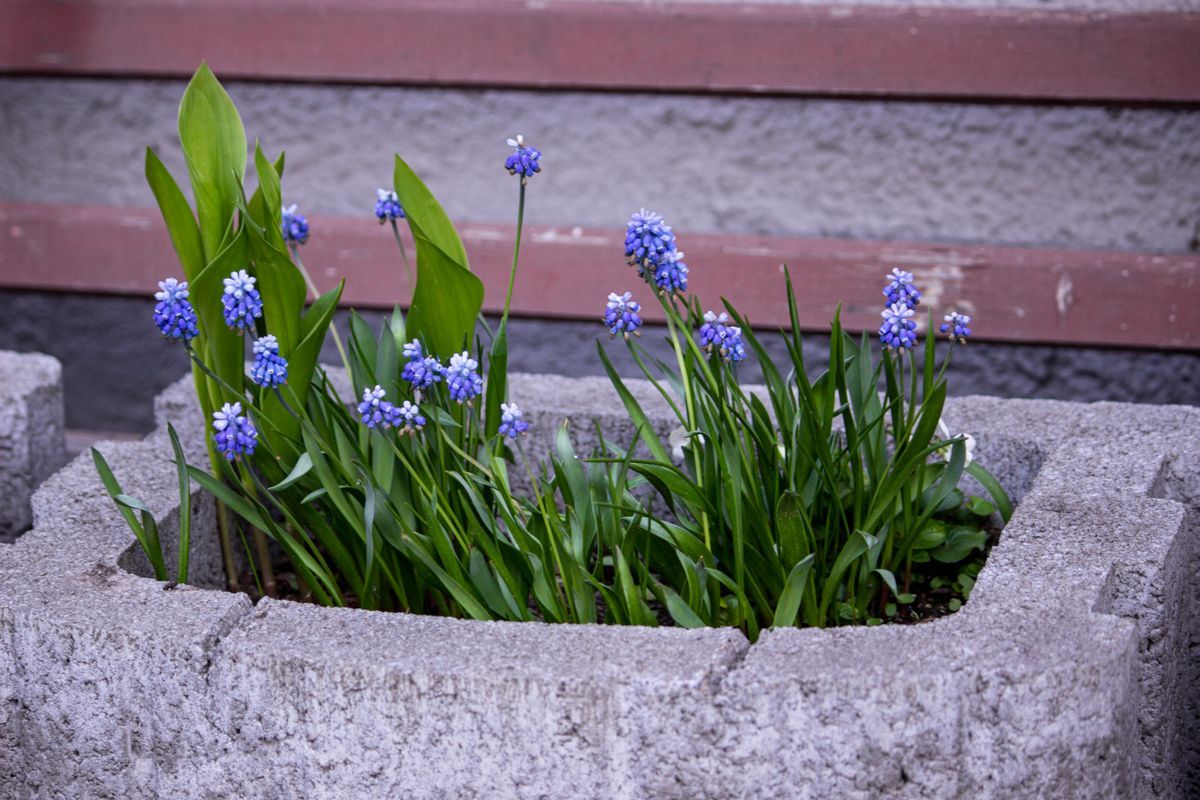
The finished wall holds 8 to 12 inches of soil, and planting into it well means matching plants to that depth honestly. Annual flowers, the bed's namesake tenants, root comfortably in 8 inches; perennials want the full 12 and the deepest part of the bed, which argues for building to the 3 course height whenever perennials are planned rather than treating the wall as a seasonal rim. Set the tallest plants at the back of a one sided bed and step down to the edge, because a paver bed against a path or lawn is read from the front like a picture, and the cap course makes a frame the planting should acknowledge. Bulbs are the paver bed's secret dividend: the free draining soil behind stone is nearly perfect bulb ground, and a layer of tulips or daffodils planted in fall at their proper depth fires through the bed in spring before the annuals are even bought, with grape hyacinths, like the ones in the photograph above, edging the front at almost no cost. Water new plantings at the base until their roots reach down, mulch once they are growing, and expect the bed to run a little warmer and drier than ground level soil in summer, since stone stores the day's heat; a soaker line buried under the mulch at planting time is 20 minutes of work that pays out every July.
Related guides
More from the same bed, bench, and border:
- Annual Flowers for Full Sun: The Heat Roster for Beds That Bake
- How to Deadhead Flowers: Read the Stem Before You Cut
Frequently Asked Questions
How deep should the trench be for a paver raised bed?
Two to 3 inches deep, filled with about 2 inches of crushed gravel or paver base, tamped hard. The first course sits in the trench with roughly half its height buried, which locks the wall's base against frost push and soil pressure. Level this buried course with total care; every course above inherits its errors.
How high can I stack pavers for a raised bed?
About 3 courses above the buried course for a simple dry stack, which gives 8 to 12 inches of soil with standard units, exactly the depth a flower bed wants. Taller dry stacks need pins, adhesive, or a battered wall design. If you need 18 inches or more of soil, choose a material system built for height.
Do the joints really need to be staggered?
Yes. Staggering each course by half a paver, so every joint lands over the middle of a unit below, is what makes a stack behave as a wall. Stacked joints act as hinges, and the wall leans as separate columns. Alternate the corner overlaps the same way, one course long on the front, the next on the side.
How do I avoid cutting pavers?
Design the bed from the paver outward. Choose bed lengths that are whole multiples of your unit's length, count the corner overlaps and the half units the staggered bond needs, and cut only those halves in one session, or buy factory half units where the line offers them. A bed designed this way may need fewer than a dozen cuts in total.
What soil depth do flowers need in a raised bed?
Eight to 12 inches suits annuals and most perennials, which is what a 3 course paver wall holds. Fill in lifts, watering each to settle, with about two thirds raised bed soil or topsoil to one third compost. The dry stacked joints drain freely, so paver beds rarely waterlog, even in wet climates.
Photo credits: Louitina Palaiologou (Pexels); Natalia Sevruk (Pexels). Photos are served from this site; follow the credit to the library page for the original.