Every hydrangea rule most gardeners know was written for the standard bigleaf, the mophead that blooms only on last year's wood and fails in cold climates because winter kills the buds it already made. Endless Summer, the reblooming bigleaf line that began with the original 'Bailmer' cultivar, exists to break that rule: it blooms on old wood in early summer and then again on the new season's growth, so a hard winter costs it the first flush and not the year. NC State's Plant Toolbox describes the original cultivar exactly that way, a reblooming mophead for zones 4 to 9, spaced 3 to 6 feet. The care calendar follows from the biology, and it inverts the standard advice at the critical point: where a standard macrophylla owner fears pruning at the wrong time, the Endless Summer owner's one hard deadline is August 1, after which no pruning happens at all, because the fall growth carries next year's first buds. This page runs the cultivar's own calendar, drawn from the brand's care guide and the extension record, and keeps it separate from the site's general hydrangea care page, which serves the standard types.
Home / Flowers and Houseplants
How to Care for Endless Summer Hydrangeas: The Reblooming Bigleaf Calendar
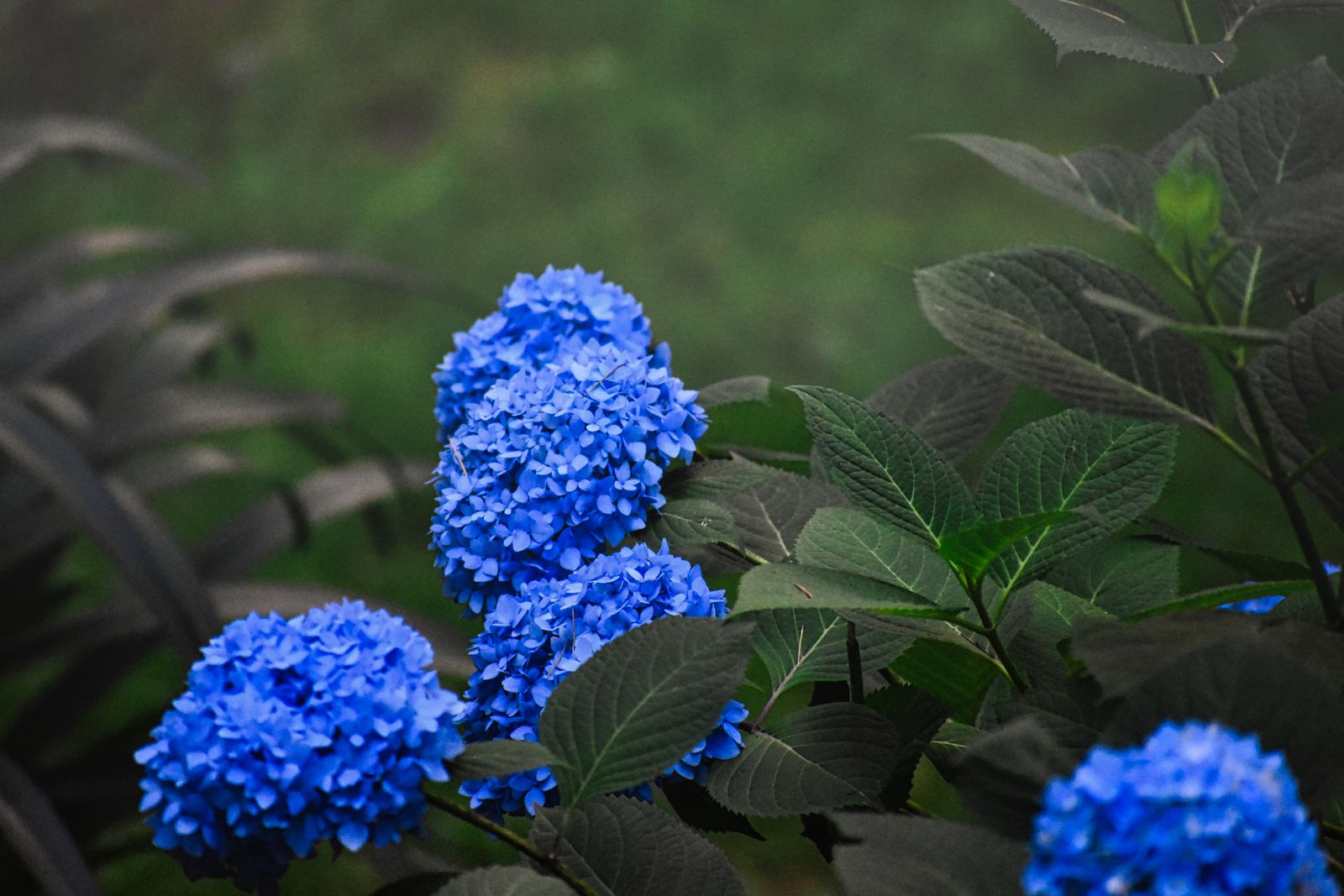
Photo: Soubhagya Maharana / Pexels
Endless Summer Hydrangea Care Checklist
Check off each step as you finish it. Your progress stays on this page.
0 of 8 complete
0% done
The Calendar: What Happens in Each Season
Spring is for cleanup only. Wait until the plant leafs out, because Endless Summer breaks dormancy late and looks dead weeks after other shrubs are green; then cut only the stems that are genuinely dead, identified by the scratch test, brown and dry all the way down, and leave every stem with green growth untouched. Feed once as growth starts with a balanced or rose-type fertilizer, and renew mulch. Early summer brings the first flush on old wood. Deadhead it as the heads fade, cutting to the first pair of strong buds below the flower, because on a rebloomer deadheading is not tidiness, it is the trigger: removing the spent head redirects the plant into the new growth that carries the second flush. Midsummer care is water discipline, deep watering in dry spells, since bigleaf hydrangeas are thirsty shrubs and a drought-stressed plant drops its second flush first. August 1 is the deadline after which pruning stops entirely; late-summer trimming removes the wood that carries next spring's first flowers and stimulates tender growth that winter will burn. Fall is for leaving alone: no pruning, no feeding, mulch deep after the ground cools. Winter care in cold zones is protection of the crown and lower stems, a mound of mulch or leaves after freeze, because the old-wood buds that survive are the difference between a June show and an August-only one.
| Season | Do | Do not |
|---|---|---|
| Spring | Scratch test, remove only dead stems, feed once, renew mulch | Prune for shape before leaf-out |
| Early summer | Deadhead first flush to strong buds | Let spent heads sit and set seed |
| Midsummer | Deep water in dry spells | Shear or hedge the plant |
| After August 1 | Nothing; hands off | Any pruning at all |
| Fall and winter | Deep mulch over the crown after ground cools | Fall feeding or cleanup cuts |
Color: pH Plus Aluminum, Test First
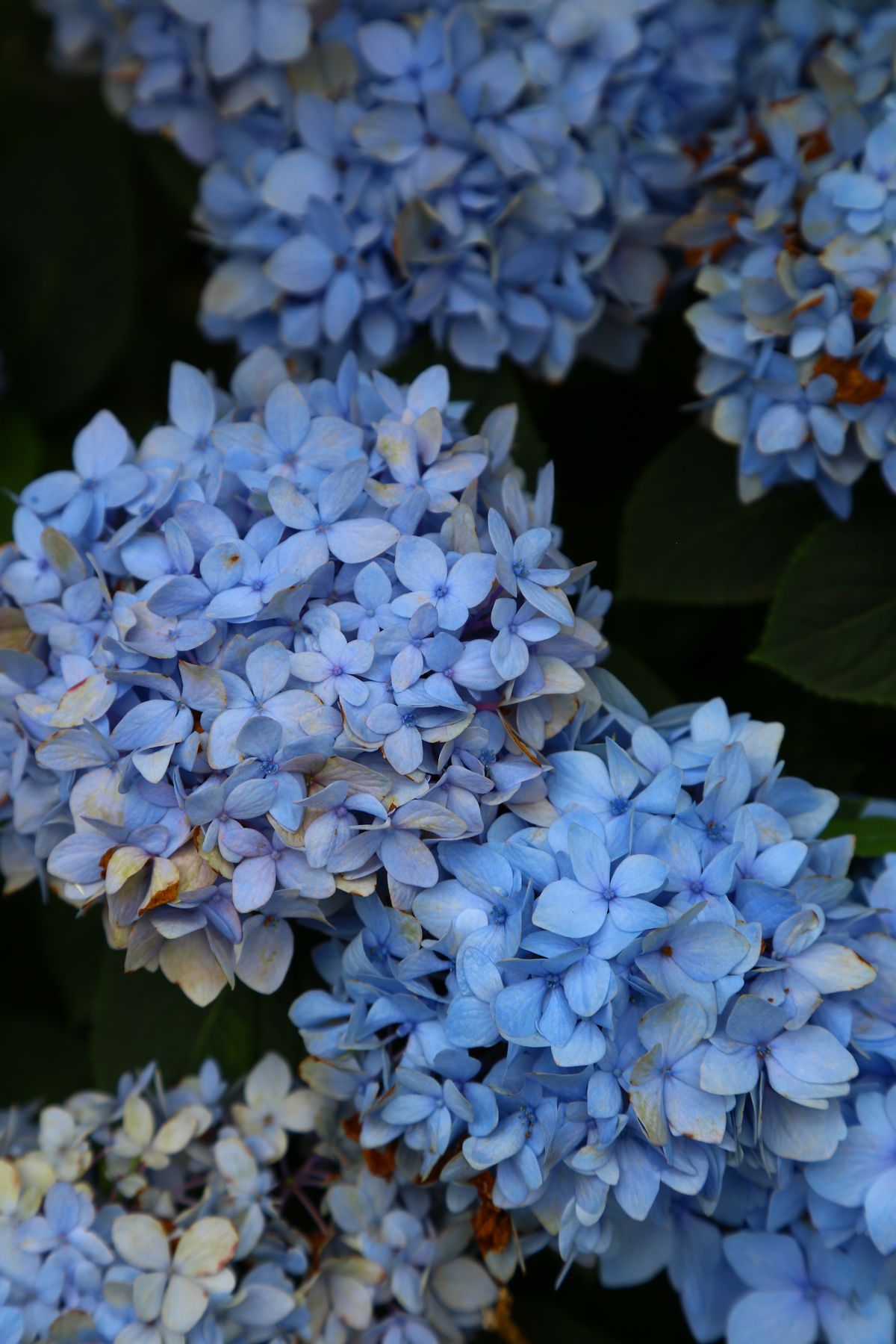
Endless Summer color is chemistry the gardener can steer, and the steering has two variables, not one. The flower color of the blue-to-pink types is set by soil pH and by available aluminum: in acid soil, pH roughly 5.2 to 5.5, aluminum is available to the roots and flowers come blue; in alkaline soil, toward 6.5 and above, aluminum locks away and flowers come pink, with the purples living in between. The protocol is test first, because amending blind overshoots in both directions and takes a season to correct. For blue, apply aluminum sulfate or an acidifying fertilizer per label rates in spring and again in early summer, and water it in. For pink, apply garden lime on the same schedule. Change one variable per season and photograph the result, because the shrub is a slow instrument and the gardener who adds acidifier and lime in the same year, chasing a photograph, learns nothing. Two cautions: white cultivars in the line do not change color at all, whatever the soil, and containers shift pH faster than ground soil, so potted plants need the test twice a year and smaller doses. The color program is optional decoration on top of the calendar; a plant pruned after August 1 in perfect blue soil still skips its June flush, which is why this page puts the calendar first.
Siting: Morning Sun, Afternoon Shade, Four Feet of Room
The brand's siting rule is morning sun and afternoon shade, and it is a water rule disguised as a light rule. Bigleaf hydrangeas wilt theatrically in afternoon heat even in moist soil, a transpiration wilt they recover from by evening, but a plant that wilts daily spends its season surviving instead of setting the new growth the rebloom depends on. Four to six hours of morning sun with shade from the worst heat gives full flowering without the daily collapse; deep all-day shade, the other common placement, gives a healthy green shrub with few flowers, because reblooming is not shade magic and the buds still need light to form. Spacing follows NC State's 3 to 6 foot allowance with a working figure of about 4 feet for the original and larger types, less for the compact later releases, whose tags carry their own mature widths. A rebloomer against a foundation at 2 feet from its neighbor becomes a pruning problem by year three, and pruning problems on this plant have a deadline attached, which makes the tape measure at planting the cheapest care tool in the article. Soil wants to be rich, moist, and drained, amended with compost at planting and mulched permanently; the thirsty bigleaf root system in dry, thin soil is the one condition the rebloom trait cannot rescue, because new-wood flowers are made out of current water and food, not stored reserves.
The Winter-Kill Year: What Reblooming Actually Promises
The rebloom promise deserves an honest reading, because it is the reason for the plant's existence and the source of its one disappointment. In a zone 4 or 5 winter that kills the stems to the snow line, an Endless Summer loses its old-wood buds entirely, and spring's scratch test removes a depressing amount of dead wood. The difference from a standard macrophylla is what happens next: the plant grows new stems through summer and flowers on them from midsummer into fall, smaller and later than the June flush, but real flowers in a year when the standard shrub gives none. Manage expectations by zone. In zones 6 to 9, expect the full two-flush performance most years. In zones 4 and 5, expect the late flush as the reliable product and the June flush as a bonus in mild winters, improved by the fall crown mulching in the calendar. The gardener who understands that contract is delighted with the plant; the gardener who was sold June flowers guaranteed in Minnesota feels cheated by August. Both are looking at the same shrub, performing exactly as its biology advertises.
Feeding and Watering Discipline
The calendar's two recurring inputs deserve their own terms. Feeding is a spring event, one application of a balanced or rose-formula fertilizer as growth starts, with an optional second light application before midsummer in poor soil, and nothing after that, because late feeding pushes the tender growth the August rule exists to protect. More is not better on this shrub: an overfed Endless Summer makes magnificent foliage and ordinary flowers, and the fix is a skipped year, not a stronger product. Watering is the reverse discipline, generous and consistent: bigleaf hydrangeas are thirsty plants, and the rebloom is manufactured out of current-season water, so dry spells in summer call for deep soaking at the base, weekly or better in heat, with mulch holding the gains. The afternoon wilt that recovers by evening is transpiration, not thirst, and is answered by siting rather than by the hose; the wilt that is still present at dawn is thirst, and is answered the same morning. A shrub on drip irrigation under mulch, fed once in spring and never pruned after August 1, is running the complete program, and everything else in this article is commentary on those four clauses.
Related guides
The closest companions to this guide:
- How Often to Water Hydrangeas in Pots: The Daily Summer Rhythm, the Two Pass Soak, and the Wilt That Lies
- How to Care for Dahlias: The In Season Calendar From Sprouts to Storage
- How Often to Water Hydrangeas: Deep Soaks, and Why Afternoon Wilt Lies
Frequently Asked Questions
When do I prune Endless Summer hydrangeas?
Almost never, and never after August 1. The only routine pruning is spring cleanup: wait for leaf-out, scratch test the stems, and remove only wood that is dead all the way down. The plant blooms on old and new wood, so shape pruning costs flowers in both directions, and late pruning removes next spring's first buds.
Why is my Endless Summer not reblooming?
Work the list in order: afternoon sun and drought stress, which make the plant spend the season surviving; spent first-flush heads left on, which removes the deadheading trigger for the second flush; pruning after August 1; and deep shade, which starves bud formation. In cold zones, a late-only bloom after winter kill is the plant performing as designed.
How do I make Endless Summer flowers blue?
Acid soil plus available aluminum: test the soil first, aiming for pH around 5.2 to 5.5, then apply aluminum sulfate or an acidifier per label rates in spring and early summer and water it in. For pink, lime toward 6.5 and above. Change one variable per season. White cultivars never change color regardless of soil.
How much sun does Endless Summer need?
Morning sun and afternoon shade, roughly 4 to 6 hours of direct morning light. Afternoon sun causes daily transpiration wilt that eats the rebloom; all-day deep shade gives foliage without flowers. The siting rule is really a water rule, protecting the new growth the second flush is made from.
How far apart should I plant Endless Summer hydrangeas?
About 4 feet for the original and larger types, inside NC State's 3 to 6 foot allowance for the cultivar; compact releases take less, per their tags. Crowding a rebloomer creates pruning pressure, and this is the one hydrangea whose pruning carries a hard August 1 deadline, so the room is worth more than usual.
Photo credits: Soubhagya Maharana (Pexels); Andy Lee (Pexels). Photos are served from this site; follow the credit to the library page for the original.