Every other season, lawn weed control is a fight against plants at their strongest. Fall reverses the terms. Perennial broadleaf weeds, dandelion, clover, plantain, wild violet, and creeping Charlie, spend the fall moving the food their leaves made down into their roots for winter storage, and a herbicide applied to the foliage rides that same flow downward and kills the root, which is the part spring spraying never reaches. That mechanism is why the extension services, Illinois, Purdue, Rutgers, and Colorado State among them, converge on the same verdict: early to mid fall is the single best window of the year for perennial broadleaf control. The site's general lawn weed page and its natural methods companion cover the year-round and chemical-free cases; this page is the fall specialist, and it runs a two-window plan, because fall holds a second, opposite opportunity: the winter annual weeds germinate now, and they are stopped before emergence or not at all.
Home / Lawn and Landscape Basics
How to Get Rid of Weeds in Lawn in Fall: The Two-Window Plan
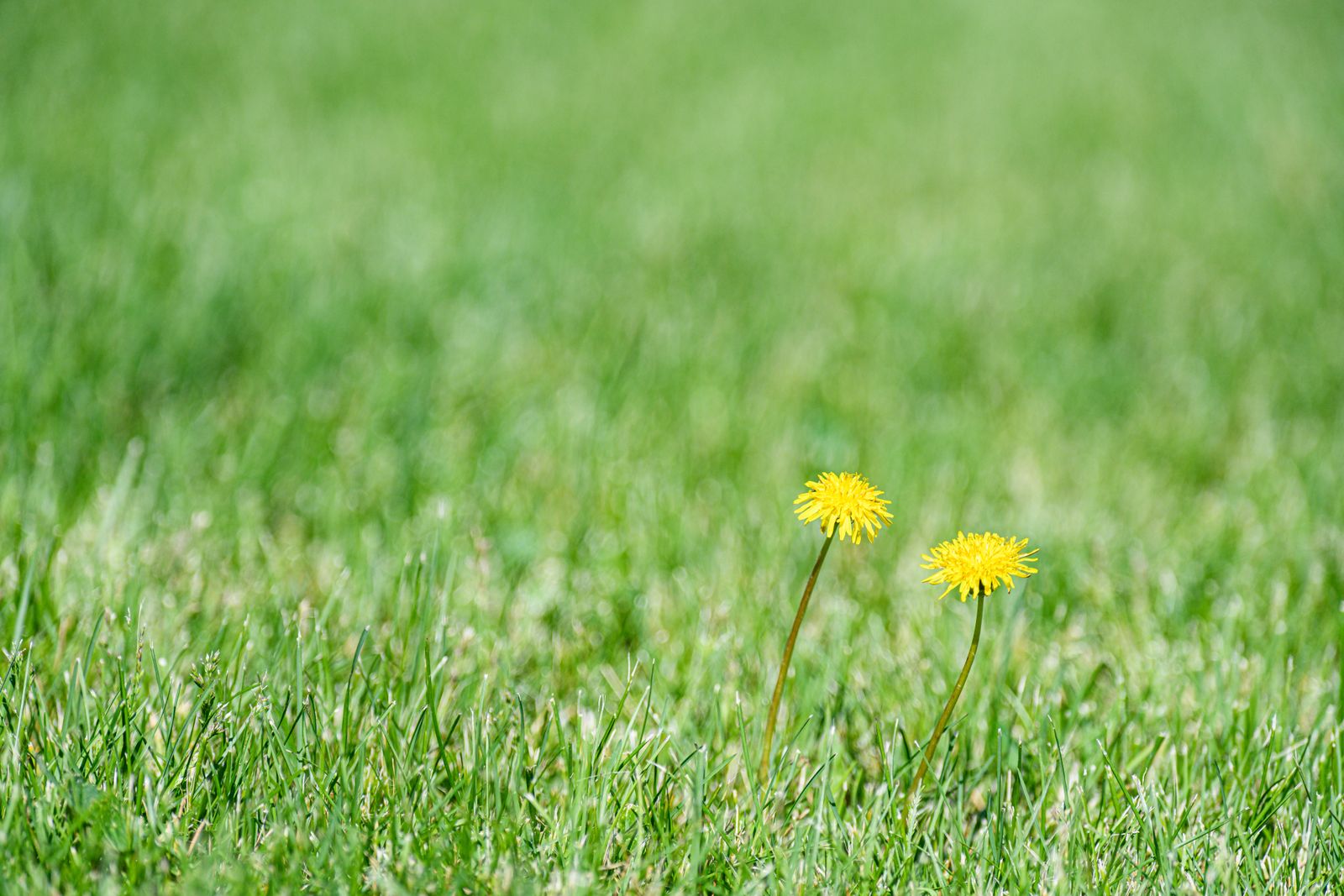
Photo: Jay Brand / Pexels
Fall Lawn Weed Checklist
Check off each step as you finish it. Your progress stays on this page.
0 of 8 complete
0% done
Window One: Post-Emergent Control of Perennials
The perennial window opens when nights cool and the weeds are still green and actively growing, typically early to mid fall, and it closes after several hard freezes, when top growth dies back and there is no foliage left to carry herbicide to the roots. Within the window, conditions matter more than the calendar date. Spray when air temperatures are roughly 50 to 85 F, Illinois prints 55 to 85, because the weed must be metabolizing, not shut down by cold or wilted by heat, for the herbicide to move. Light frosts do not close the window; a weed that has taken a frost or two and is still green and growing on a mild afternoon is still a valid target, and some of the season's best kills happen on those mild days after the first frosts have thinned the gardener's competition for time. Apply to foliage, on a calm day with no rain expected for a day, and do not mow for a couple of days before or after, so the leaf area is maximal and the chemical has time to translocate. Rutgers' guidance prefers spot spraying over blanket weed-and-feed products: spot treatment puts the herbicide on the weeds that exist, at the rate they need, and skips the clean lawn entirely, which is both the environmental and the economical reading of the same advice. Expect treated perennials to yellow slowly over 2 to 3 weeks; the root kill is the point, and it is invisible until spring, when the dandelion simply does not return.
| Weed | Type | Fall window | Notes |
|---|---|---|---|
| Dandelion | Perennial broadleaf | Post-emergent, early to mid fall | The flagship target; root kill prevents spring return |
| White clover | Perennial broadleaf | Post-emergent, early to mid fall | Decide first: some lawns keep clover deliberately |
| Broadleaf plantain | Perennial broadleaf | Post-emergent, early to mid fall | Rosette must be green and growing |
| Wild violet | Perennial broadleaf | Post-emergent, mid fall | Waxy leaves; a second pass may be needed |
| Creeping Charlie | Perennial broadleaf | Post-emergent, mid to late fall | The latest window of the set; repeat treatment common |
| Chickweed and henbit | Winter annual | Pre-emergent, late summer to early fall | Germinates in fall; post-emergent only while small |
| Annual bluegrass | Winter annual grass | Pre-emergent, late summer to early fall | Timing keyed to soil temperature falling toward 70 F |
Window Two: Pre-Emergent Control of Winter Annuals
The second window faces the other direction in the weeds' life cycle. Chickweed, henbit, and annual bluegrass are winter annuals: they germinate in the cooling soil of late summer and early fall, grow quietly through winter as small green plants in a dormant lawn, and explode into flower and seed in spring, which is when most gardeners first notice them and when it is too late for the easy control. Pre-emergent herbicide, applied before germination, forms a chemical barrier at the soil surface that stops the seedlings as they sprout. The timing is keyed to soil temperature: annual bluegrass germinates as soil temperatures fall toward 70 F, so the application goes down in late summer to early fall, earlier than the perennial window and easy to miss while the lawn still looks like summer. Water the application in as the label directs, because the barrier must be at the soil surface, not on the foliage. A lawn with a spring chickweed history has already told you its diagnosis, and the fall pre-emergent is the answer written a season ahead, which is the characteristic discipline of this whole page: fall weed control is played against weeds that have not appeared yet or are about to disappear underground, and the gardener works from records and mechanism rather than from what is visible.
The Seeding Conflict: The Decision to Make First
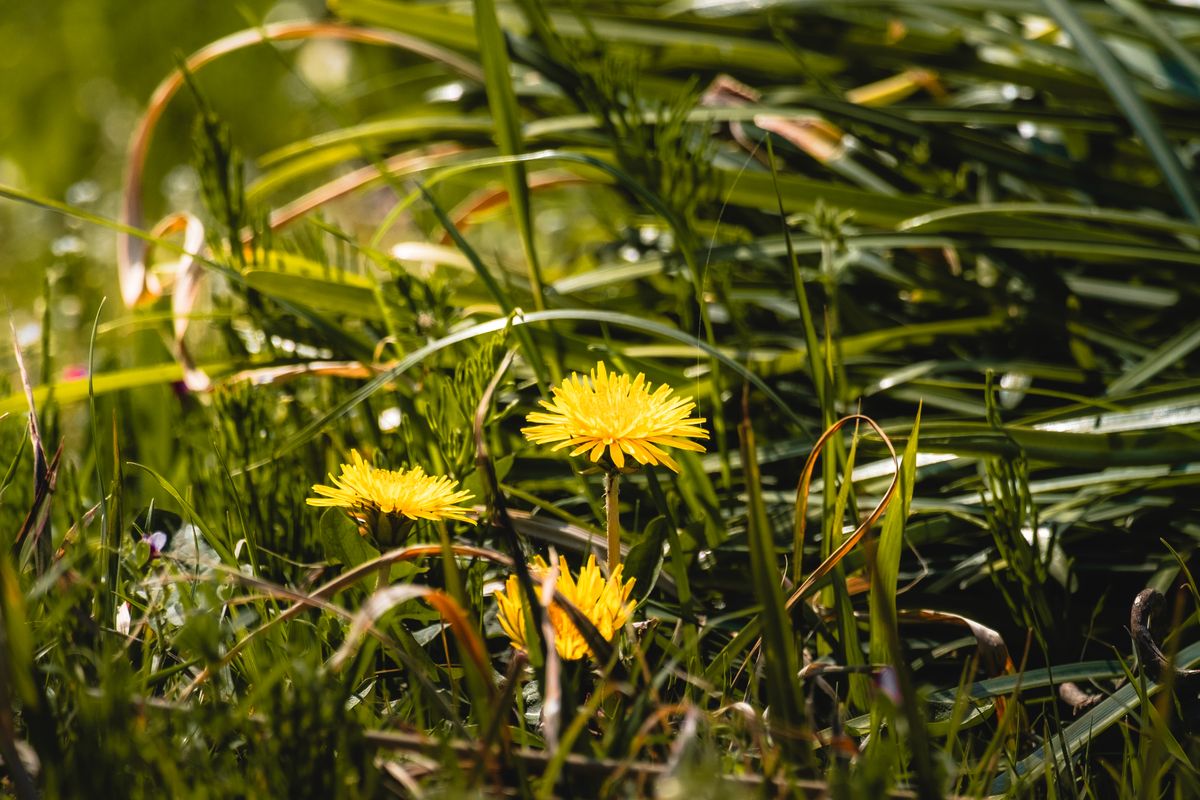
Fall is also the best season to seed a lawn, overseeding thin turf and repairing bare ground, and the two fall programs collide head-on: pre-emergent herbicide cannot tell weed seed from grass seed, and it blocks both. A lawn seeded this fall cannot receive pre-emergent until the new grass is established, typically not until the following spring, and in some label terms not until after several mowings. So the fall plan begins with a decision, made lawn by lawn and even section by section. If the lawn's main problem is thin, weak turf, seed wins: overseed, skip the pre-emergent, and accept one more season of winter annuals, which a thickening lawn will increasingly shade out on its own, because dense turf is itself the long-term pre-emergent. If the lawn is thick but invaded by chickweed and annual bluegrass, pre-emergent wins, and seeding waits for spring or the following fall. The perennial window collides with seeding more gently: spot spraying established perennial weeds is compatible with seeding around them, observing the product label's interval before seed can go down in treated spots, while blanket post-emergent applications on brand-new seedlings must wait until the new grass has been mowed several times. Read the specific label for the specific product; the intervals differ, and the label is a legal document, not a suggestion. The gardeners who get fall wrong almost always get it wrong here, applying everything to the whole lawn at once, when the correct unit of decision was always the section.
Technique and Safety Notes That Decide Results
The fall windows reward technique because the mechanism is translocation, and translocation is slow biology, not contact burn. Beyond the temperature and mowing rules above: treat when weeds are not drought-stressed, irrigating a dry lawn a day or two before treatment if the fall has been rainless, because a shut-down weed does not move herbicide. Use the product form the job wants, a liquid spray for spot work and even coverage of rosette weeds, granular weed-and-feed only where a blanket treatment is genuinely intended and its fertilizer half is wanted, which in fall it often is not. Keep children and pets off treated areas until sprays have dried or the label's interval has passed, and store the fall chemicals where they will not freeze over winter, since a frozen herbicide can lose its formulation. Finally, keep records: which weeds, which product, which window, what the spring result was. The fall program improves every year it is recorded, because the winter annual diagnosis and the perennial map are property-specific, and next fall's plan is written by this fall's notes. That record-keeping is the difference between a lawn on a program and a lawn on a series of emergencies.
The Non-Chemical Fall Program
Gardeners who do not use herbicides still own a fall program, and it is better than the spring version of the same work, because the mechanism of the season helps them too. Hand-digging perennial weeds is most complete in fall: the soil is moist and workable, the crowns are swollen with stored food and easy to identify, and a dandelion forked out entire in October, taproot and all, does not return, while the same plant snapped off at the crown in spring regrows from the fragment. Overseeding is the second tool and the strongest long-term one, since a thickened lawn shades out the winter annuals' germination niche and competes with perennial seedlings; fall is the best seeding season in cool-season country precisely because the weed pressure is lowest. Corn gluten meal is marketed as a natural pre-emergent and deserves an honest sentence: the research record is mixed, with some trials showing reduced germination at heavy rates applied over multiple seasons and others showing little effect, so it belongs in the program as a nitrogen source with possible side benefits, not as a barrier you rely on. Mowing height is the quiet fourth tool: a lawn cut at 3 to 4 inches through fall shades its own soil, and chickweed and annual bluegrass germinate poorly under a canopy. The natural program's honest limit is creeping Charlie and wild violet in an established lawn, where hand work is slow and the chemical window is genuinely the efficient answer; gardeners who decline it are choosing labor, knowingly, and the fall season at least makes that labor count double.
Related guides
Keep reading with these guides from the same corner of the garden:
- How to Get Rid of Weeds in a Lawn with Vinegar: What It Can and Cannot Do
- How to Overseed a Lawn in Fall: The Window, Counted Back from First Frost
- How to Overseed a Lawn with Clover: The Rate, the Short Mow, and the Two Week Moisture Window
- When to Fertilize Lawn in Fall: The Two Feeding Structure
- How to Get Rid of Weeds in Your Lawn and Grow Grass: One Sequence
Frequently Asked Questions
Why is fall the best time to kill dandelions and other perennial weeds?
Because of the direction of flow. In fall, perennial weeds move food from their leaves down to their roots for winter storage, and foliar herbicide rides that flow and kills the root, the part spring treatments rarely reach. Spray in early to mid fall while weeds are green and growing, in air around 50 to 85 F, and the plant does the delivery work for you.
When does the fall weed window close?
After several hard freezes, when perennial top growth dies back and no foliage remains to absorb and carry herbicide. Light frosts do not close it; weeds still green and growing on mild afternoons after early frosts remain valid targets, and some of the season's best control happens then.
What are winter annual weeds and how do I stop them?
Chickweed, henbit, and annual bluegrass germinate in late summer and fall, overwinter as small plants, and flower in spring. They are controlled with pre-emergent herbicide applied before germination, as soil temperatures fall toward 70 F, which means late summer to early fall, earlier than most gardeners think to act.
Can I overseed and use pre-emergent in the same fall?
Not on the same ground. Pre-emergent blocks grass seed exactly as it blocks weed seed. Choose per section: thin lawns get seed and skip pre-emergent for a season, while thick but weed-invaded lawns get pre-emergent and defer seeding. Spot spraying perennials is compatible with seeding if you observe the label's interval for treated spots.
Is weed-and-feed a good fall product?
Rutgers' guidance prefers spot spraying for perennial broadleaf control: it treats the weeds that exist, at the needed rate, and skips clean lawn. Weed-and-feed blankets everything, adds fertilizer whether the lawn wants it or not, and usually underdoses the scattered weeds that were the actual problem. For most fall work, a sprayer beats a spreader.
Photo credits: Jay Brand (Pexels); Oliver Hu (Pexels). Photos are served from this site; follow the credit to the library page for the original.