How to Grow Flowers From Seeds: Timing, Depth, and Light Rules That Work
By the Windchime Walker editorial team
Photo: Tima Miroshnichenko / Pexels
Growing flowers from seed is the cheapest way to fill a garden and the easiest skill to get almost right. The almost is where most failures live: seeds sown too deep, started too late, or missing the one special trigger their species needs. Three rules carry most of the weight. Start tender flowers indoors 6 to 8 weeks before your last frost date. Sow seed at a depth of 2 to 3 times its own diameter. And check whether your species needs light to germinate, a period of cold (stratification), or a nicked seed coat (scarification) before it will sprout at all.
The checklist below tracks the whole job from packet to transplant. Then this guide goes deeper on the special-requirement seeds, because they are the ones that sit in the tray for a month doing nothing while gardeners conclude the seed was dead. It usually was not dead. It was waiting for a signal nobody sent. For variety-specific depth after germination, our guides to how to grow zinnias from seed and how to grow marigolds from seeds pick up where this general method leaves off.
Interactive tool
Flowers From Seed Checklist
Check off each step as you finish it. Your progress stays on this page.
0 of 8 complete
0% done
The seed-starting table: common flowers and what they need
Flower
Start indoors
Depth
Special requirement
Soil temp for germination
Zinnia
4 to 6 weeks before frost
1/4 inch
None; fast and easy
60 to 65 degrees F and up
Marigold
6 to 8 weeks before frost
1/4 inch
None
70 to 75 degrees F
Petunia
10 to 12 weeks before frost
Surface, do not cover
Needs light
70 to 75 degrees F
Snapdragon
8 to 10 weeks before frost
Surface, do not cover
Needs light
65 to 70 degrees F
Pansy
10 to 12 weeks before frost
1/8 inch
Prefers darkness
About 50 to 60 degrees F
Echinacea (coneflower)
8 to 10 weeks before frost
1/4 inch
Cold stratification helps
65 to 70 degrees F after chilling
Lupine
Direct sow or 6 to 8 weeks
1/4 inch
Scarify the hard coat
55 to 65 degrees F
Lavender
10 to 12 weeks before frost
Surface, light cover
Needs light; slow
65 to 70 degrees F
Read the table as a sorting tool. Most flowers are in the easy middle: cover lightly, keep warm and moist, wait a week or two. The failures cluster in the special columns, light, cold, and scarification, and the sections below handle each one.
Step by step: the standard method
Fill clean trays or pots with fresh seed-starting mix, moisten it before sowing so seeds are not washed around afterward, and sow at the depth from the table. Cover the tray with a clear dome or plastic to hold humidity, and put it somewhere warm; most flower seeds germinate fastest at 65 to 75 degrees, on top of a refrigerator or a heat mat if the room is cool.
The moment seedlings emerge, the dome comes off and the light goes on, meaning a sunny south window at minimum and ideally a grow light 2 to 3 inches above the leaves for 14 to 16 hours a day. Leggy, pale seedlings are a light problem, not a food problem, and no fertilizer fixes them. Run a small fan nearby or brush the seedlings daily; the movement builds stocky stems.
Feed weakly once true leaves appear, transplant to individual pots when roots fill the cell, and harden off over 7 to 10 days before the garden move: an hour of shade outside the first day, building to full sun and overnight stays by the end. Skipping hardening off is how a tray of perfect seedlings becomes a tray of sunburned casualties in one June afternoon.
Light germinators: the surface-sown seeds
Petunia, snapdragon, lavender, and columbine seeds need light to trigger germination and will sit dormant if buried. Sow them on the surface of moist mix and press gently for contact without covering. Keep the surface continuously moist, because an exposed seed dries out fast; a fine mist twice a day or a humidity dome until emergence solves it. These species are also slow and tiny-seeded, which is why their start dates run 10 to 12 weeks before frost rather than 6 to 8.
Stratification: seeds that need winter first
Echinacea, rudbeckia, and milkweed evolved to germinate after a winter in cold, moist soil, and their seeds carry that expectation indoors. Stratify by mixing seed with barely damp sand or a damp paper towel in a sealed bag in the refrigerator for 4 to 6 weeks (milkweed and some echinacea benefit from the full period), then sow normally. Skipping stratification does not always mean zero germination, but it commonly means 20 percent instead of 80, spread erratically over months.
Fall direct sowing is nature's stratification service: sow these perennials outdoors in autumn and let winter send the signal. Mark the spot well, because the seedlings will not appear until spring and the bed will look empty for months.
Scarification: seeds with armor
Lupine and sweet pea seeds have coats hard enough to shed water entirely. Nick each seed with a file or sandpaper, or soak in warm water for 12 to 24 hours until the coat swells, then sow immediately. An unscarified lupine seed can sit in moist soil for a season waiting for weather to do the job. The soak test is diagnostic: seeds that swell are ready; seeds that stay hard and shiny after 24 hours need a nick.
Direct sowing: the flowers that prefer it
Some flowers resent transplanting or grow so fast that indoor starting buys nothing. Zinnias sown directly after frost outgrow transplants within weeks. Sunflowers, cosmos, nasturtiums, and morning glories all do best sown in place. Pansies break the temperature pattern in the other direction, germinating best in cool soil around 50 degrees, which is why they are started early and set out while nights are still cold. Our guide to how to grow sunflowers from seeds covers the most direct-sown flower of all.
Seedling troubleshooting: the four classic failures
Damping off kills more seedlings than everything else combined: stems pinch at the soil line and the seedlings topple overnight, killed by fungi that thrive in wet, still air. Prevention is the whole cure: fresh mix, clean trays, the dome off at emergence, a fan moving air, and watering from below or early in the day. Once a tray shows damping off, remove affected seedlings immediately and increase airflow; there is no spray that saves a pinched stem.
Leggy seedlings stretch toward inadequate light and never fully recover their stockiness. The fix is immediate and mechanical: lights down to 2 to 3 inches above the tops, 14 to 16 hours a day, and a gentle daily brush or fan. Mildly leggy tomato-style transplants can be buried deeper, but most flower seedlings cannot, so prevention beats rescue.
Slow, purple-tinged seedlings in a cold room are usually just cold; move the tray somewhere 65 to 70 degrees before reaching for fertilizer. And seedlings that germinate then stall with yellowing lower leaves after the true-leaf stage are hungry: begin the weak weekly feeding described above rather than a heroic full-strength dose that burns tender roots.
Succession and planning: flowers all season, not all at once
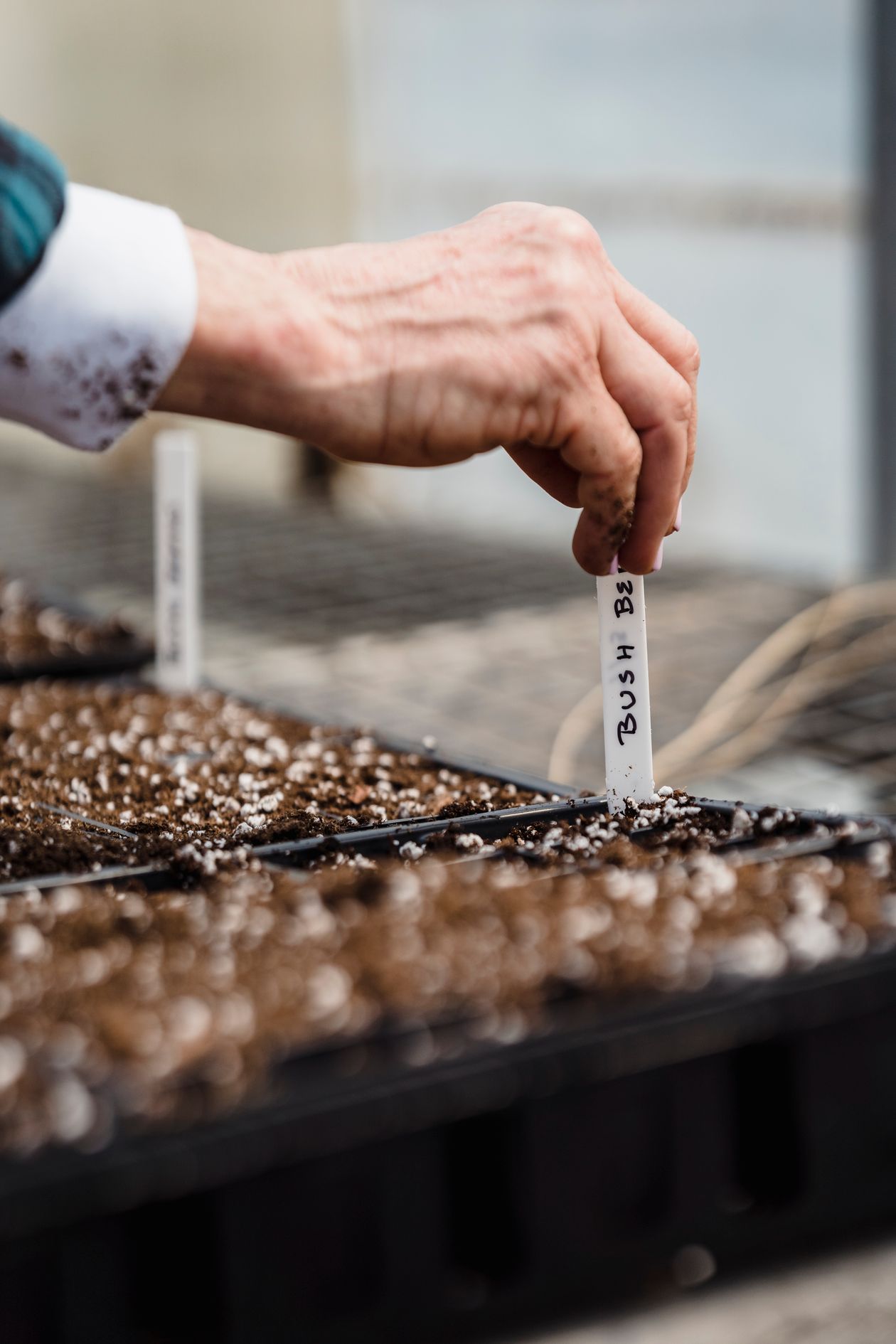
A single sowing of most annuals blooms in one great wave and fades. Succession sowing, a fresh small batch every 2 to 3 weeks for fast flowers like zinnias and cosmos, stretches the show from early summer to frost. Mark each batch with its sowing date on the tray label; by midsummer you will not remember which tray is which, and the label is the only honest record.
Plan backward from the bloom you want. A zinnia started indoors 5 weeks before the last frost and transplanted out blooms roughly 6 to 8 weeks after sowing. For a wedding, a party, or just peak garden glory in mid-July, count backward on the calendar and start the trays on the computed date, then add one insurance batch a week later. Seed starting rewards this arithmetic more than any other gardening skill, because the plant's clock starts when you say so.
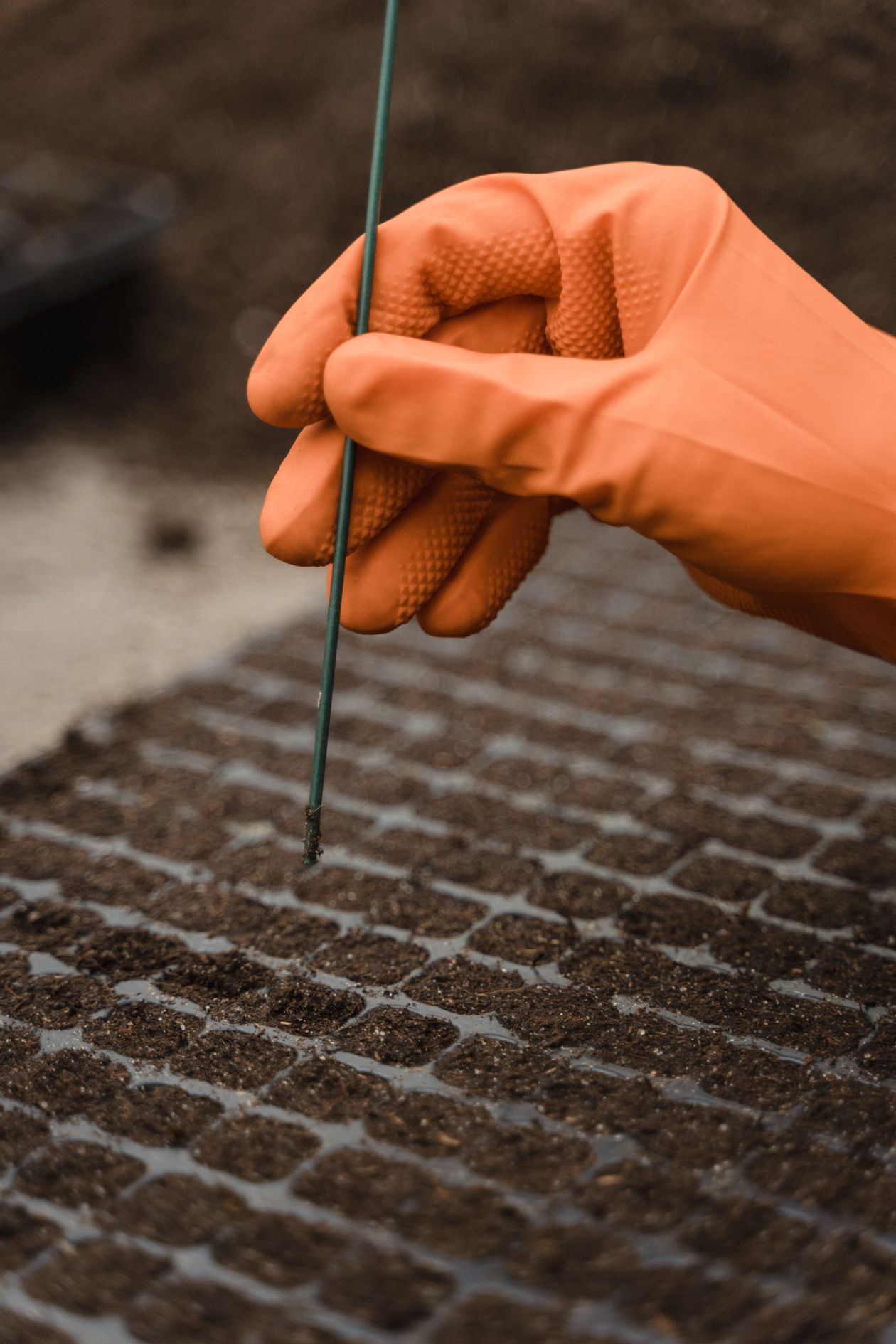
Hands sowing flower seeds into a tray of starting mix in a greenhouse
The working rule is 2 to 3 times the seed's own diameter. A 1/8 inch seed goes about 1/4 inch deep. Fine seeds like petunia and snapdragon break the rule entirely: they need light and are sown on the surface with no cover at all. When a packet gives a specific depth, the packet wins.
When should I start flower seeds indoors?
For most tender annuals, 6 to 8 weeks before your last spring frost date. Slow, tiny-seeded flowers like petunia, snapdragon, and lavender need 10 to 12 weeks. Fast growers like zinnia need only 4 to 6 and are often better direct sown after frost.
Why did my flower seeds not germinate?
The big four causes are: buried too deep (especially light-needing seeds), soil too cold, old seed, and a missing special trigger such as cold stratification for echinacea or scarification for lupine. Check the special-requirement column for your species before blaming the seed.
Do flower seeds need light or darkness to germinate?
Most are indifferent and germinate either way under a thin soil cover. A specific minority (petunia, snapdragon, lavender, columbine) requires light and must be surface sown. Pansies sit at the other pole and germinate best in darkness at cool temperatures around 50 to 60 degrees.
Can I save seeds from my own flowers?
Yes for open-pollinated varieties; collect fully ripe, dry seed heads, clean and store the seed dry in paper envelopes in a cool place. Hybrid (F1) varieties grow fine from saved seed but the offspring vary and often revert toward plainer forms, so save hybrid seed for surprises, not for a uniform border.
Photo credits: Tima Miroshnichenko (Pexels); Greta Hoffman (Pexels). Photos are served from this site; follow the credit to the library page for the original.