How to Plant Flowers: Depth, Spacing, and the First Two Weeks
By the Windchime Walker editorial team
Photo: Helena Lopes / Pexels
Most flowers die in their first two weeks from planting errors, not from bad luck. The good news is that planting technique is short and learnable: set the plant's crown exactly at soil level (the single most important rule), dig a hole only as deep as the root ball and roughly twice as wide, loosen circling roots, water deeply at planting, and keep the soil moist while roots establish. Do those five things and nearly every flower you buy or raise will take off.
This guide covers the full planting job for bedding plants, seedlings you raised yourself (the companion skill to how to grow flowers from seeds), and perennials. The checklist sequences the work. The sections after it handle the judgment calls: hardening off, rescuing root-bound pots, spacing, and the first-two-weeks watering rhythm that decides whether a planting succeeds.
Interactive tool
Planting Flowers Checklist
Check off each step as you finish it. Your progress stays on this page.
0 of 8 complete
0% done
Before you dig: timing and hardening off
Plant after your last frost date for tender annuals; hardy perennials and pansies can go in weeks earlier. Cloudy days and late afternoons are the kindest planting windows, because the plant gets a night of cool recovery before its first full sun. Planting at noon in a heat wave and walking away is how transplants die photogenically.
Any plant raised indoors or bought from a greenhouse needs hardening off if it has not already been acclimated: 7 to 10 days of increasing outdoor exposure, from an hour of shade to full days and nights outside. Greenhouse-grown nursery stock that has been displayed outdoors is usually pre-hardened; stock from inside a store is not. When in doubt, harden it. Sunburned, wind-whipped transplants lose a week recovering from an injury that patience prevents.
The planting sequence
Water the pots an hour before planting so root balls slide out intact and hydrated.
Dig the hole as deep as the root ball and about twice as wide. In compacted soil, wider matters more than deeper.
Tip the plant out, keeping the root ball together. If roots circle the bottom, score the root ball with 3 or 4 shallow vertical cuts and gently tease the bottom roots outward. Circling roots left alone keep circling in the ground.
Set the plant so the crown, where stems meet roots, sits exactly at soil level. Not an inch deep, not perched above: level. Planting too deep rots crowns and is the number one killer of new flowers; planting high leaves roots exposed to dry out.
Backfill with the soil you dug out, firming gently to remove air pockets without compacting. Amending the backfill is unnecessary for most flowers and can create a bathtub effect in clay; improve the whole bed instead.
Water deeply and slowly, soaking the root ball and surrounding soil until the planting basin fills and drains twice.
Mulch 2 to 3 inches deep over the bed, keeping mulch a few inches away from the stems.
Spacing: plant for the mature size
The spacing tag on a six-pack describes the plant at maturity, and obeying it is what separates a designed bed from a June fistfight. Annuals like petunias and marigolds typically want 8 to 12 inches; zinnias 12 inches; perennials follow their mature width. The bed looks sparse for three weeks and perfect for three months. Gardeners who plant for instant fullness spend July thinning out the losers of a competition they scheduled themselves.
Stagger rows in a triangular pattern rather than a grid for a more natural fill, and keep tall plants where they will not shade short ones as the season peaks. If you are laying out a whole bed, the planner logic in our vegetable spacing guides, like plant spacing for yarrow, applies unchanged to flower beds: mature width decides the gap.
The first two weeks: the establishment contract
New transplants have the root system of their pot and the ambitions of their species, so they need water on a nursery schedule, not a garden schedule. Water deeply every 2 to 3 days for the first two weeks in the absence of rain, checking that moisture reaches the full root ball depth. After two weeks, taper to the plant's normal rhythm as roots colonize the surrounding soil; a plant that still wilts daily at day 14 has a problem worth investigating, usually a root ball that has dried into a hydrophobic brick while the surrounding soil stayed moist.
That last failure deserves its own warning. Peat-based root balls can dry out inside wet soil because water flows around them. If a transplant wilts while the bed feels moist, dig a careful check beside it and feel the root ball itself. The cure is a slow, targeted soak directly over the ball, repeated until it rehydrates.
Perennials and bare roots: small differences
Perennials follow the same crown rule with one addition: many resent being planted deeper than they grew in the pot, and some (peonies famously) refuse to bloom if their eyes sit more than 2 inches deep. Bare root plants arrive dormant and look like sticks and string; soak the roots for an hour, spread them over a soil cone in the hole, and set the crown at the depth the supplier specifies for that species. Water bare roots in thoroughly and mulch; they repay patience with decades of service.
Common mistakes, ranked by body count
Planting too deep. Skipping hardening off. Letting the root ball dry out in the first week. Mulching against the stems (volcano mulching rots crowns). Fertilizing heavily at planting, which burns tender roots and pushes soft growth; a light hand of balanced fertilizer or compost in the bed is plenty, with real feeding starting after establishment. And the quiet classic: planting a shade lover in full sun because the spot was empty. The spot was empty for a reason. Match the plant to the light first, and the rest of this guide can do its work. For what comes after planting, how to care for gardenias shows the steady-state care of a demanding flower done right.
Bed preparation: the hour that saves the season
An hour of bed prep outperforms a season of remedial care. Clear weeds and grass completely, because they compete with new transplants at exactly the moment the transplants are weakest. Loosen the soil 8 to 10 inches deep across the whole bed, not just in the planting holes, so roots meet workable soil in every direction. Work in 2 to 3 inches of compost if your soil is heavy clay or hungry sand; whole-bed amendment beats hole-by-hole amendment because it avoids the bathtub effect and feeds the soil biology that flowers quietly depend on.
Check drainage while you are at it. Dig one hole a foot deep, fill it with water, and time the drain: an hour or less is fine, several hours means your flowers will want a raised bed or a different spot. More flowers die of wet feet in clay than of any pest, and it is far easier to learn this before planting day than after.
Planting flowers in containers: the variations
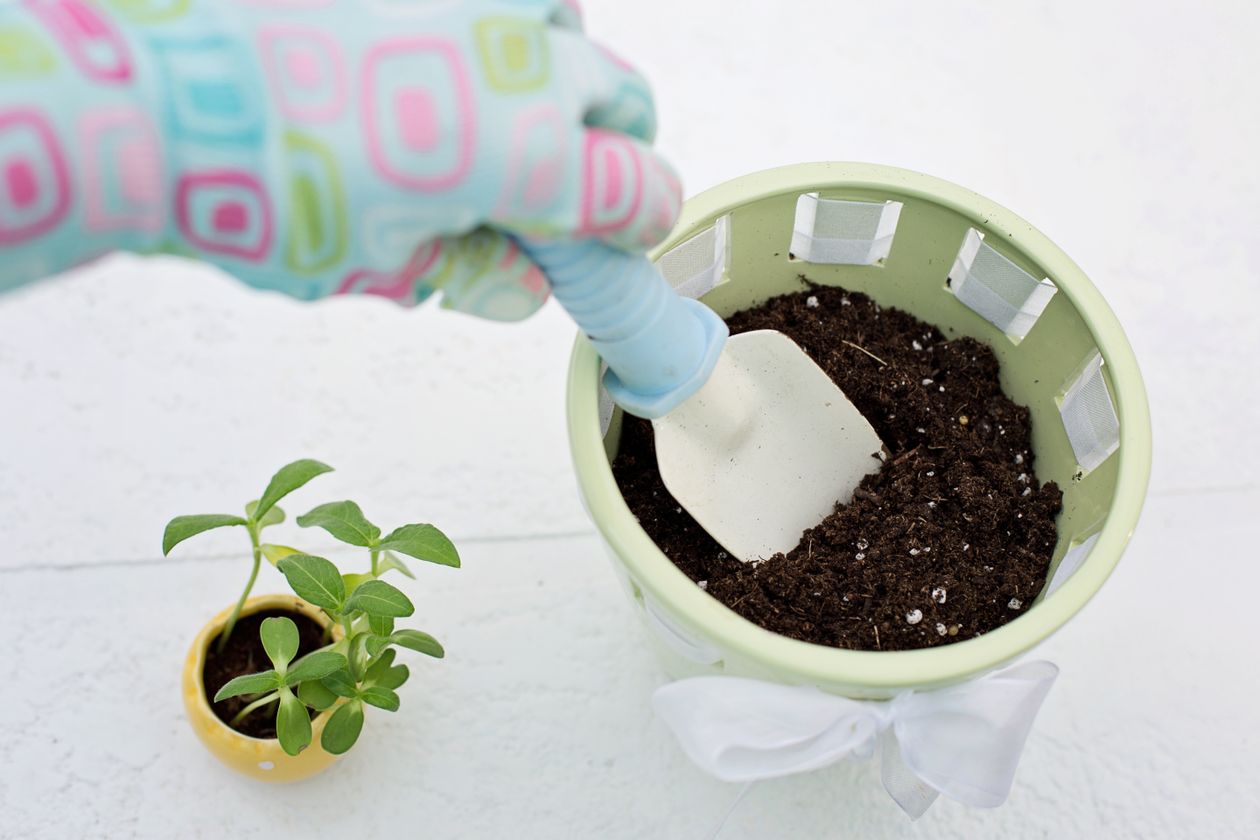
Containers follow the same crown rule with three twists. First, the mix is the soil: use fresh potting mix, never garden soil, which compacts and drains poorly in pots. Second, drainage holes are non-negotiable, and a layer of gravel in the bottom does not improve drainage (it raises the water table inside the pot); just fill with mix. Third, spacing tightens slightly because you control water and food: annuals can sit at two thirds of their in-ground spacing for a full display, at the price of watering daily in summer and feeding weekly.
Set the crown at the mix surface, leave an inch of headspace below the rim for watering, and soak the pot thoroughly at planting until water runs free. Container transplants establish fast and forgive depth errors less than bed plants do, because the whole root zone is the pot; the crown rule matters even more here.
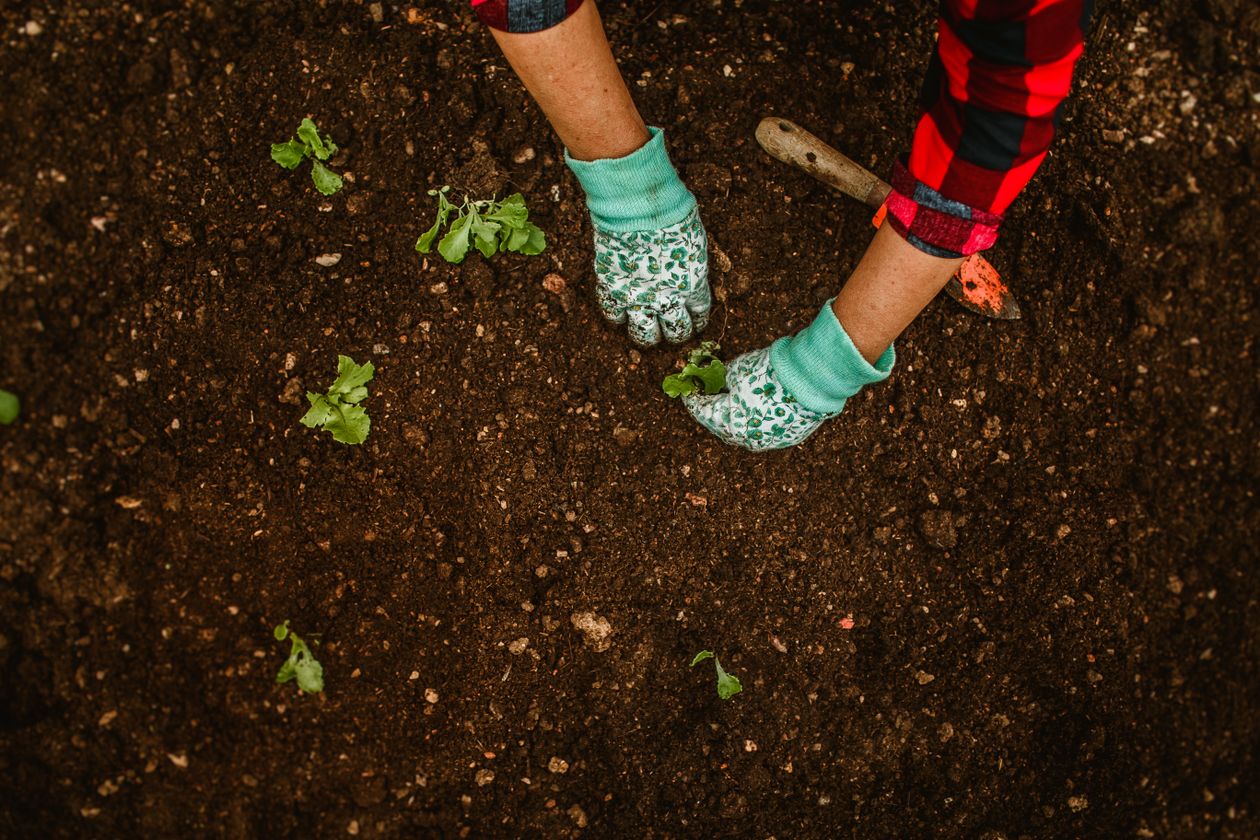
Hands planting a young flower seedling into garden soil with a trowel
Set the crown, where the stems meet the roots, exactly at soil level, in a hole as deep as the root ball and about twice as wide. Planting deeper is the most common fatal error: crowns rot and plants decline within weeks. A few species have special rules, such as peony eyes no more than 2 inches deep, and those are noted on their tags.
How often do I water newly planted flowers?
Deeply every 2 to 3 days for the first two weeks if rain does not do it for you, soaking the full root ball each time. Then taper to the plant's normal schedule as roots grow into the surrounding soil. Check the root ball itself if a plant wilts in moist soil; peat balls can dry out inside a wet bed.
Should I fertilize flowers when I plant them?
Lightly at most. Heavy fertilizer at planting burns fresh roots and forces soft growth. Work compost into the bed, plant, and begin regular feeding once the plants are established and growing, usually 2 to 3 weeks in. Container flowers are the exception and need a steady feeding program from the start.
What do I do with a root-bound flower pot?
Score the root ball with 3 or 4 shallow vertical cuts, tease the bottom roots loose with your fingers, and plant promptly into a well-watered hole. Roots that circle undisturbed continue circling underground and the plant never establishes properly. Severely bound plants benefit from soaking the ball before surgery.
When is the best time of day to plant flowers?
Late afternoon or on a cloudy day, so the plant's first hours in the ground are cool and dark rather than hot and bright. Water immediately after planting regardless of timing. Avoid planting into frozen, waterlogged, or bone-dry soil; wait a day for conditions to moderate.
Photo credits: Helena Lopes (Pexels); Jill Wellington (Pexels). Photos are served from this site; follow the credit to the library page for the original.