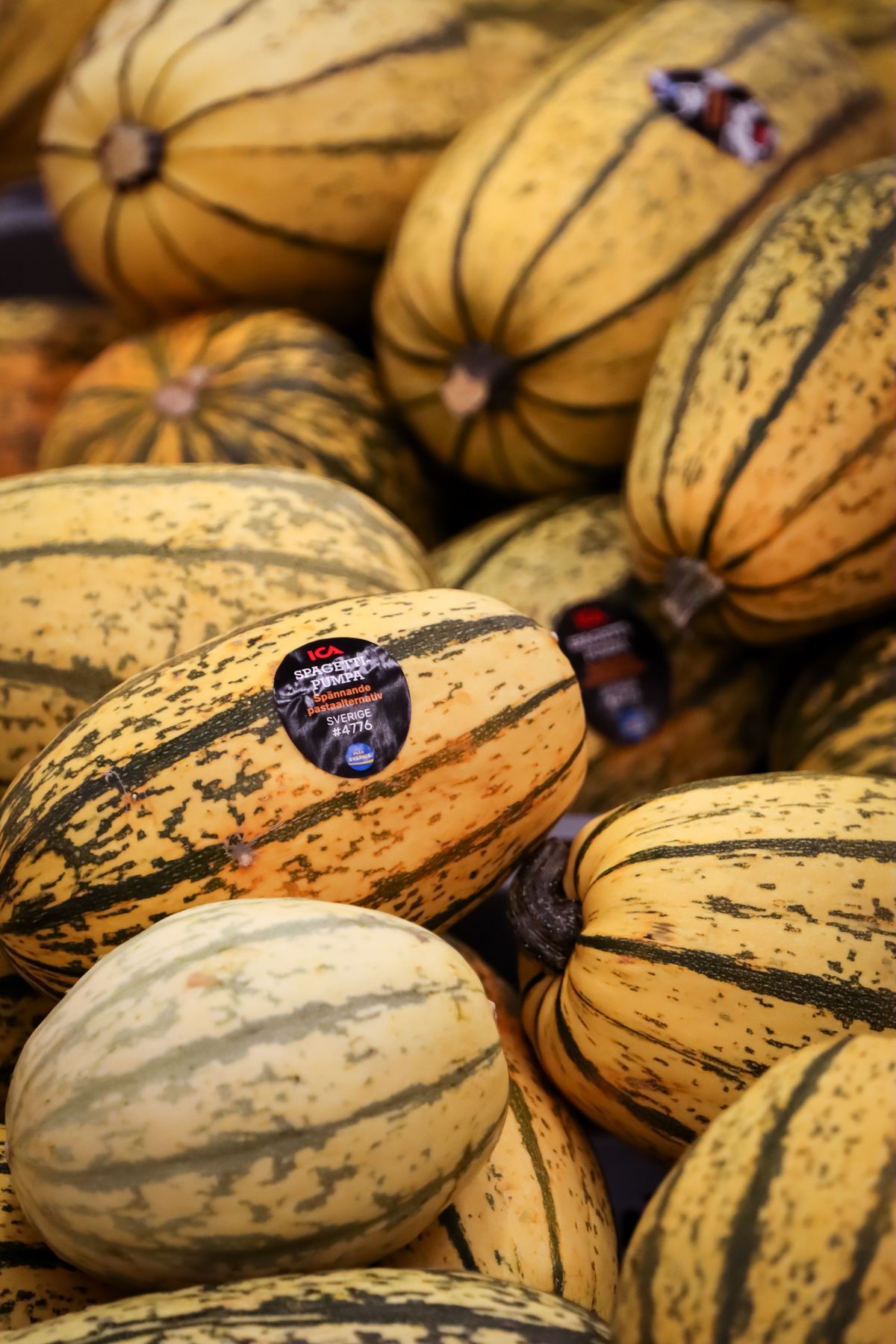
Delicata is the winter squash that does not fit the winter squash rules. The fruit is small, a pound or two, striped, and thin skinned enough to eat whole, and the plant, while a true vine, runs shorter than the butternut and Hubbard sprawl most spacing charts are written for. So the gardener faces two honest benches that do not agree. The University of Georgia's Circular 963, the extension standard for winter squash, plants at 36 inches apart in the row with 60 inches between rows, the same spacing it gives the big fruited types, and that is the bench the planner on this page runs, because it is the one that never fails: at 36 by 60 every delicata vine has light, air, and room to set fruit along its length. The seed trade argues the small fruit earns a tighter fit, and that argument, and the trellis case, are laid out below with their sources named, because the right answer depends on how you grow, and pretending the sources agree would serve no one.
Plant Spacing for Delicata Squash: The Small Fruit Changes the Math

Photo: Vitalii Abakumov / Pexels
Plant Spacing Planner: The Delicata Patch
Delicata squash is in the crop list below on the University of Georgia winter squash row of 36 inches between plants and 60 inches between rows. Enter your bed size, then read the small fruit and trellis benches in this article before you sow.
8 tomato plants fit this bed
4 plants per row across 2 rows, on a 24 inch grid. Extension spacing for this crop: 24 in between plants, 48 in between rows.
The grid uses the in-row spacing in both directions, the standard square foot layout for raised beds. In open ground, keep the wider row spacing in the note above so you can walk and weed between rows.
Spacing figures: University of Georgia Cooperative Extension, Circular 963, Vegetable Planting Chart, source.
The Georgia Bench: 36 Inches in the Row, 60 Between Rows
Circular 963's winter squash spacing treats the plant as what it botanically is, a vining Cucurbita pepo that roots at the nodes, feeds heavily, and mildews in still air. At 36 inches in the row with rows 60 inches apart, each plant commands about 15 square feet, the canopy closes late enough to weed between the vines into midsummer, and air moves through the planting, which matters more for delicata than for thick skinned squash because its thin skin and dense fruit set suffer first when powdery mildew takes the leaves early. The bench assumes the vine runs on the ground, in a field or a wide bed, and it is the spacing to use when ground is not the constraint. In a raised bed, the same math reads as one plant per 15 square feet of bed, vines trained out over the edge to sprawl on mulch or lawn, because a delicata confined inside a 4 foot bed with two companions will spend the season fighting them for light. Hills are the traditional alternative layout: 2 plants per hill, hills 4 to 5 feet apart each way, which is the same population wearing older clothes.
| System | In the row | Between rows | Ground per plant |
|---|---|---|---|
| Georgia extension bench | 36 inches | 60 inches | About 15 square feet |
| Hills, 2 plants per hill | Hills 4 to 5 feet apart | Hills 4 to 5 feet apart | About 8 to 12 square feet |
| Johnny's small fruit rule | 18 to 24 inches | About 6 feet | About 9 to 12 square feet |
| Trellised on a fence or panel | About 24 inches | Single row | About 4 to 6 square feet of bed |
The Flagged Conflict: The Small Fruit Argument
Johnny's Selected Seeds, whose squash trials are extensive, publishes a tighter rule for small fruited squash: plants 18 to 24 inches apart in rows about 6 feet apart, roughly 9 to 12 square feet per plant against Georgia's 15. The two benches are not an error on either side; they are answers to different questions. The extension bench optimizes for reliability across soils and seasons, for a grower who cannot afford a mildew collapse, and it prices in the vine's full run. The seed house rule optimizes for yield per bed foot in managed conditions, fertile soil, drip irrigation under the canopy rather than overhead water on it, and a grower watching for mildew weekly. What you may not do is average them into a 27 inch compromise that satisfies neither logic. Choose by your conditions: ground to spare, overhead watering, or a humid climate, take Georgia's 36 inches. Tight beds, drip lines, and a dry summer climate, the Johnny's spacing can be run honestly, with the understanding that you have accepted the mildew watch as part of the bargain. This page's planner runs the Georgia bench because it is the extension standard, and the conflict is recorded here rather than smoothed over.
The Trellis Case: 24 Inches and a Strong Panel
Delicata is the one winter squash that trellises gracefully, because the fruit is small enough, 1 to 2 pounds, that the vine and a sturdy support can carry it without slings in most cases, though a fruit net under the largest specimens is cheap insurance. On a fence, cattle panel, or trellis, space plants about 24 inches apart along the support and train the main vine up and along, letting laterals run where they find light. The trellis buys three things: the bed footprint falls to a strip, the fruit hangs clean and stripes up evenly, and air circulation, the mildew defense, is the best of any system on this page. It costs attention: a ground vine roots at its nodes and feeds itself from several points, while a trellised vine feeds only from its base, so water and fertility have to arrive on schedule, and the vine must be tied in weekly as it grows, because a delicata that falls off its panel in August does not climb back. Gardeners with more wall than ground will find the trade worth it; gardeners with ground should take the Georgia bench and let the vine do what it evolved to do.
Growing the Spacing: Soil, Water, and Mildew
Spacing performs only inside the culture that supports it. Delicata wants fertile soil, compost worked in before planting, and steady water at the base through fruit set, about an inch a week in dry weather, delivered by drip or soaker where possible, because overhead watering on a closing canopy is an invitation to the powdery mildew that decides how long the vines live. The harvest depends on that leaf life: delicata fruit needs its full season on a healthy vine to harden its stripes from pale green to the deep orange green of maturity and to cure its skin for storage, and a planting that mildews out in August yields soft, bland squash that keeps for weeks instead of months. Mulch under the vines once the soil warms, keeping fruit off bare ground, and scout the undersides of leaves weekly from midsummer, removing the first mildewed leaves you find, a sanitation habit that matters twice as much at the Johnny's spacing as at Georgia's. The butternut squash spacing page runs the big fruited end of the same extension bench, and the comparison shows what the small fruit buys: the same rows, a third less vine per plant, and a trellis option the big squash cannot use. The kabocha growing page covers the third member of the winter squash trio this site grows.
Season Care: Feeding, Watering, and the Powdery Mildew Watch
Delicata is a heavy feeder wearing a small fruit, and the spacing only pays if the plant is fed like the vine it is. Work compost into the bed before planting and side dress once when the vines begin to run, because a hungry delicata sets its first fruit and then stalls, aborting the later set that a fed plant carries. Water belongs at the base of the plant, an inch a week in dry weather through fruit set, and the case for drip under mulch strengthens with every week of the season: the canopy of a vining squash at full spread cannot be watered from above without wetting every leaf, and wet leaves in August are the powdery mildew's invitation. Scout from midsummer with a hand under the oldest leaves, where the white patches start, and remove the first infected leaves into the trash, not the compost. A planting sprayed preventively with a baking soda or sulfur program on a extension schedule can hold the disease for weeks, but spacing and dry leaves remain the foundation the sprays stand on. As harvest approaches, let the soil dry a little between waterings; fruit finishing on a slightly thirsty vine cures harder and tastes sweeter than fruit finished in mud.
Related guides
Readers working on this usually need these next:
- Plant Spacing for Squash: Hills vs Single Plants, and the Summer to Winter Jump
- How Often to Water Jalapeno Plants: The Weekly Inch Budget and the Fruit Set Window
- When to Plant Vegetables: Your Frost Date Does the Math
Frequently Asked Questions
How far apart do you plant delicata squash?
On the University of Georgia extension bench, 36 inches apart in rows 60 inches apart, about 15 square feet per plant. Seed house guidance for small fruited squash allows 18 to 24 inches in the row on rows about 6 feet apart, a tighter system that demands drip watering and a mildew watch. The two benches conflict and this page does not average them; choose by your space and climate.
Can delicata squash grow on a trellis?
Yes, and it is the best winter squash for the job, because the 1 to 2 pound fruit is light enough for the vine and a strong panel to carry. Space plants about 24 inches apart along the support, tie the vine in weekly, and water and feed on schedule, since a trellised vine cannot root at its nodes to feed itself.
How many delicata squash do you get per plant?
A healthy plant at full spacing commonly sets 5 to 10 fruit over the season, with the first flush the largest. Crowded plants set fewer and smaller fruit and lose leaves to mildew earlier, which is why the per plant yield at wide spacing usually beats the per plant yield of a crowded row, even when the crowded row wins per square foot early.
When is delicata ready to harvest?
When the skin has hardened to its full cream color with deep green orange stripes, resists a thumbnail, and the stem has begun to cork and dry. Fruit picked pale and soft skinned eats poorly and stores worse. Cure harvested fruit in a warm, airy spot for about 10 days before storage.
Why are my delicata leaves covered in white powder?
Powdery mildew, the winter squash disease that spacing exists to fight. It spreads fastest in crowded, still, overhead watered plantings. Improve air flow, water at the base, remove the worst leaves, and next season hold the wider bench or trellis the vines, which gives the best air circulation of any system.
Photo credits: Vitalii Abakumov (Pexels); Efrem Efre (Pexels). Photos are served from this site; follow the credit to the library page for the original.