Potted Plants That Survive Winter Outside: The Two Zone Rule
By the Windchime Walker editorial team
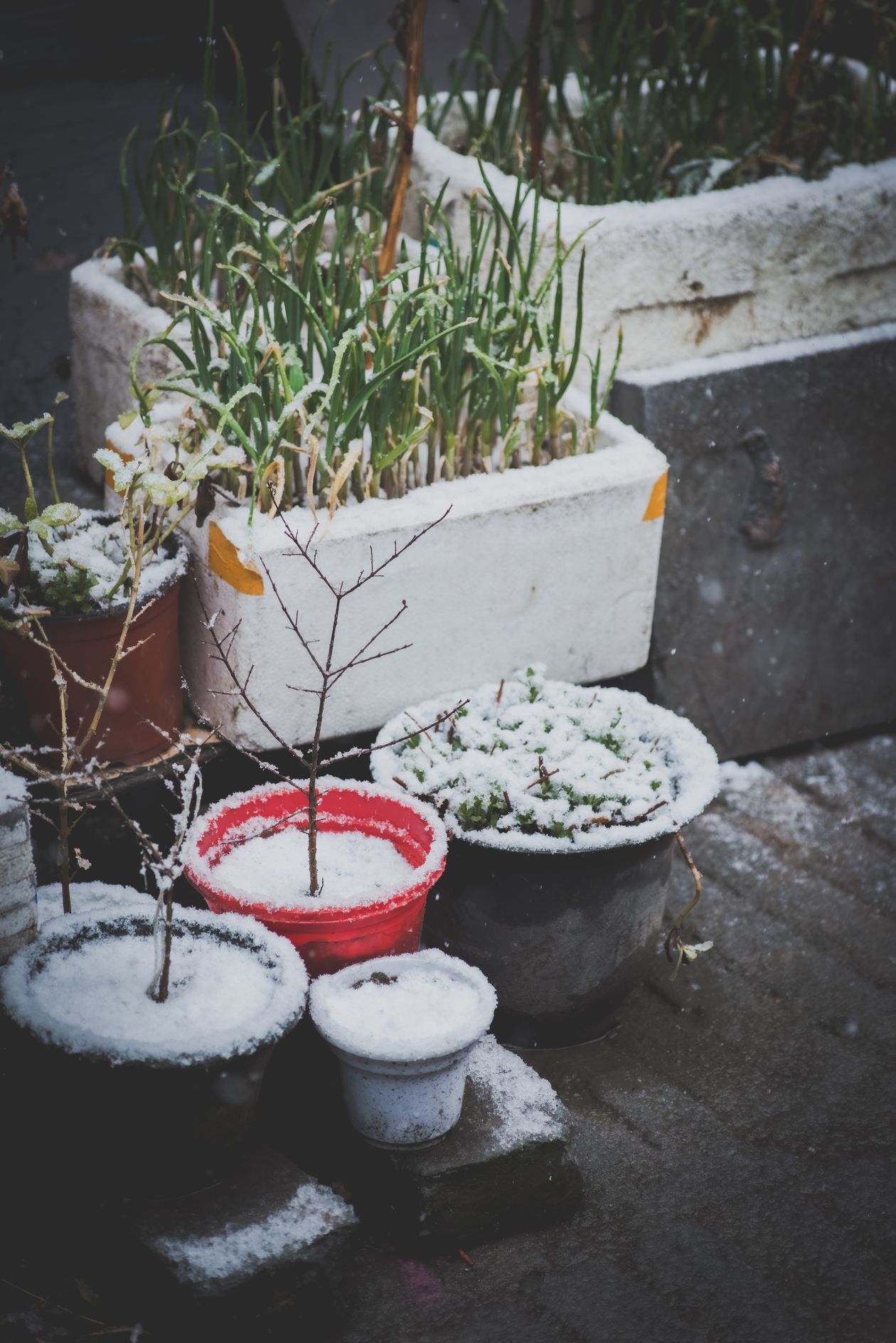
Photo: Alex Bian / Pexels
The plant that survives winter in your garden bed can die in a pot on the patio in the same winter, in the same yard, on the same night. The reason is geometry: roots in the ground are insulated by the whole earth, while roots in a pot are surrounded by a few inches of mix and cold air on every side, and the root ball of a container drops to air temperature. Penn State and University of Illinois Extension teach the same correction, known as the two zone rule: for a plant to overwinter outside in a container, choose one rated at least two hardiness zones colder than your zone. A zone 6 gardener shops for zone 4 plants for the pots that stay out.
Roots are also the tender part. UMass research on root killing temperatures puts numbers on what gardeners learn the hard way: the roots of common landscape plants die at temperatures their tops laugh at. Boxwood roots are killed at about 15 degrees Fahrenheit, saucer magnolia roots at about 23 degrees, while shrubby cinquefoil roots survive to about minus 10. The top growth of all three is hardier than those numbers by 20 degrees or more. Winter pot survival is a root insulation problem, and every technique in this guide is a way of keeping the root ball warmer than the air.
Interactive tool
Winter Outdoor Pots Checklist
Check off each step as you finish it. Your progress stays on this page.
0 of 8 complete
0% done
The survival table: what actually makes it
Plant
Top hardiness
Root killing temperature
Verdict for pots
Boxwood
Zone 5 to 6
About 15 degrees F
Survives in large pots in zone 6 to 7 with the cluster method; marginal in zone 5 pots
Saucer magnolia
Zone 4 to 5
About 23 degrees F
Poor pot candidate in cold zones; the roots are the tender part
Shrubby cinquefoil (potentilla)
Zone 2 to 3
About minus 10 degrees F
Excellent pot plant; roots nearly as hardy as tops
Hardy herbs (thyme, sage, lavender)
Zone 4 to 5
Varies, generally hardy roots
Good in large pots with drainage; wet kills more than cold
Dwarf conifers
Zone 3 to 5
Generally hardy roots
The most reliable winter pot plants in cold zones
Read the table the way the two zone rule intends: the plant's advertised hardiness describes its top growth in the ground, and the pot demands a discount of two zones. A plant exactly at your zone's limit is a plant you are gambling on in a container. A plant two zones hardier is a plant you can forget about until spring, which is the actual goal.
The pot is half the system
Size is insulation. A 20 inch pot holds enough mix that its core may never reach the night's low temperature, while a 10 inch pot tracks the air almost exactly. Put the plants you care about most into the largest pots you own, and accept the corollary: the small decorative pots are for annuals and for plants that come inside.
Material decides what survives the freeze thaw cycle. Thick plastic, fiberclay, wood, and metal flex or endure; thin terracotta absorbs water, freezes, and spalls or cracks apart, which is why the checklist in this guide sends clay pots indoors empty. Glazed ceramic sits between: thick walled pieces survive cold zones if the mix inside drains freely, because it is the water in the clay and the mix, expanding as it freezes, that does the breaking. Drainage is a winter feature, not a summer one: a pot whose drainage hole plugs with ice holds a block of frozen water around the roots, so lift pots onto feet, confirm the holes are open in fall, and never let a pot sit in a saucer of water going into a freeze.
The cluster, the wall, and the blanket
The standard outdoor method stacks small advantages. Group the pots tightly together against a south or east facing wall of the house, where they share each other's mass, catch the wall's radiant warmth, and sit out of the north wind. Pack mulch, leaves, or straw into the gaps between pots up to the rims. Wrap the whole cluster in burlap or bubble insulation if a severe stretch is forecast. Each layer is worth a few degrees at the root ball, and a few degrees is the entire game: it is the difference between a root ball at 20 degrees and one at 12, between boxwood roots alive and boxwood roots at their killing temperature.
Watering flips its logic in winter. A dry root ball insulates worse and a plant entering a freeze dry also desiccates, but a saturated pot freezes hardest and cracks containers. The working rule is to water on thaw days, keeping the mix lightly moist, and always water before a forecast hard freeze if the mix is dry, because moist soil stores and releases heat better than dry. Our guide to how often to water outdoor potted plants covers the growing season rhythm; winter is the same pots on a monthly, weather driven check. The indoor half of the winter story lives in our guide to how to care for houseplants in winter.
The unheated garage method, for the borderline plants
For the plants that fail the two zone rule but are too big or too numerous to live in the house, Iowa State Extension's unheated garage method is the standard rescue: an unheated garage typically holds between about 20 and 45 degrees Fahrenheit through winter, cold enough to keep hardy plants dormant, warm enough to stay above most root killing temperatures. Move the pots in after they have had their first frosts and gone dormant, water lightly about once a month, and move them back out in spring as temperatures moderate. The garage trades light for temperature, which dormant plants do not miss, and it converts a zone 5 patio into zone 7 root conditions without a single purchase.
Evergreens in the garage need the monthly water check taken seriously, since they keep transpiring slowly all winter. Deciduous plants need almost nothing but the temperature. What the garage cannot do is rescue a plant that was already rotted or dried out in November; it preserves healthy dormant plants, it does not revive casualties.
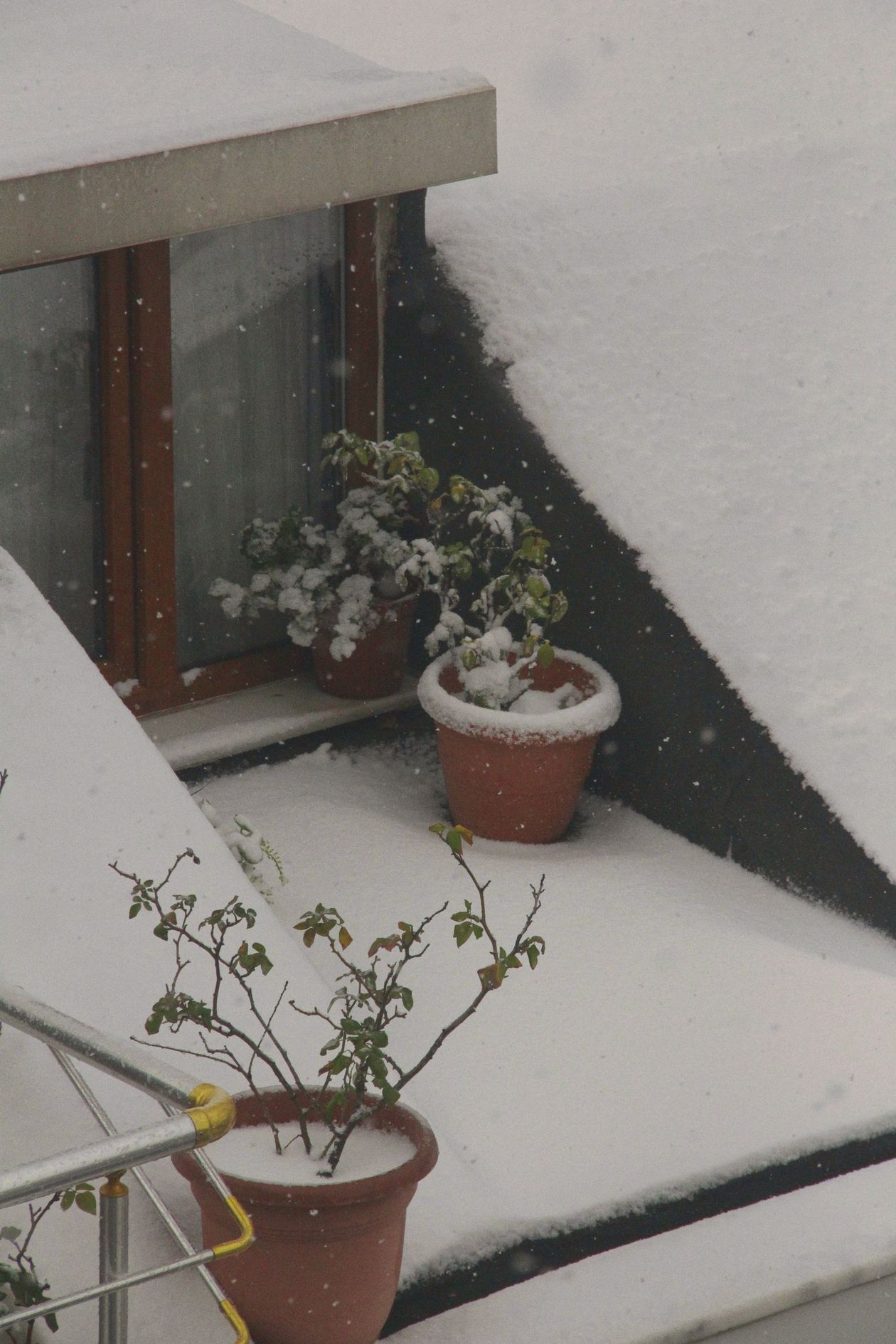
Terracotta pots on a balcony during snowfall
Signs you are getting it wrong
A pot found split in spring was a water and clay problem, solved by drainage, pot feet, and moving thin terracotta in. A plant that leafs out and then collapses had its roots killed at a temperature the tops survived, the signature injury this guide exists to prevent. Evergreens bronzing on the windward side are desiccating, and the fix is wind shelter and a pre freeze watering, not fertilizer. And a plant that breaks dormancy in a January warm spell and then gets frozen was sited in the warmest, sunniest spot you own; winter pots want steady cold, not comfort.
Choose plants rated at least two USDA hardiness zones colder than your own zone for containers that stay outside all winter. Penn State and Illinois Extension teach the rule because a pot's root ball drops to air temperature, stripped of the ground's insulation, so container roots live in a climate roughly two zones colder than the garden bed a few feet away. A zone 6 gardener overwinters zone 4 plants in pots with confidence.
Why do roots die when the top of the plant is hardy?
Because roots evolved underground, where temperatures moderate, and they never developed the top growth's cold tolerance. UMass root killing temperature research puts boxwood roots at about 15 degrees Fahrenheit and saucer magnolia roots at about 23, while their tops survive far colder. Shrubby cinquefoil roots, by contrast, survive to about minus 10. In a pot, the root ball reaches air temperature, so the roots meet cold they were never built for.
Can terracotta pots stay outside in winter?
Thin terracotta should come in, empty. The clay absorbs water, which freezes, expands, and cracks or spalls the pot, and the small volume tracks air temperature at the roots. Thick plastic, fiberclay, wood, and metal are the reliable winter materials. If a glazed or clay pot must stay out, use the largest size, confirm drainage is open, lift it on feet, and cluster it with the other pots against a wall with mulch packed around it.
How often do outdoor pots need water in winter?
About monthly, on thaw days, and always before a hard freeze if the mix has gone dry. The goal is a lightly moist root ball: dry mix insulates poorly and lets evergreens desiccate, while saturated mix freezes into a solid block that cracks pots and suffocates roots. Check with a finger at the surface and a lift of the pot; winter watering is a check, not a schedule.
How does the unheated garage method work?
Move dormant pots into an unheated garage after the first frosts. Iowa State Extension notes such a garage typically holds about 20 to 45 degrees Fahrenheit, cold enough to keep plants dormant but above most root killing temperatures. Water lightly about once a month, give evergreens the most attention, and move everything back outside in spring as the weather moderates. It is the standard rescue for plants too tender for the patio and too big for the house.
Photo credits: Alex Bian (Pexels); zeynep aslan (Pexels). Photos are served from this site; follow the credit to the library page for the original.