A hanging basket of ferns is the hardest watering case in the container garden, because the pot dries from every surface at once, the plant is a moisture lover by ancestry, and the penalty for a dry weekend is a basket of crisp fronds. The fern singles on this site keep their own benches: the Boston fern page and the queen fern page each run one species in depth. This page is the group case, the mixed porch and basket reality, where several fern species share a watering round and the keeper needs one rule that bends by species without breaking. That rule is a band, not a date: keep potted ferns evenly moist and never soggy, check when the top inch of soil is just dry, and water then, before the pot dries further. In summer that check comes every 2 to 5 days depending on the species and the room. The band sounds vague until the species table below puts edges on it, and the humidity section explains why the same basket needs different intervals in different houses.
Home / Gardening Basics for Beginners
How Often to Water Ferns in Pots: The Moisture Band for Baskets and Porch Pots
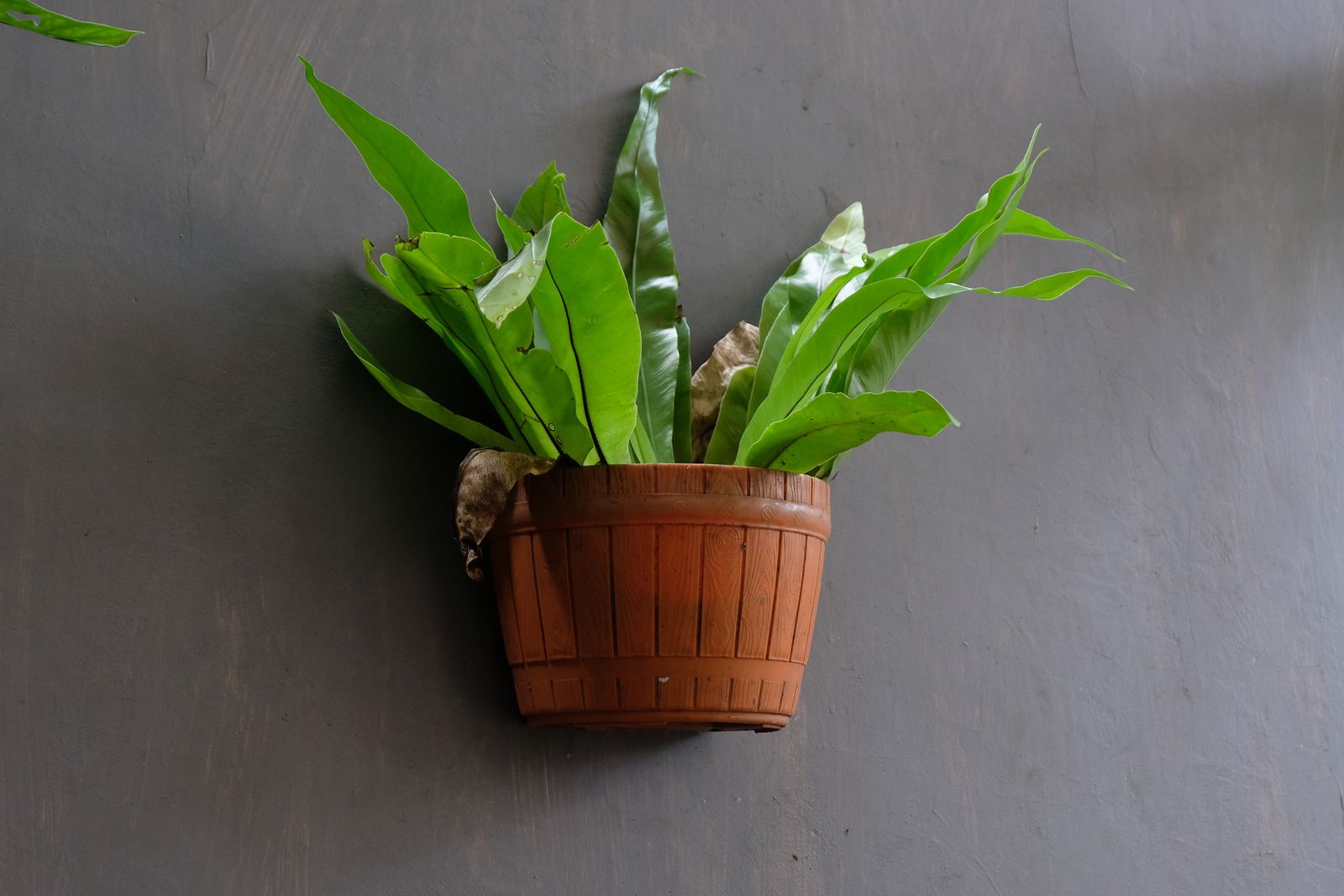
Photo: Ali Rahman / Pexels
Watering Calculator: The Potted Fern Moisture Audit
Potted ferns stay evenly moist and never soggy: check when the top inch is just dry, every 2 to 5 days in summer by species. Enter your pot size below, then read the species band table and the humidity correction in this article.
19.9 gallons
For 32 square feet at 1 inch deep. That is about 76 liters, or 10 trips with a standard 2 gallon watering can.
A rain gauge or a straight sided can set in the bed tells you when a sprinkler or soaker hose has actually delivered this depth. Time alone is a guess, because hose pressure varies from house to house.
The conversion is arithmetic, not opinion: one inch over one square foot is 144 cubic inches of water, and a US gallon holds 231 cubic inches, so each square foot at one inch takes 0.62 gallons.
The Species Band: Who Drinks When
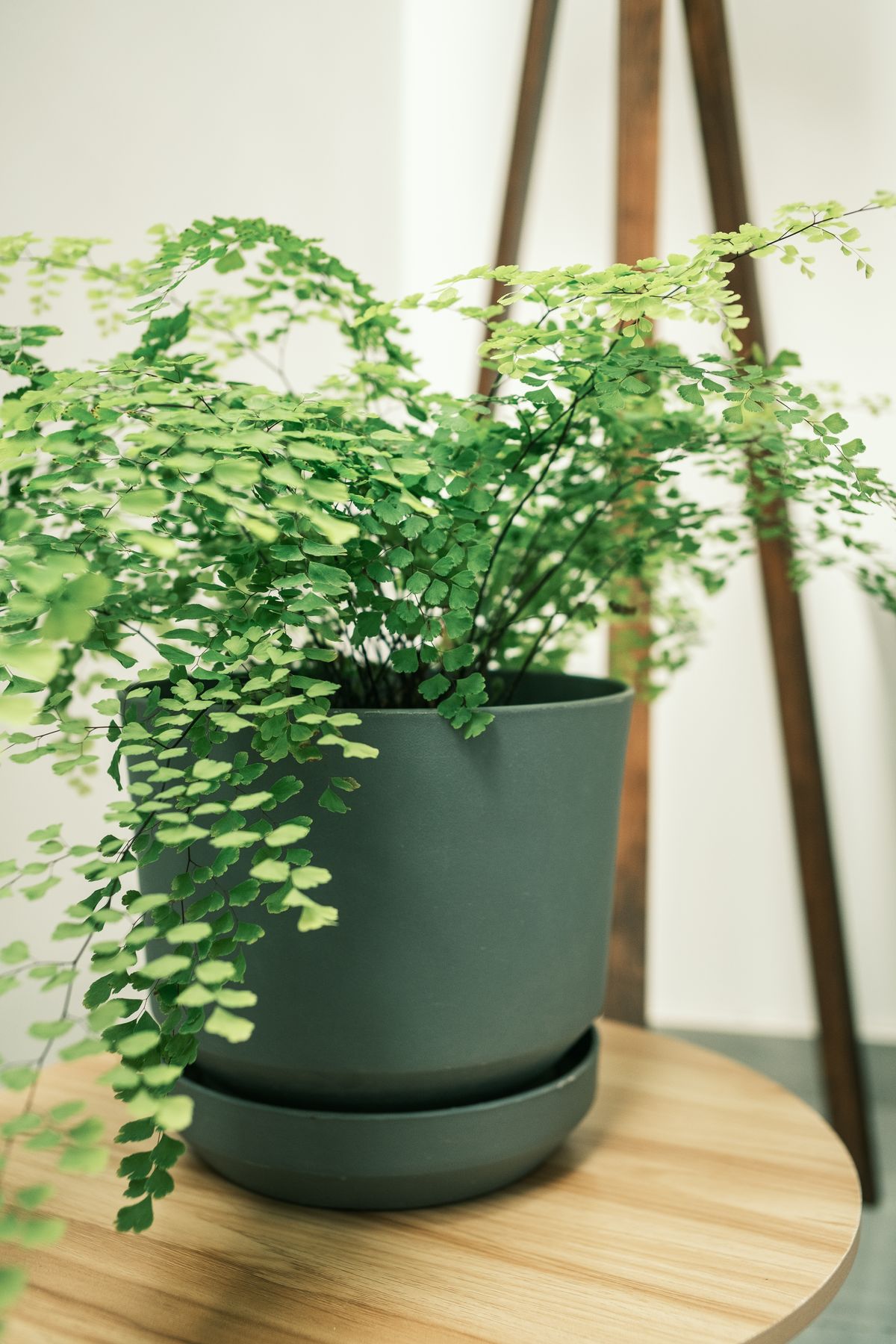
Ferns split by how much dryness they forgive, and the split runs through the popular pot species in a consistent order. Maidenhair fern is the wet end of the band: it wants constantly moist soil, checked every 2 days in summer, and it is famous for collapsing completely at a single full dry-out, though it often regrows from the crown if the rhizome stayed alive. Boston fern and the other sword ferns sit in the middle: top inch just dry, then water, every 3 to 4 days in a summer basket. Bird's nest fern drinks on the same rhythm with one handling note, water the soil and not the central cup, where standing water rots the crown. Staghorn and rabbit's foot ferns are the dry end: both store reserves, the staghorn in its shield fronds and the rabbit's foot in its fuzzy rhizomes, and both want to dry further between drinks, top 2 inches dry, every 4 to 5 days, and both rot in soil kept at maidenhair moisture. Planting a mixed basket across the band is the classic fern mistake; a basket is one watering unit, so group ferns from the same band or accept that the wettest member sets the schedule and the driest member needs the free-est draining pocket in the basket.
| Species | Band position | Test before watering | Summer check rhythm |
|---|---|---|---|
| Maidenhair | Wet end | Surface just losing moisture, never dry | Every 2 days |
| Boston and sword ferns | Middle | Top inch just dry | Every 3 to 4 days |
| Bird's nest fern | Middle | Top inch just dry, water soil not the cup | Every 3 to 4 days |
| Kimberly queen fern | Middle to dry | Top inch dry | Every 3 to 5 days |
| Staghorn | Dry end | Mount or basket mostly dry | Every 4 to 5 days |
| Rabbit's foot | Dry end | Top 2 inches dry | Every 4 to 5 days |
Humidity: The Variable That Beats Pot Size
Ask why the same fern needs water twice as often in one house as another and the answer is almost never the pot. It is the air. Ferns lose water through thin fronds with little cuticle protection, and dry indoor air, heated winter rooms, air conditioning, and a basket hung high where warm air pools all pull moisture out of the plant and the soil surface continuously. In a humid bathroom or a shaded porch in a wet summer, the middle-band check rhythm can stretch by 2 days; in a heated room in January it can compress to the maidenhair end for every species. The corrections, in order of effect: group pots together so their transpiration humidifies the shared air; set baskets on pebble trays with water below the pot base; run a humidifier in the fern room through the heating season; and move hanging baskets down and away from ceiling heat and vents. Misting is the popular correction and the weakest one, raising humidity for minutes at a time; it is harmless and pleasant and no substitute for the tray, the grouping, or the humidifier. Bench the interval to the room the fern actually lives in, and re-bench it when the heating season starts, because the calendar on the wall did not change but the air did.
Brown Fronds: The Diagnosis Fork
Brown fronds on a potted fern have two common causes that demand opposite responses, and the fork is decided by where the brown sits and what the soil says. Dry air browning starts at the frond tips and edges, works inward on the oldest and most exposed fronds first, and happens in soil that tests moist: the roots are drinking, but the air is pulling water out of the frond faster than the plant can replace it. The fix is atmospheric, the humidity corrections above, plus trimming the browned fronds at the base so the plant's energy goes to new growth. Dry soil browning is wholesale: whole fronds crisp, the pot feels light, and the soil has pulled away from the pot edge. The fix is a soak, the whole pot stood in water for 20 to 30 minutes until the mix is rewet through, because dried peat-based mixes repel water and a top watering runs down the gap at the edge without wetting the root ball. The third case is the overwatered fern, yellowing and limp in soil that never dries, with blackened rhizomes at the surface; that plant needs the opposite of a soak: out of the wet mix, rotted material cut away, and a restart in fresh mix on the correct band for its species. Read the soil with a finger before treating any brown fern; the fronds alone will lie to you.
Self-Watering Pots and the Fern Verdict
Self-watering pots, with a reservoir below and a wick or a false bottom, are marketed at exactly the fern keeper's pain, and for the middle and wet bands of the fern family they genuinely work. A Boston or maidenhair fern in a self-watering pot holds the evenly moist band with a reservoir refill every week or two instead of a check every 3 days, and the plant, not the calendar, draws the water. The verdict comes with three conditions. The reservoir must be allowed to empty and sit dry for a day or two between fills, so the soil surface is not permanently saturated and fungus gnats do not move in permanently. The dry-end species, staghorn and rabbit's foot, do not belong in self-watering pots at all; the constant moisture the design exists to provide is the rot condition for their band. And the keeper must still look at the plant weekly, because a self-watering pot conceals the early chapters of every problem, from a clogged wick to a rhizome quietly rotting at a constantly wet surface. Used on the right species with the dry break, the design converts the hardest watering case in the container garden into a weekly task, which is the closest thing to a free lunch this family offers.
Water Quality, Feeding, and the Salt Line
Ferns are light feeders with a low salt tolerance, and the back half of a potted fern's decline is often chemistry rather than rhythm. Tap water in hard-water regions carries dissolved salts that accumulate in a mix which, by fern design, never fully dries and is rarely flushed; the symptom is a slow browning at the frond margins on a plant whose moisture tests right, plus a white crust on the mix surface and the pot rim. The maintenance is a flush: once a month in the growing season, water the pot slowly with several volumes of plain water and let it drain completely, carrying the accumulated salts out. Rainwater, where you can collect it, postpones the problem indefinitely and is the water long-term fern keepers swear by. Feeding follows the same restraint: a balanced houseplant fertilizer at quarter to half strength, monthly in spring and summer, is the whole program, and the classic fern error is feeding a salt-stressed plant to fix its browning, which adds the insult that caused the symptom. Ferns in active growth with clean water and the right moisture band are deep green on almost no food at all; the family built its living extracting minerals from forest-floor runoff, and a pot is a richer environment than the one it evolved for.
Related guides
Readers working on this usually need these next:
- How Often to Water Gardenia: The Moisture Band Behind Bud Drop
- How Often to Water Begonias: The Storage Organ Rule, the Basket Case, and the Crisp Edge Diagnosis
- How Often to Water Ferns: One Rule for Three Moisture Classes
Frequently Asked Questions
How often should I water a hanging fern basket in summer?
Check every 2 to 3 days and water when the top inch is just dry for middle-band species like Boston fern; maidenhair wants checking every 2 days and never a full dry-out. Baskets dry from every side and hang in the warmest air in the room, so they run faster than the same fern in a pot on the floor.
Why is my fern turning brown even though I water it?
Read the fork. Brown tips and edges with moist soil mean dry air, and the fix is humidity: grouping, pebble trays, a humidifier, and distance from vents. Wholesale crisping with a light pot and dry soil means drought, and the fix is a full soak. Yellowing and limpness in soil that never dries means overwatering and rot.
Can I keep different fern species in one basket?
Only from the same moisture band. A basket is one watering unit: maidenhair wants constant moisture and staghorn wants to dry well between drinks, so one of them will be wrong on any shared schedule. Group middle-band species together, or give the driest member the freest-draining pocket and accept the compromise.
Do self-watering pots work for ferns?
For the wet and middle bands, yes, with one discipline: let the reservoir empty and rest dry for a day or two between fills. Boston and maidenhair ferns hold their moisture band well in them. Keep staghorn and rabbit's foot ferns out; constant moisture is their rot condition.
My maidenhair fern collapsed overnight. Is it dead?
Often not. Maidenhair collapses completely at a full dry-out but frequently regrows from the crown if the rhizome survived. Cut the dead fronds away, soak the pot until the mix is rewet, and hold the constantly moist band. New fronds within a few weeks mean the crown lived.
Photo credits: Ali Rahman (Pexels); Alex Quezada (Pexels). Photos are served from this site; follow the credit to the library page for the original.