Every raised bed material asks its own question, and decking boards ask the simplest one: how many boards? A deck board is a standardized, widely stocked piece of lumber, 5/4 by 6 in name and a true 1 inch thick by 5.5 inches wide in the hand, pressure treated for ground contact in most yards' stock, and priced by the piece at every home center. Against the fence boards some beds are built from, at under three quarters of an inch thick, the deck board's full inch is a different structure: walls that do not bow under wet soil, screws that bite and hold, corners that stay square. The site's other material builds, cinder blocks, landscape timbers, and bricks, each solve the wall their own way; decking boards solve it with lumberyard arithmetic, and this page does that arithmetic for the standard bed, then builds it.
Home / Garden Projects and Outdoor Living
How to Build a Raised Bed with Decking Boards: Thick Stock, Simple Math
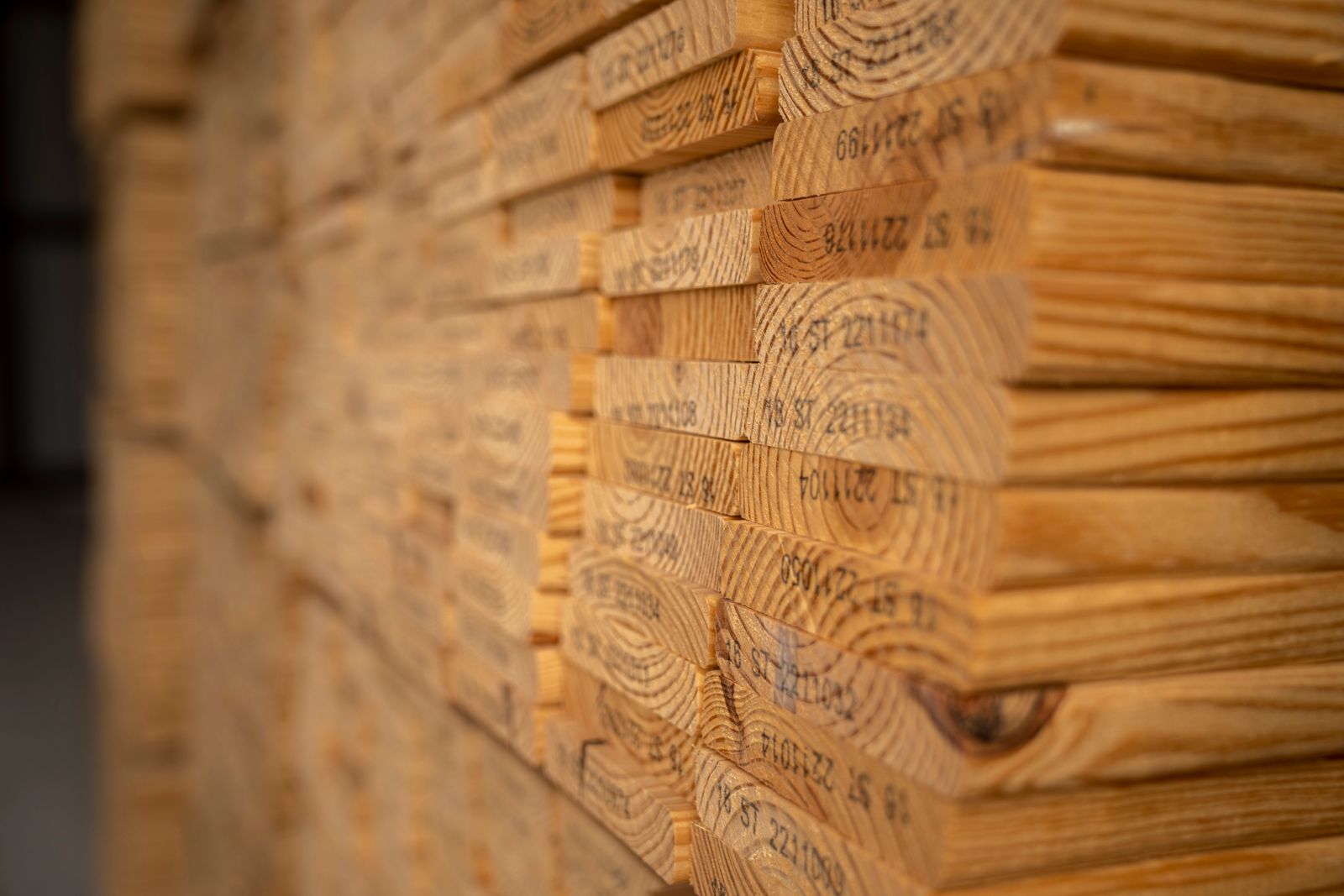
Photo: Mark Stebnicki / Pexels
Decking Board Raised Bed Build Checklist
Check off each step as you finish it. Your progress stays on this page.
0 of 8 complete
0% done
The Board Math
A deck board wall rises in 5.5 inch courses, minus nothing, because the boards stack flat with no gap needed. Four courses give a 22 inch wall, the comfortable working depth most gardeners want; three courses give 16.5 inches, the minimum worth building; two courses, 11 inches, suit a shallow bed for greens. The standard bed for the math is 2 by 8 feet, a reach friendly size, four boards high. Its long walls take four 8 foot boards each, eight in total. Its short walls take four boards cut to 2 feet, and two 8 foot boards yield all eight of those pieces with nothing wasted, since each 8 foot board cuts into four 2 foot pieces and only four pieces are needed per course across both ends... the clean count: ends need 8 pieces of 2 feet, which is 16 feet of board, exactly two more 8 footers. Total for the 2 by 8 by four high bed: 10 deck boards, 8 full length and 2 cut into ends. A 4 by 8 bed at the same height takes 8 long boards and 8 four foot end pieces, which come from four 8 foot boards cut in half: 12 boards total. Buy one extra board against a split or a knot in the wrong place.
| Bed size, 4 courses (22 in) | Long boards | End pieces | Total 8 ft boards |
|---|---|---|---|
| 2 by 8 feet | 8 at 8 ft | 8 at 2 ft, from 2 boards | 10 |
| 4 by 8 feet | 8 at 8 ft | 8 at 4 ft, from 4 boards | 12 |
| 4 by 4 feet | 8 at 4 ft, from 4 boards | 8 at 4 ft, from 4 boards | 8 |
| 2 by 4 feet | 8 at 4 ft, from 4 boards | 8 at 2 ft, from 1 board | 5 |
| 3 courses (16.5 in), 4 by 8 | 6 at 8 ft | 6 at 4 ft, from 3 boards | 9 |
Choosing the Boards: Wood, Grooved, Composite
Standard pressure treated deck boards are the default and the value pick, rated for the wet service a bed wall lives in. At the yard, sight down each board and reject the crowned and twisted ones; a bed wall forgives a slight bow and nothing else. Grooved deck boards, milled with a channel on each edge for hidden deck fasteners, work identically as bed walls, the grooves facing in or out as you prefer, and are sometimes the cheaper stock on sale; there is no structural difference that matters at bed scale. Composite decking is the premium option: it will outlast the garden, never rots, and cuts and screws like wood, but it is heavier, costs several times more, and flexes more over a span, so a composite wall wants its corner posts closer or a mid span post on long beds. Composite also runs hotter in sun, a small consideration for roots at the wall. For most beds the treated wood board is the rational buy, with a service life measured in many seasons; save composite for the bed you intend to be your last.
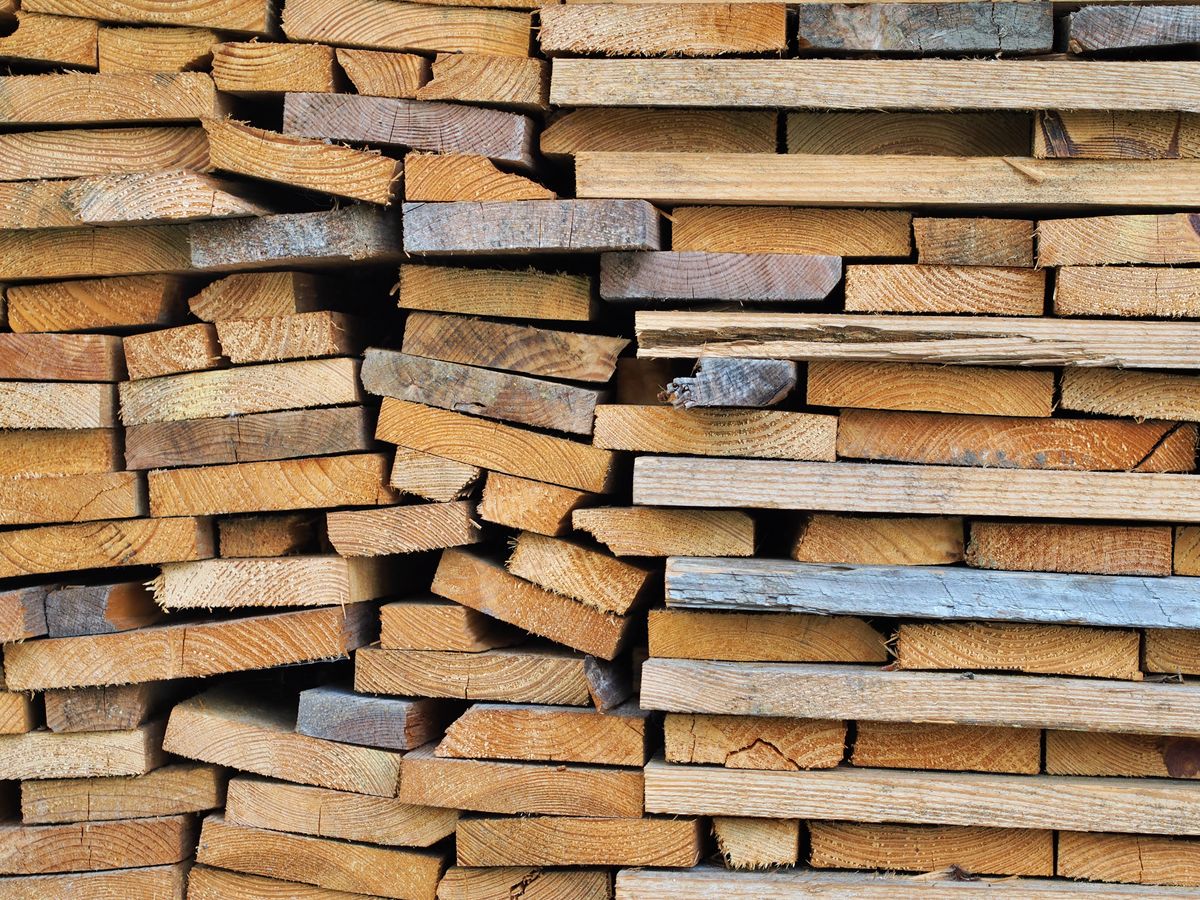
Structure: Corner Posts Do the Work
A decking board wall is a skin; the corner posts are the skeleton. Use 4 by 4 posts at each corner, cut to the wall height, set inside the bed, and screw every board end into its post with two exterior deck screws per board. That joint, repeated at four corners, is what resists the outward pressure of wet soil, which is considerable: a freshly watered 22 inch bed pushes like it means it. On beds longer than 6 feet, add a mid span post or an outside stake at the middle of each long wall, or tie the two long walls together with a cross member at mid height, because a long, straight, inch thick wall will belly outward over seasons without one. Assemble the bed on flat ground as a box, square it by measuring the diagonals until they match, then set it in place and level the site to the box, rather than building in place on uneven ground. A bed built square and set level stays square; a bed built to fit a slope inherits the slope's arguments forever.
Site, Liner, and the Ground Beneath
Set the finished box on ground stripped of turf, leveled, and, if the site is weedy, covered with cardboard or landscape fabric under the bed's footprint. Do not line the inside of a decking board bed with plastic: the liner traps water against the wood, shortens its life, and solves a problem, soil contact, that pressure treatment already handles. Where the concern is treated lumber near food crops, the modern treatments and the research behind them are reassuring, but a gardener who prefers a barrier can line the walls with a food safe membrane kept above the soil line's drainage path; the essential thing is that the bed's bottom stays open to the soil below for drainage and worms. On concrete or paving, the same box works with a fabric bottom to hold the soil, following the approach in the raised bed on concrete guide. Level is not cosmetic: a bed an inch out of level waters unevenly, one end drowning while the other dries, for its whole life.
Filling and First Planting
A 4 by 8 bed at 22 inches deep holds about 2 cubic yards of fill, and the math in the soil volume guide will size any bed on this page. Fill in two lifts, watering each down to settle it, because a bed filled dry and planted settles 2 to 3 inches in its first month and takes the seedlings' crowns down with it. The standard mix is roughly 60 percent topsoil, 30 percent compost, and 10 percent aeration material such as perlite or coarse bark, though any decent bagged raised bed mix lands near the same place. Leave the finished surface 2 inches below the top course, room for mulch and for the soil line to sit below the wood's top edge. First planting can happen the day the bed is filled and watered in. The boards will silver and weather over the first year, which changes nothing structurally; a coat of exterior wood oil on the outside faces only, if you like the color kept, is a cosmetic choice, never a requirement, and the bed's working life is counted in the posts and the inch of thickness you started with.
Variations: Low Beds, Cap Rails, and Benches
The standard build bends in three useful directions. The low bed, two courses at 11 inches, is the right height for a greens and herb bed you tend from a path, for a child's garden, and for the top of a slope where a tall wall would dominate; it takes half the boards of the four course bed and fills with a third of the soil, and its shallowness is its only limit, ruling out the deep rooted crops the tall bed carries. The cap rail is the finishing variation with a structural dividend: a deck board laid flat across the top of the wall, overhanging an inch inside and out, screwed down into the posts and the top course, stiffens the whole box, gives the gardener a seat and a place to set a coffee and a harvest basket, and sheds water off the wall's top edge where end grain would otherwise drink it. It costs one board per side and is the single best upgrade the build offers. The third variation is the bench bed, an L or U shaped run of decking bed with cap rails wide enough to sit on along its working side, which turns the bed's edge into its own seating and tool rest and is the form kitchen gardens take when they are designed for people who cook. All three variations keep the same skeleton: corner posts, two screws per board end, square before it is set, and level before it is filled. The material invites the variations because it is lumber, cut and screwed with the same two tools from the first board to the last.
Related guides
These guides sit closest to this one on the garden path:
- How to Build a Raised Bed Against a Fence: The Gap, the Back Board, and the Sun Audit
- How to Build a Raised Bed
Frequently Asked Questions
How many deck boards do I need for a raised bed?
For a 2 by 8 foot bed four boards high (22 inches), 10 eight foot deck boards: 8 run full length for the long walls and 2 cut into 2 foot pieces for the ends. A 4 by 8 at the same height takes 12. The table on this page sizes the common beds, and one spare board is cheap insurance.
Are decking boards thick enough for a raised bed?
Yes, and that is their advantage: a 5/4 deck board is a full inch thick, against under three quarters for a fence board. Screwed into 4 by 4 corner posts, an inch thick wall holds wet soil without bowing, and mid span support on beds over 6 feet keeps it true for years.
Can I use composite decking for a raised bed?
Yes. Composite never rots and works like wood, at several times the cost and with more flex, so give long composite walls mid span posts. It also runs hotter in sun. For most gardens, pressure treated wood decking is the value choice; composite suits a permanent, build it once bed.
Do I need corner posts with decking boards?
Yes. The boards are the skin and the posts are the structure: 4 by 4 posts inside each corner, two deck screws per board end, resist the outward pressure of wet soil. Butt jointed corners without posts rack and pull apart within a few seasons.
Should I line a decking board raised bed?
Not with plastic against the wood, which traps moisture and shortens the boards' life; pressure treatment is designed for this contact. Keep the bottom open for drainage. On concrete, use a fabric bottom to hold soil while letting water out.
Photo credits: Mark Stebnicki (Pexels); Lukas Tan (Pexels). Photos are served from this site; follow the credit to the library page for the original.