Kale spacing questions go wrong because kale is two crops sharing a seed packet. Grown for baby leaves, it is a cut and come again carpet, sown thick and harvested at a few inches tall. Grown for full plants, it is a two foot rosette that needs real estate closer to a cabbage than to a lettuce. Advice that does not ask which crop you are growing gives you a number that serves neither, and the extension benches look contradictory until you sort them by the same fork. The University of Georgia Circular 963 chart lists kale at 8 to 16 inches between plants in rows 36 inches apart. Utah State University Extension runs 12 to 18 inches with rows about 2 feet apart. The University of Minnesota Extension tells gardeners to thin seedlings to 8 to 12 inches. Read as one argument, that is a mess. Read as a range across harvest styles and garden systems, it is a map, and this page draws it.
Plant Spacing for Kale: Baby Leaf Rows and Full Plant Rows Are Different Crops
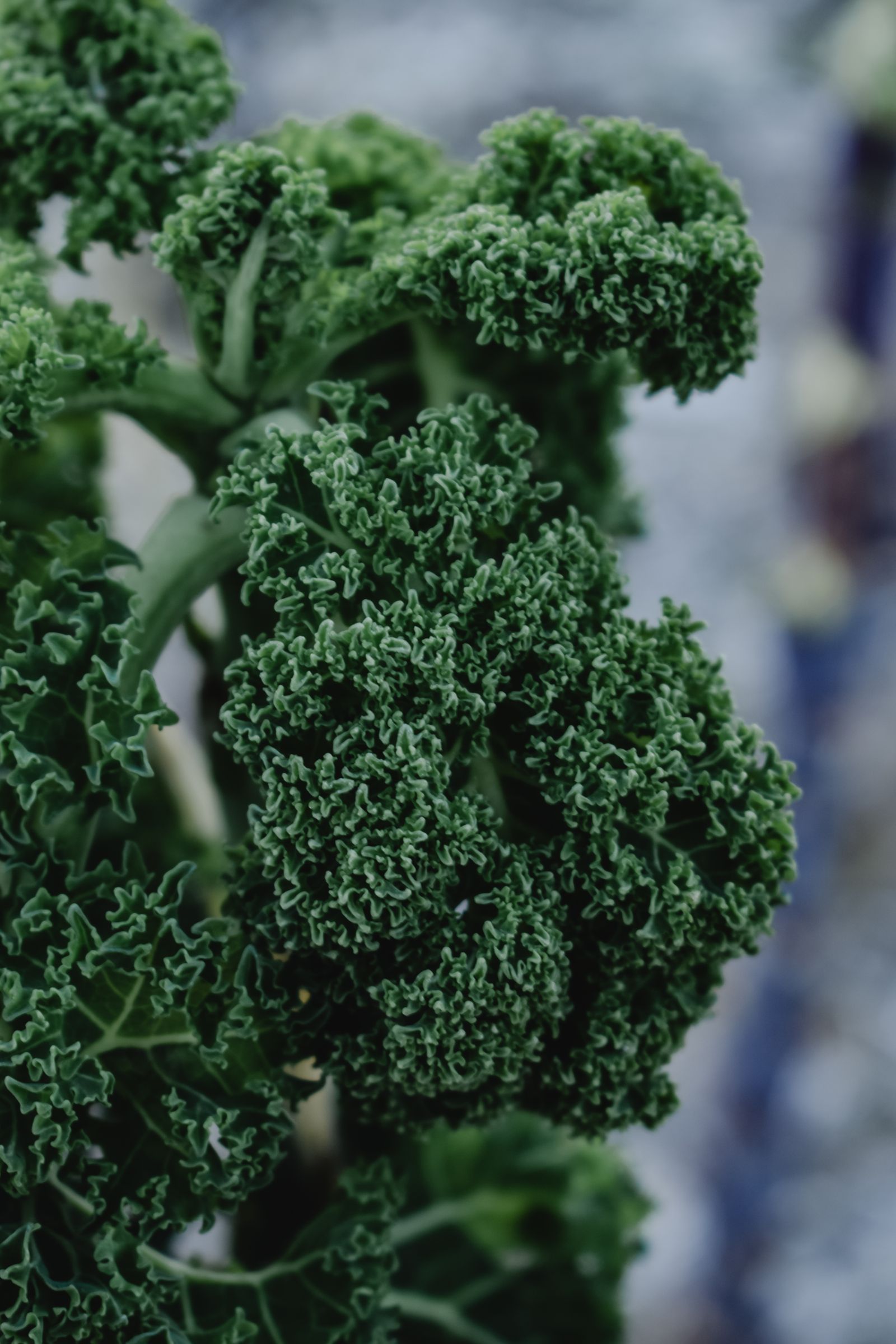
Photo: Eva Bronzini / Pexels
Plant Spacing Planner: The Kale Row
Kale is in the crop list below at the University of Georgia Cooperative Extension spacing of 8 to 16 inches between plants, the planner at 12, in rows 36 inches apart. Enter your bed size, then read the baby leaf band and the source conflict in this article before you thin.
8 tomato plants fit this bed
4 plants per row across 2 rows, on a 24 inch grid. Extension spacing for this crop: 24 in between plants, 48 in between rows.
The grid uses the in-row spacing in both directions, the standard square foot layout for raised beds. In open ground, keep the wider row spacing in the note above so you can walk and weed between rows.
Spacing figures: University of Georgia Cooperative Extension, Circular 963, Vegetable Planting Chart, source.
The Routing Table: Pick Your Crop First
Full plants for cooking greens and repeated picking sit at the Georgia bench: 8 to 16 inches between plants, with the planner above set to 12, in rows 36 inches apart. The low end of that band suits compact varieties and gardens where you pick outer leaves often, keeping plants smaller; the wide end suits the big curly and lacinato types left to reach full size. Baby leaf production ignores the bench entirely: sow seed thickly in a band, roughly a seed every inch or two, and cut the whole stand at 3 to 5 inches tall, which gives an effective plant spacing of about 4 inches or less and a harvest measured in weeks, not months. The two crops can share a bed in sequence, baby rows first in spring while the full plants are still in the nursery row, but they cannot share a spacing number, and any guide that gives kale a single spacing without asking about harvest style has skipped the only question that matters.
| Your kale crop | Plant spacing | Row spacing | Source bench |
|---|---|---|---|
| Full plants, standard | 12 in (band 8 to 16 in) | 36 in | UGA Circular 963 |
| Full plants, wide system | 12 to 18 in | About 24 in | Utah State Extension |
| Full plants, thinned stand | 8 to 12 in | Garden rows | UMN Extension thinning guide |
| Baby leaf, cut young | About 4 in effective | Bands or broadcast | Harvest style, not a bench |
The Source Spread, Flagged and Explained
The three benches disagree in instructive ways, and this page flags the spread rather than averaging it. Georgia's rows at 36 inches are field rows, spaced for cultivation equipment and walking rows in open ground; Utah's rows at about 2 feet are garden rows, and its plants at 12 to 18 inches assume each plant is left to size up fully. Minnesota's 8 to 12 inch thinning figure assumes the common home pattern, direct sown seed thinned in place, where the tight end reflects gardeners picking leaves steadily and keeping plants in check. In a raised bed, the row number mostly dissolves: use the plant spacing on a grid, 12 inches each way for standard full plants, and the Georgia and Minnesota benches agree there. Where the benches genuinely part is the wide end. Utah's 18 inches is not wrong; it is the spacing for unpicked, full sized plants in a long season. Gardeners who harvest outer leaves weekly, which is most home growers, hold plants near the 12 inch size indefinitely and can plant at 12 without crowding.
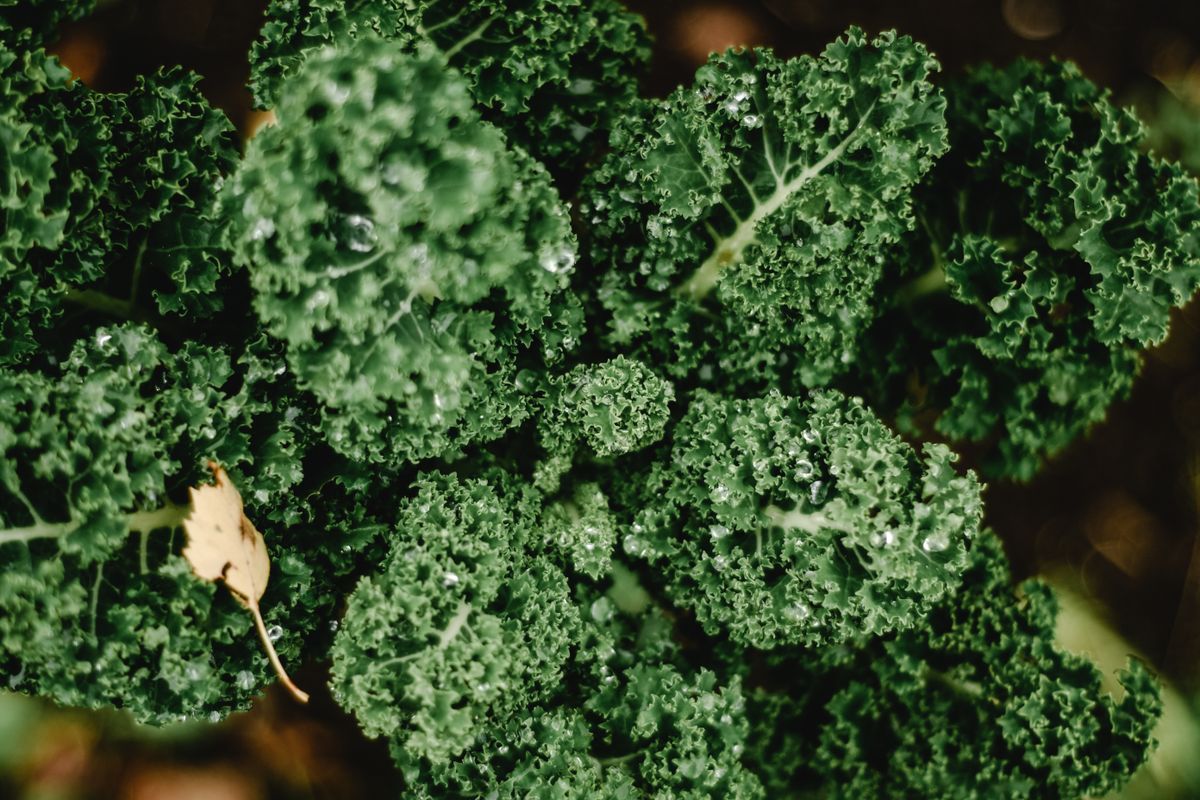
The Thinning Ladder: One Sowing, Two Crops
Direct sown kale gives you the thinning ladder, the most efficient pattern in the leafy greens. Sow seed in a row or band at roughly 1 inch apart. The first thinning, at 2 to 3 inches tall, takes every other seedling out as baby greens for the kitchen, leaving plants at about 2 inches. The second thinning, a week or two later, takes the stand to about 4 inches, and those thinnings are a real baby leaf harvest, not waste. The final thinning takes the keepers to their full spacing, 8 to 12 inches depending on your bench, and the plants removed at that stage are young cooking greens. A sowing managed this way produces three harvests on the way to the final stand, and it converts the spacing decision from a guess made at sowing into a series of small decisions made with the plants in front of you. Transplanted kale skips the ladder: set seedlings straight to the final spacing, and buy the baby leaf phase as a separate thick sown band if you want it.
Varieties Change the Footprint, Not the System
The benches assume a standard plant, and kale varieties deviate from standard in both directions, which is worth a section because variety is the one spacing input you choose before the seed goes in. The big curly Scotch types are the bench plant: broad, heavily frilled rosettes that genuinely fill a 12 to 16 inch circle and shade out their neighbors at the tight end. Lacinato, the dinosaur kale, grows narrower and taller, its strap leaves held upright, and it tolerates the 8 to 12 inch end better than any other full size type because its footprint is a column rather than a disc. Red Russian and the Siberian types spread wide and low with flatter leaves and want the wide end. Dwarf and compact varieties bred for containers and small beds hold at 8 to 10 inches and are the honest choice for a tight grid. None of this changes the system: pick the bench for your harvest style first, then slide within the band for the variety, tighter for the upright and compact types, wider for the sprawling ones. What variety cannot do is rescue a spacing chosen for the wrong crop. A baby leaf stand of a giant curly variety is still a baby leaf stand, cut at 4 inches before variety size ever expresses itself, and a lacinato left unpicked at 6 inches still becomes a crowded thicket by midsummer.
Beds, Containers, and the Fall Crop
In raised beds, plant full kale on a 12 inch grid, two plants across a 2 foot bed section with room to spare, and run baby leaf bands in the gaps and edges where a full plant would shade its neighbors. Kale is also one of the best fall crops in the garden, sweeter after frost, and the fall sowing is where the wide end of the benches earns its keep: plants set in late summer at 14 to 16 inches grow into the cool season without the summer pest pressure, and their size at frost is the winter harvest. In containers, one full plant per 5 gallon pot is the honest rule, or a wide shallow box sown thick for baby leaf only. The site's kale in pots guide covers the container system in depth, and the kale growing guide covers the crop end to end; this page is the spacing decision that both of them depend on.
Related guides
The closest companions to this guide:
- Lettuce Plant Spacing: The Leaf Row Ladder, the Head Lettuce Footprint, and the Succession Rhythm
- Plant Spacing for Marigolds: French and African Are Different Plants
- Plant Spacing for Nasturtiums: Bush Plants and Trailers Obey Different Geometry
- Collard Greens Plant Spacing: Room for the Leaf by Leaf Harvest
- How to Plant Radishes: The 30 Day Crop, Run as a Weekly System
Frequently Asked Questions
How far apart should I plant kale?
For full plants, 8 to 16 inches apart with 12 inches as the working figure, in rows 36 inches apart on the University of Georgia Circular 963 chart, or on a 12 inch grid in beds. Utah State runs wider at 12 to 18 inches in rows about 2 feet apart, and Minnesota thins to 8 to 12 inches. For baby leaf kale, ignore all of that: sow thick and cut at about 4 inches tall.
Why do the extension spacings for kale disagree?
Because they describe different systems. Georgia's 36 inch rows are field rows; Utah's 2 foot rows and wider plants assume full sized, lightly picked plants; Minnesota's thinning band assumes home gardeners who pick outer leaves weekly and hold plants smaller. This page flags the spread instead of averaging it. Pick the bench that matches how you actually harvest.
Can I plant kale closer if I pick the outer leaves often?
Yes, and that is exactly what the tight end of the range is for. Steady outer leaf picking holds a plant near a 12 inch footprint indefinitely, so 8 to 12 inch spacing works for picked plants. The wide 16 to 18 inch figures are for plants left to reach full, unpicked size. Crowding appears when the picking stops, not when the spacing is set.
How do I space kale for baby leaf harvest?
Sow in a thick band, roughly a seed every 1 to 2 inches, and cut the whole stand at 3 to 5 inches tall, giving an effective spacing of about 4 inches. Or run the thinning ladder: sow at 1 inch, thin progressively to 4 inches while eating the thinnings, and let a few keepers go on to full spacing.
How many kale plants fit in a 4 by 8 foot raised bed?
At a 12 inch grid, 32 full plants, which is far more kale than most households can eat; a realistic bed mixes 8 to 12 full plants with baby leaf bands in the remaining space. At the wide 16 inch spacing, the same bed holds about 18 full plants. The planner above runs the arithmetic for your bed size and bench.
Photo credits: Eva Bronzini (Pexels); Eva Bronzini (Pexels). Photos are served from this site; follow the credit to the library page for the original.