Zucchini is a squash, and this site has a family spacing page that covers the whole clan, hills, singles, summer and winter types. This page exists because zucchini earns its own: it is the one squash nearly every beginner plants, it is a single bush crop with a single bench spacing, and its spacing mistakes are the most repeated in home gardening. The bench is not in dispute. The University of Georgia Circular 963 planting chart lists summer squash, zucchini included, at 24 inches between plants in rows 36 inches apart, and the surrounding guidance converges on the same footprint: 2 to 3 feet between plants, 3 to 4 feet between rows, one mature plant occupying 4 to 9 square feet. The seedling you plant looks like it needs a dinner plate of ground. By July it is a yard wide. Space for the plant it becomes, not the plant in the tray.
Plant Spacing for Zucchini: One Bush, Four Square Feet, and No Room for a Second Thought
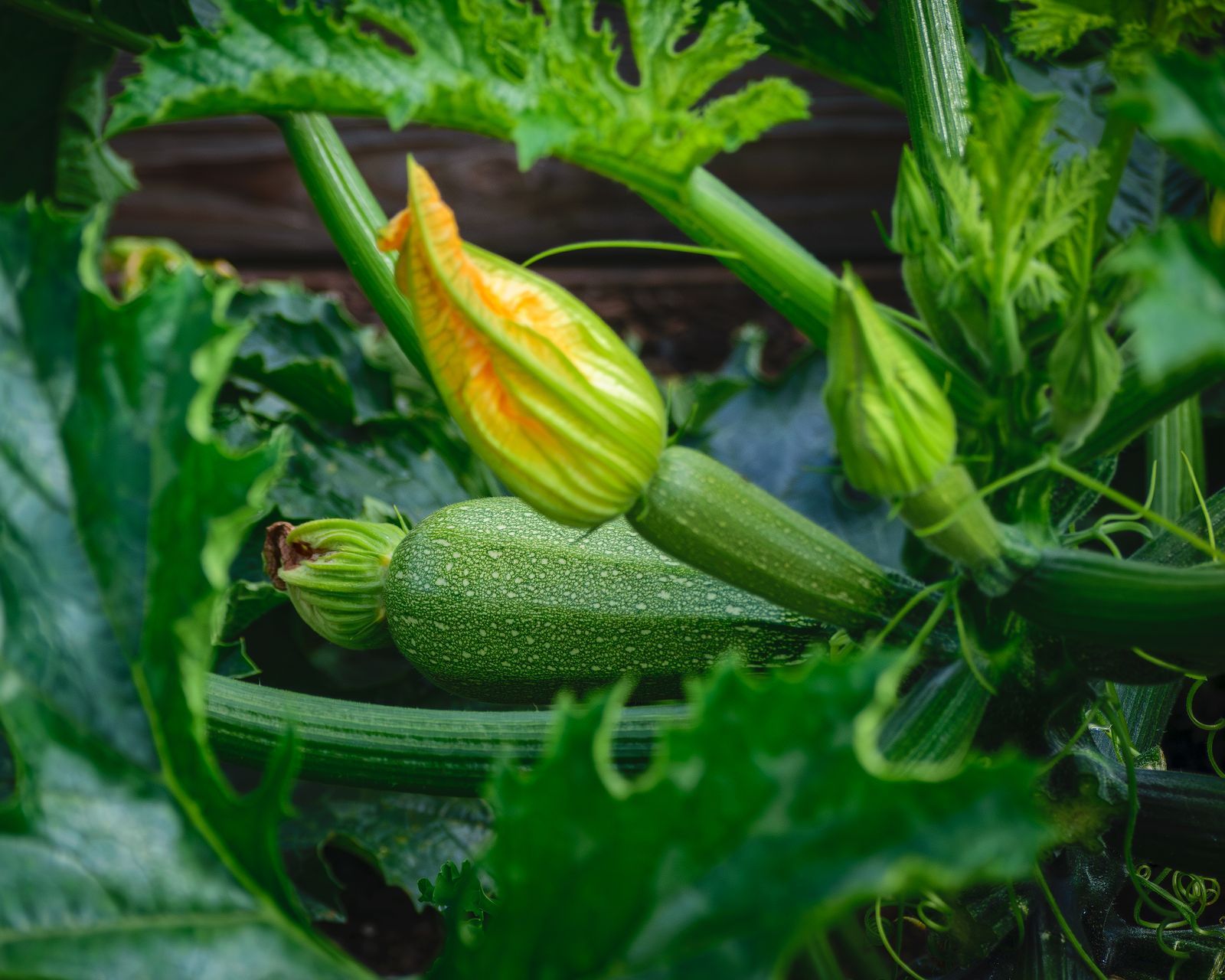
Photo: Thomas Parker / Pexels
Plant Spacing Planner: The Zucchini Plant
Zucchini is in the crop list below at the University of Georgia Cooperative Extension spacing of 24 inches between plants in rows 36 inches apart. Enter your bed or row size and see what one bush really claims before you plant the second one.
8 tomato plants fit this bed
4 plants per row across 2 rows, on a 24 inch grid. Extension spacing for this crop: 24 in between plants, 48 in between rows.
The grid uses the in-row spacing in both directions, the standard square foot layout for raised beds. In open ground, keep the wider row spacing in the note above so you can walk and weed between rows.
Spacing figures: University of Georgia Cooperative Extension, Circular 963, Vegetable Planting Chart, source.
The Bench: 24 Inches in 36 Inch Rows
The Georgia chart figure, 24 inches between plants and 36 inches between rows, is the planner setting above and the working number for a row garden. It gives each plant about 6 square feet, the middle of the 4 to 9 square foot band the wider guidance supports. At the tight end, 2 feet by 2 feet in a bed grid, a vigorous bush still fills its square completely and touches its neighbors, which is workable with airflow discipline and prompt harvesting. At the generous end, 3 feet each way, the plant stands alone with working room around it, and every operation, picking, inspecting leaf undersides, cutting out a borer, gets easier. What the bench rules out is the classic beginner layout: a row of six seedlings 8 inches apart, planted because the tray held six. Five of those plants are a thinning debt that comes due in June, and an unthinned zucchini row is a mildew tent with fruit hidden where you cannot see it until it is oversized.
Why the Footprint Is So Big: The Bush Architecture
A zucchini plant is a short, thick central stem with every leaf and fruit stalk radiating from one crown, and the leaves are large, a foot or more across on long hollow stalks. The plant does not vine away from its footprint like a winter squash; it expands in place, layer over layer, until the crown is a dense canopy 3 or more feet across that shades the ground completely beneath it. That architecture explains both numbers in the bench. The 24 inches between plants is really crown room plus a working gap, and the 36 inch row is your access corridor, because a zucchini patch you cannot reach into is a patch you cannot harvest daily, and daily harvesting is the crop's other rule. It also explains the airflow stakes: the canopy holds humid, still air against the leaf undersides, which is the powdery mildew environment, and crowding two canopies together doubles the humidity while halving your ability to see and remove the first infected leaves.
Raised Beds: Plants Per Bed, Worked Out
In a 4 by 8 foot raised bed, the honest count is two plants, three at the tight 2 foot grid with the understanding that the bed will be a single green mass by midsummer and picking will be a reach in operation. Place them offset, not in a straight line, and toward the bed's center line so the canopies can spill over the edges rather than over a path crop. A 4 by 4 foot bed holds one plant, and that is not a waste of the bed; one well spaced zucchini outproduces two crowded ones, and the classic guidance that a family needs only one or two plants per variety exists because a single healthy bush in season produces faster than most kitchens can use. For the full crop routine beyond spacing, this site's zucchini growing guide carries the season through, and the container zucchini guide covers the potted version, where the spacing question becomes one plant per large container, full stop.
Thinning, Succession, and the Second Planting
Direct sown zucchini is planted 2 or 3 seeds to a spot at the bench spacing, about 1 inch deep, and thinned to the single strongest seedling when the first true leaves open, cut at the soil line rather than pulled. Transplants go in at the same spacing, one per spot, handled gently, since squash roots resent disturbance. Succession is the spacing topic nobody plans: a zucchini plant's peak is intense and not endless, and growers in long seasons start a second plant 4 to 6 weeks after the first, in a second spot at full spacing, so the replacement is hitting its stride as the first plant fades or falls to borers. That means reserving the second footprint in the spring plan, not squeezing the successor into the gap between two mature plants in July. Two successions at honest spacing beat a double row at half spacing across the whole season, in yield, in disease pressure, and in the gardener's willingness to keep picking.
Containers and Grow Bags: One Plant, One Pot
In a container, the spacing question collapses to a rule with no exceptions in it: one zucchini plant per container, and the container must be large, a 10 gallon grow bag or pot at minimum and bigger if you have it. The plant's crown and root system are sized for its 4 to 9 square feet of garden ground, and a small pot does not shrink the plant so much as starve it: the mix dries daily, the roots circle, and the harvest is a fraction of the in ground plant's. Two seedlings in one large pot is the container version of the unthinned row, and it ends the same way, with both plants underperforming one honest plant. The compensating advantage of the container is placement: a potted zucchini can sit on a patio in full sun where no bed exists, can be turned so the canopy develops evenly, and can be moved a few feet to break a squash bug cycle or catch better light. It also wants feeding and watering attention at a level bed plants do not, since everything the plant gets arrives through you. The container zucchini guide on this site works the potted routine in full; the spacing takeaway is simply that the bench follows the plant into the pot, one plant, full size container, no doubling up.
What Crowding Actually Costs
It is worth naming the costs precisely, because "give it room" is easy to nod at and ignore. Crowded zucchini sets less fruit per plant, because pollinators work a visible, accessible flower better than one buried in a double canopy. It mildews earlier and worse, in the still humid air the overlapped leaves trap. It hides fruit, and a zucchini hidden for three extra days is a marrow that diverts the plant's energy into seed production and slows the next setting of fruit. And it makes the vine borer and squash bug inspections that save plants nearly impossible to do thoroughly. Every one of those costs is a spacing cost, paid for a few saved square feet in May. The plant's side of the bargain is generous: give one bush its 4 to 9 square feet and it will repay the ground with the heaviest yield per square foot of almost anything in the vegetable garden.
Related guides
Keep reading with these guides from the same corner of the garden:
- Plant Spacing for Star Jasmine: Feet for the Wall, Feet for the Floor
- Kohlrabi Plant Spacing: Four Inches, a Three Inch Harvest Window, and the Giant Exception
- Plant Spacing for Dianthus: Room to Breathe Is the Whole Game
- Plant Spacing for Hibiscus: Which Hibiscus, How Much Room
Frequently Asked Questions
How far apart should zucchini plants be?
Twenty four inches between plants in rows 36 inches apart, per the University of Georgia Circular 963 chart, which is the bench the planner above uses. The wider guidance agrees: 2 to 3 feet between plants, 3 to 4 feet between rows, one plant claiming 4 to 9 square feet at maturity. Space for the yard wide bush it becomes, not the seedling in the tray.
How many zucchini plants fit in a 4 by 8 raised bed?
Two comfortably, three at the tight 2 foot grid with crowded canopies by midsummer. A 4 by 4 bed holds one, and one well spaced plant outproduces two crowded ones. Offset the plants rather than lining them up, and place them so the canopies spill over the bed edges instead of over neighboring crops.
Can I plant zucchini closer if I prune it?
Pruning a zucchini means removing older leaves to open the center, and it improves airflow, but it does not shrink the crown or the fruit stalks, and it does not repeal the bench. Gardeners do run zucchini at the tight 2 by 2 foot end with leaf pruning and daily picking and get good crops. What pruning cannot rescue is a row planted at seedling spacing; thin first, prune second.
Is zucchini spacing the same as squash spacing?
Zucchini is a summer squash, and its bench, 24 inches in 36 inch rows, is the summer squash single plant figure. The family is wider than that one number: summer squash also grows in hills 48 inches apart, and winter squash jumps to 36 inches in 60 inch rows or hills 5 to 6 feet apart. The squash spacing page carries the full routing table.
How many zucchini plants does a family need?
One or two per variety is the standard extension guidance, and it is not modesty; a single healthy bush in peak season produces a fruit a day or faster, checked and picked at 6 to 8 inches long. Plant one, plan a succession plant 4 to 6 weeks later at full spacing if your season is long, and give the ground you saved to something else.
Photo credits: Thomas Parker (Pexels); Samet Kaplan (Pexels). Photos are served from this site; follow the credit to the library page for the original.